Ukrainian President Volodymyr Zelensky will be in Brussels this week. His agenda reportedly includes signing a security cooperation agreement between Ukraine and the European Union that has been in the works for several months. Although not officially confirmed, Mr Zelenskiy may also attend the Summit of the 27 EU Heads of State and Government this Thursday.
The new aid to Ukraine, a brainchild of the G7 group, was discussed at the highest level at the NATO summit in Vilnius, Lithuania last year, where it was agreed that individual states should enter into bilateral agreements with Ukraine to ensure its long-term security. The UK, Germany and France signed up in January and February, followed by the US.
The deal reportedly includes arms supplies, financial aid and political cooperation, aimed at bridging the gap for Ukraine to fulfill its ambition to join NATO.
At the same time, Danish Defense Minister Lund Poulsen said Monday in a joint press conference with Norwegian Defense Minister Arild Gramm that Denmark will stop training Ukrainian F-16 pilots by the end of the year.
Denmark and the Netherlands were the two countries that led the international coalition to train Ukrainian F-16 fighter pilots, followed by Norway and Belgium.
Officially, the decision to end the training is due to Denmark’s intention to focus on the new F-35 aircraft, the Danish defense minister explained.
By the end of the year, Denmark will have trained around 20 Ukrainian pilots, and has pledged to deliver 19 F-16s to Ukraine once their training is complete.
The United States has revealed plans to train Ukrainians, and a training center has been identified in Romania for this purpose.
The voices for peace
With the war raging in the European neighborhood, it is paradoxical that the voices for negotiations, finding a solution and peace, as we have seen happen in the past with Cyprus, are limited to politicians who are branded by the press as fringe from the beginning, even if they maintain wide influence in their countries.
In France, Jordan Bardela, leader of the National Rally, which is ahead of Sunday’s election, said that as head of the new French government, he would provide ammunition to Ukraine but not send French troops or long-range missiles if he is the next prime minister. .
“My position has not changed, and that is to support Ukraine by providing defense equipment, ammunition, operational logistics and defense weapons so that Ukraine can protect itself to hold the front,” Bardela told reporters on the sidelines Wednesday of the Eurosatory arms exhibition on the outskirts of Paris.
“Unlike the President, I am against sending French troops and soldiers to Ukraine,” he said, adding that this was a “red line.”
Hungarian President Viktor Orbán’s opposition to occasional aid to Ukraine is also known and recorded. on behalf of the European Union. His country and he will be the head of the European Council for the next six months. The choice of the slogan “Make Europe Great Again” which refers directly to the central slogan of Donald Trump’s election campaign, raises the question of what will happen if Donald Trump is elected to the US Presidency in the November elections, with the Hungarian President in place of the Council, i.e. the institutional European body which consists of the Heads of State and Government of the Member States and the President of the Commission and determines the political directions and priorities of the Union.
A Trump whose followers are proud that he did not wage wars like his predecessors, while he opened channels of communication by meeting Vladimir Putin and also visiting North Korea where he was received in a brotherly way by its leader Kim Jong Un.
In Great Britain, Nigel Farage, the Brexiteer, expressed his own reservations about the war and went a step further.
“I’m one of the few figures who has been consistent and honest about the war with Russia,” he told social media network X on Friday night. “Putin was wrong to invade a sovereign nation and the EU was wrong to expand eastward. The sooner we realize this, the closer we will be to ending war and achieving peace.”
Towards a Third World War?
In addition to the questions raised about what is going on between Russia and Ukraine, the war in the Middle East that now seems likely to extend to Lebanon, but also the concerns about the realignments that the ongoing conflict and its political consequences may have in the world . Can Iran Really Use Nukes? Will China invade Taiwan?
One of Britain’s leading military historians, Professor Richard Overy of the University of Essex, who specializes in the history of the Third Reich and the Soviet Union, recently asked the British newspaper The Telegraph whether it is really too late to anticipate a Third World War.
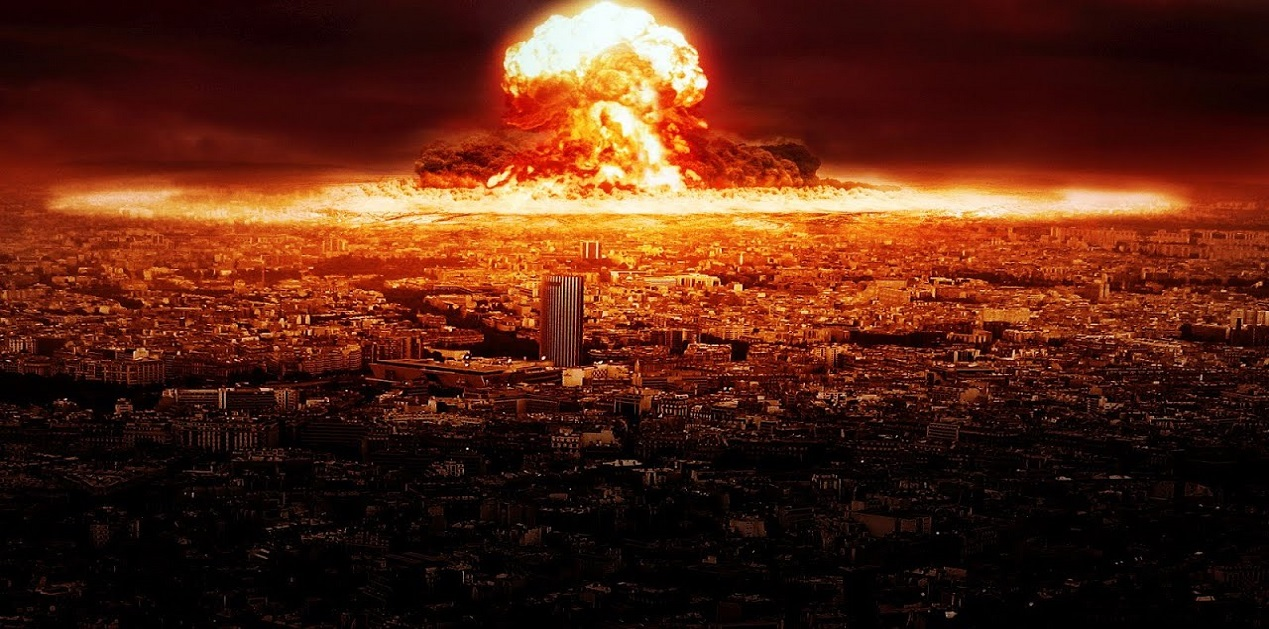
In the first scenario proposed by Overy, the Iranian government announces that it has developed a nuclear bomb and threatens to use it on Israel. The United States reacts with the threat of military intervention, as it did in 1991 and 2003 in Iraq. Iran says it will not tolerate a third war in the Gulf and is looking for allies. American forces are entering Iran en masse. Russia, China and North Korea express their support for Iran and Washington expands its intervention force, aided by British forces. Russia enters the game, raising the stakes in the expectation that the West will back down. A nuclear standoff ensues, as the leaders risk not striking first. World War III starts with a nuclear exchange and the rest, as they say, is history.
In the second scenario, Chinese irritation with the Taiwan regime causes a build-up of invasion forces. The United States is preoccupied with its own domestic political crisis. Japan is anxiously watching the exchange of harsh expressions between China and Taiwan, wondering whether it should intervene. The United Nations condemns the Chinese actions, and China repudiates the censure and orders an invasion, convinced that a quick victory will deter others from intervening, as Hitler hoped when he invaded Poland in 1939. The United States is now activating contingency plans for to save Taiwan, and each side routinely uses nuclear weapons against the other’s armed forces. North Korea and Russia side with China. There is no all-out nuclear strike, but Russia is warning Europe to stay out of the conflict, splitting American strategy between the two theaters, as happened in World War II. The conflict continues and escalates.
In the third scenario, the leading British Professor looks at an entirely different kind of global conflict. According to this, the growing divide between the democratic West and the arc of authoritarian states in Eurasia has entered a dangerous new chapter. Neither side wants to risk an outright war, but there is a chance that destroying satellite communications could undermine the other side’s military and economic capability. Without warning, the West’s satellite communications system is attacked and massive damage is caused to its commercial and military electronic networks.
In the chaos that follows, blame quickly shifts to anti-Western states. Retaliation is difficult to carry out with the breakdown of communications. Amid uncertainty, military mobilization is ordered across the Western world, but Russia and China demand it be stopped. As in 1914, the wheels, once set in motion, are hard to stop and the crisis grows. Welcome to the First Space War.
The culture of war
War as a phenomenon is an element associated with the development of established cultures and political systems, race, protocracy or state. By 10,000 years ago, there is no doubt that something resembling war appeared worldwide, as evidenced by archaeological finds of weapons, iconography, and fortifications.
The war was not like modern warfare, organized into mass armies supplied by military industries, but took various forms: a deadly raid, a ritual encounter, or a massacre, such as the Nataruk killings dating to the 9th century BC. The remains of men, women (one of them pregnant) and children discovered at this site near Lake Turkana, Kenya, show that the victims were beaten with clubs and stabbed to death.
Obviously it was not necessary for a state to engage in violence, as the tribal warfare seen over the past few hundred years has shown, but warfare did mean the emergence of a warrior elite and a culture in which warfare was exploited and validated: Spartans, Vikings, Aztecs, there were very few civilizations in which war did not play a role, usually a central role, in community life.
In the historical period of states, about 5,000 years ago, there are no examples where war was not an acceptable practice. Wars are always fought for something, either to please the gods by taking captives to sacrifice, or from the desire for resources, or to expand power over others, or to seek increased security, or simply to they wage a war of defense against a predator. This combination of incentives has remained remarkably stable.
Resource capture is an obvious motivation for war, an explanation that stretches from the ancient Romans who destroyed enemy cities, seized slaves and treasure, and demanded tribute, to Japanese forces in 1942 when they seized the oil and raw materials that the east Asia was needed for a further war. Wars of faith also span millennia, from the Muslim conquests of the Middle East and North Africa in the early Middle Ages, and the era of Christian crusades that followed, to the current jihad campaigns of militant Islam.
Security, as Thomas Hobbes famously recognized in his 1651 Leviathan, is always at risk in an anarchic world where there is no single common force to enforce it. Borders are the bedrock of security fears and lack of trust, as the wars in Ukraine and Gaza demonstrate today. But China’s long frontier with steppe nomads and the vast frontiers of the late Roman empire were also sites of constant raids, defensive battles, and punitive expeditions.
The pursuit of power is perhaps the most common explanation for war – particularly popular with political and social scientists. The Power Transition Theory, pioneered at the height of the Cold War, sees a constant race between great hegemonic powers as one tries to surpass the power of the other. Race, it is argued, can end in war as a declining power seeks to protect its position or a rising power seeks to replace it. The theory was applied to the United States and the Soviet Union, but they never went to war against each other. It is now being applied to a potential war between the United States and China, a favorite scenario for those predicting 21st century conflict.
The two world wars began with a great power picking on a smaller one – Serbia in 1914, Poland in 1939 – and then dragging other powers into the maelstrom. This may indeed happen with Taiwan, as it is already happening with Ukraine.
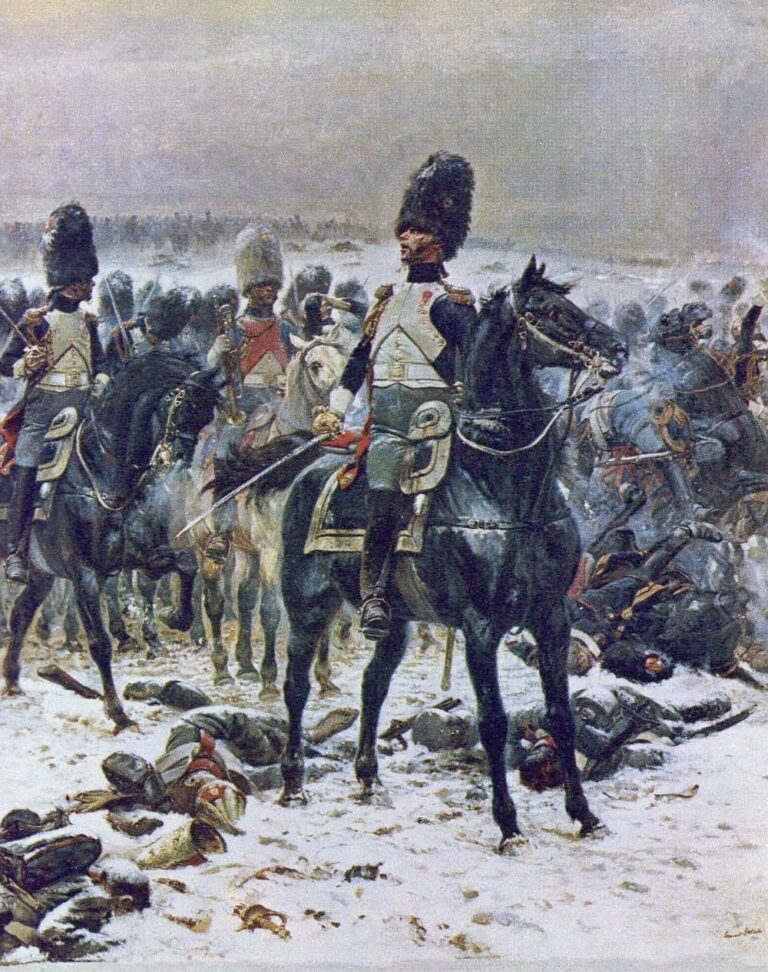
Power works best as an explanation when history turns to the individuals who led themselves to become the great conquerors, men whose raw ambition mobilized their people’s support for unlimited conquest—Alexander the Great, Genghis Khan, Napoleon, Hitler. This is an abusive power based on arrogant self-confidence and usually evaporates with the death or defeat of the leader. But as long as they lead, and there are people willing to follow, war is unlimited and destructive on a massive scale. This is the most dangerous and unpredictable explanation for the persistence of war, and it spans the entire historical record. It is one of the surest indications that war still has a future but also a long past.
The wars of the future are based on a grim legacy. The fact that peace seems to be the logical choice for most people has never been able to quell the urge to fight when it seems necessary or profitable, or an obligation. And this legacy is the main reason why we can imagine a future war. After the end of the Cold War, it was fashionable to say that war was obsolete – if it were, we could now live in a world without weapons and without fear. While few would actively seek World War III, few envisioned or wanted the other two. The sad reality is that our understanding of why wars happen has so far done little to set aside war as an enduring element in human affairs.