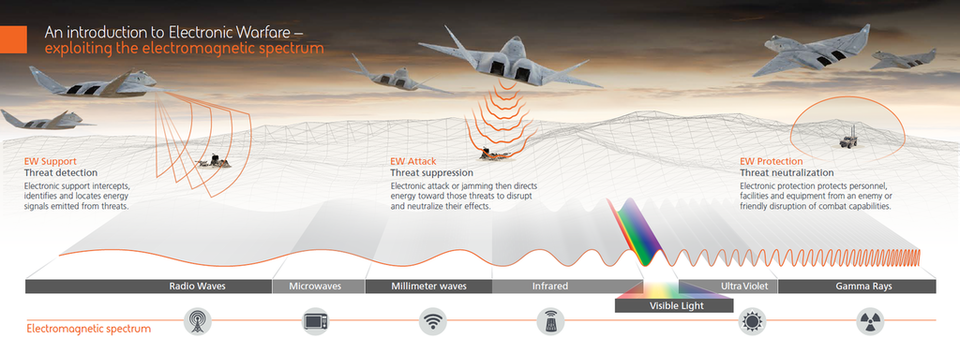
A significant degradation of the operational effectiveness of various weapons of Western origin was recorded in 2023 in Ukraine due to the Russian Electronic Warfare (EW), which succeeded in a short time to adapt to the new threats and deal with them.
This is an extremely important finding that should be taken very seriously by the West, as, unfortunately, the communication narrative is systematically cultivated that every new weapon brought into service is by definition the catalytic advantage in a conflict with Russia and China. But as evidenced by Ukraine, this may be possible, but only for as long as it takes to adapt or even strengthen enemy countermeasures and tactics. And this finding is of great importance for the West, which until today has not given due importance to the EW.
Therefore, according to publications of the Washington Post and New York Times (NYT) on the two days of May 24 and 25, citing as sources top Ukrainian military officials and confidential assessments, a significant deterioration in the operational effectiveness of various Western-sourced weapons in the Ukraine war is recorded. According to an unnamed US Defense Department official, since February 2022 the US has supplied Ukraine with more than 7,000 155 mm precision guided missiles. and have full knowledge of Russian US capabilities and their ongoing development.
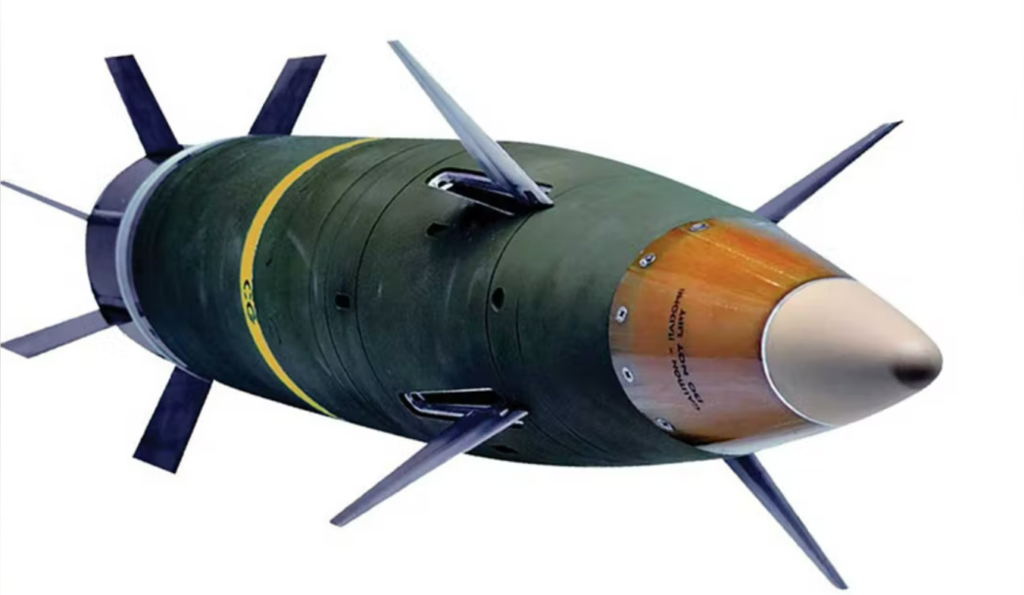
The reports said the success rate of US-made M982 Excalibur guided artillery rounds dropped from 55% to just 7% between January and August 2023, and that Ukrainian forces stopped using the round by combat artillery units. The reason for this significant reduction is the very strong Russian interference that “suppresses” the Global Positioning System (GPS) signal that the weapon’s targeting software requires to function.
It is worth mentioning that the decrease in the operational effectiveness of Excalibur and some other Western-origin artillery shells was commented a few months ago by General Valery Zaluzhny, former chief of the armed forces of Ukraine, who noted that they gave Ukraine a significant advantage, but for a short time period of time. In fact, Zaluzhny cited the Excalibur by name as the prime example of a Western weapon that has lost its effectiveness because its targeting system uses GPS, the global positioning system, which is particularly susceptible to Russian interference.
The Ukrainian forces, from the beginning of 2023, also face issues with the use of the also American-origin guided JDAM-ER (Joint Direct Attack Munition-Extended Range: cross-branch direct attack ammunition – extended range). According to information, from May 2023 they started to receive a new version of the weapon with more durability in the Russian US, but in July 2023, that is, just two months later, the success rate of the weapon dropped to the lowest point, as in this for a short time the Russian forces adjusted their countermeasures and tactics. It should be noted that according to the Washington Post the success rate of JDAM-ER was higher than 60% in most months of 2023.
The Washington Post also reported that the operational effectiveness of the MM30/M31 Guided Multiple Launch Rocket System (GMLRS) fired by the Ukrainian M142 HIMARS air defense systems has also been reduced, although it notes that the assessment it accessed did not contained a relevant reference.
Another weapon mentioned by the NYT is the Ground Launched Small Diameter Bomb (GLSDB), developed jointly by Boeing and Saab. The weapon consists of a Boeing-made modified Small Diameter Bomb (SDB) GBU-39 mounted on an antiquated M26 rocket engine and achieves a range of 150 km. According to the NYT citing as a source the head of the Ukrainian institute Center for Defense Strategies, Ukrainian forces have discontinued the use of GLSDB weapons.
Due to the increasing failure rates of Excaliburs, Ukrainian researchers collected usage data of approximately 3,000 Excalibur rounds fired by US-made M777 155mm towed howitzers. awarded to Ukraine, in the period December 2022 – August 2023, in the battles in Kherson in the south of the country, Kharkiv in the northeast and Bakhmut in eastern Donetsk.
From the processing of the data, it emerged that between January and August 2023, the months when Ukraine had started its counterattack, the success rate dropped from 55% to 7% and in August to just 6%. In fact, at one point cases were recorded where only 1 out of 19 Excalibur missiles hit the target. As a result of these achievements, the cost of destroying a target increased sixfold from US$300,000 (EUR 276,375 at the current exchange rate) in January 2023 to US$1.9 million (EUR 1,750,375 at the current exchange rate) in August of the same year .
Finally, it should be noted that the Washington Post reports that the US has the means to counter Russian EW capabilities because it has a much more advanced air force and strong US countermeasures. Moreover, they note, the ability of Ukrainian forces to carry out successful attacks on targets in occupied Ukraine, including Crimea, can be seen as evidence that the Ukrainians have developed countermeasures against Russian countermeasures and that EW Russian capabilities are not spread across occupied Ukraine (which is logical and normal, since the geographical distribution of the electronic battle array is adjusted to the geography of the theater of operations and the capabilities of the adversary.