



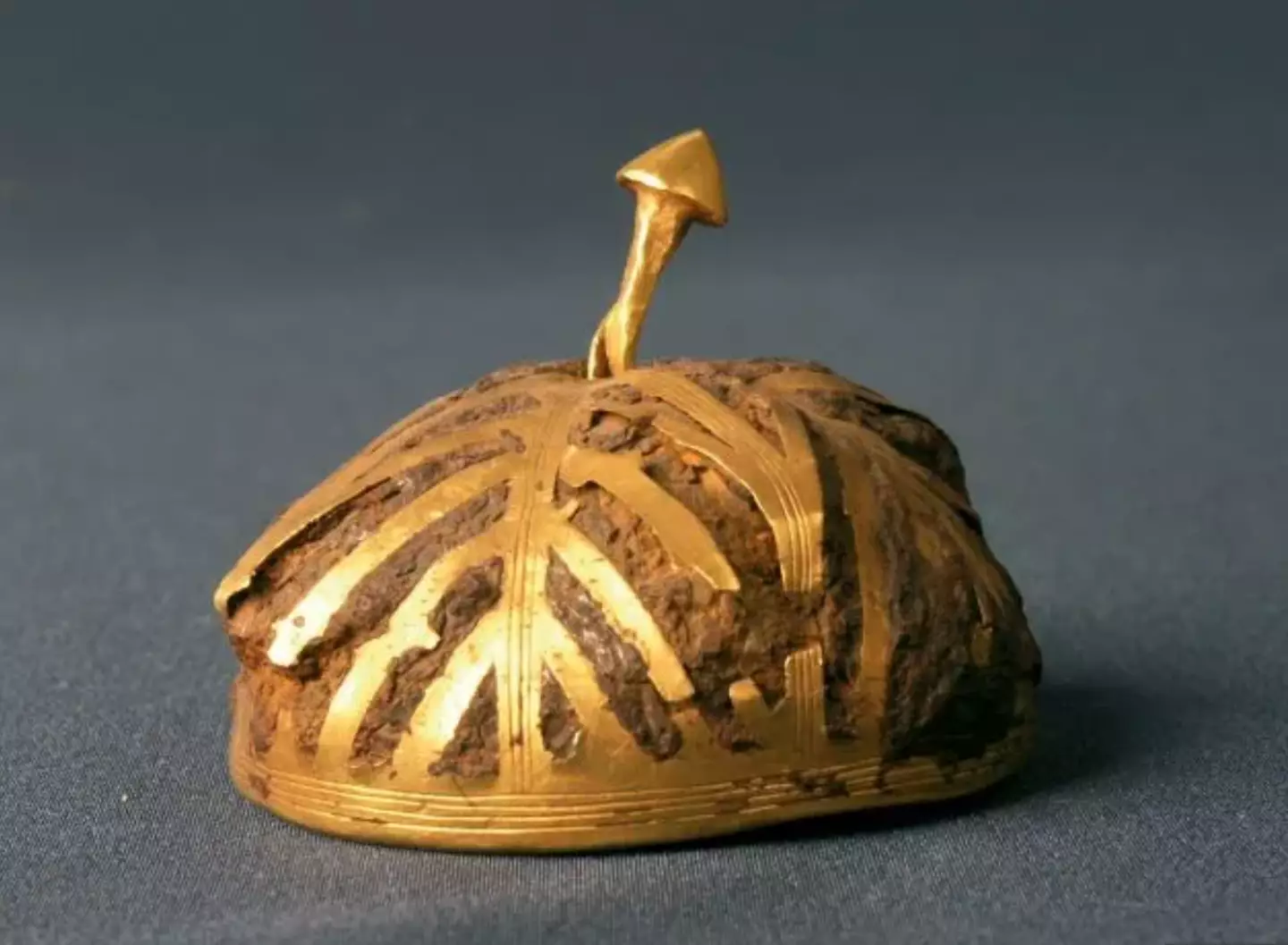
Amid stunning archaeological discoveries, amid a rich cache of magnificent gold treasures from Spain’s Bronze Age, researchers have found what may be the most valuable object ever discovered.
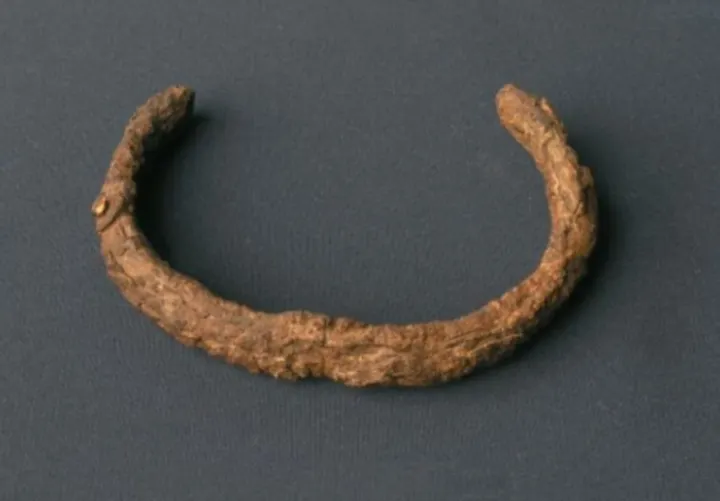
Experts at Spain’s National Archaeological Museum have identified a faded bracelet and a rusted, hollow hemisphere decorated with gold as being made not of earth, but of alien metal.
The discovery, led by retired head of conservation Salvador Rovira Llorens, and published last January (“Hierro meteorítico en el Tesoro de Villena?“), suggests that metalworking techniques in the Iberian Peninsula were much more advanced than previously thought, more than 3,000 years ago.
The Villena Treasure
The Vilena Hoard, as the cache of 66 mostly gold objects is known, was discovered more than 60 years ago in 1963 in what is now Alicante, Spain, and has since been considered one of the most important examples of Bronze Age goldsmithing in the Iberian Peninsula and throughout the Europe.
However, determining the age of the collection has been somewhat difficult, for two reasons: a small, hollow hemisphere, believed to be part of a knife or sword handle, and a bracelet that looks like a lens. Both have what archaeologists have described as an “iron” appearance – that is, they appear to be made of iron.
Alien mineral
In the Iberian Peninsula, the Iron Age – in which molten ground iron began to replace bronze – did not begin until about 850 BC. The problem is that the gold materials date back to between 1500 and 1200 BC. Thus, determining the location of the iron-like objects in the context of the Vilena Hoard was a puzzle.
But iron ore from the Earth’s crust is not the only source of ferric iron. There are many pre-Iron Age iron artifacts around the world that were formed from meteorite material.
Perhaps the most famous is Pharaoh Tutankhamun’s meteorite iron dagger, but there are other Bronze Age weapons made from this material that were very valuable.
There is one way to tell the difference: Iron mined from meteorites has a much higher percentage of nickel than iron mined from the ground.
Thus, the researchers received permission from the Municipal Archaeological Museum of Vilina, which houses the collection, to carefully test the objects and determine the amount of nickel they contain.
Iron from Meteorite
They carefully took samples from both artifacts and subjected the material to mass spectrometry to determine its composition. Despite the high degree of corrosion, which changes the elemental composition of the object, the results strongly suggest that the hemisphere and bracelet are made of meteoric iron.
This neatly solves the puzzle of how the two artifacts fit in with the rest of the collection: they were made around the same time, dating from 1400 to 1200 BC.
“Available data indicate that the cap and bracelet from the Vilena hoard would currently be the first two objects attributed to meteoric iron in the Iberian Peninsula,” the researchers explain in their paper, “corresponding to a Late Bronze Age, before the beginning of terrestrial iron production’.

