


The Chinese People’s Liberation Army (PLA) will never allow the island of Taiwan to be cut off from China.
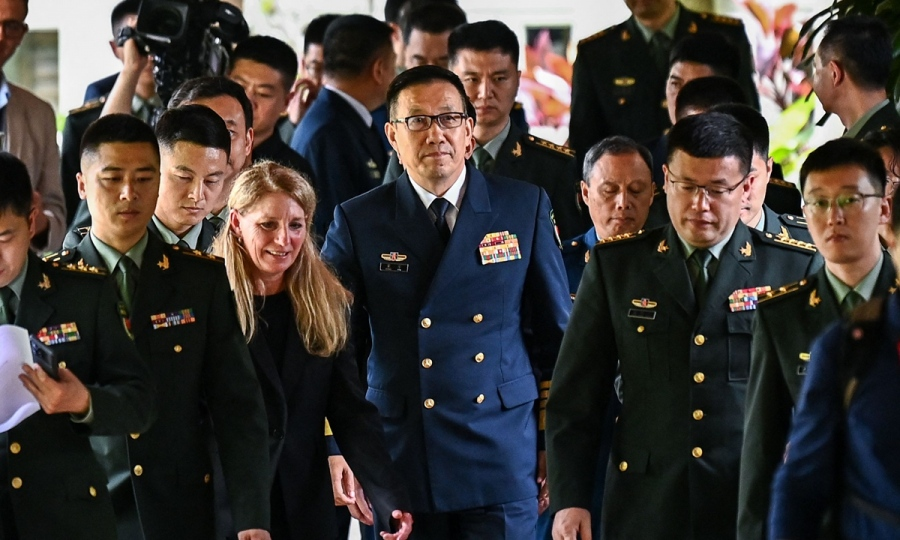
“Taiwan independence” means war, said Lt. Gen. Jing Jianfeng, deputy chief of the Joint Staff Department of China’s Central Military Commission, during a press conference held by the Chinese delegation after US Defense Secretary Lloyd Austin’s speech this morning of Saturday June 1.
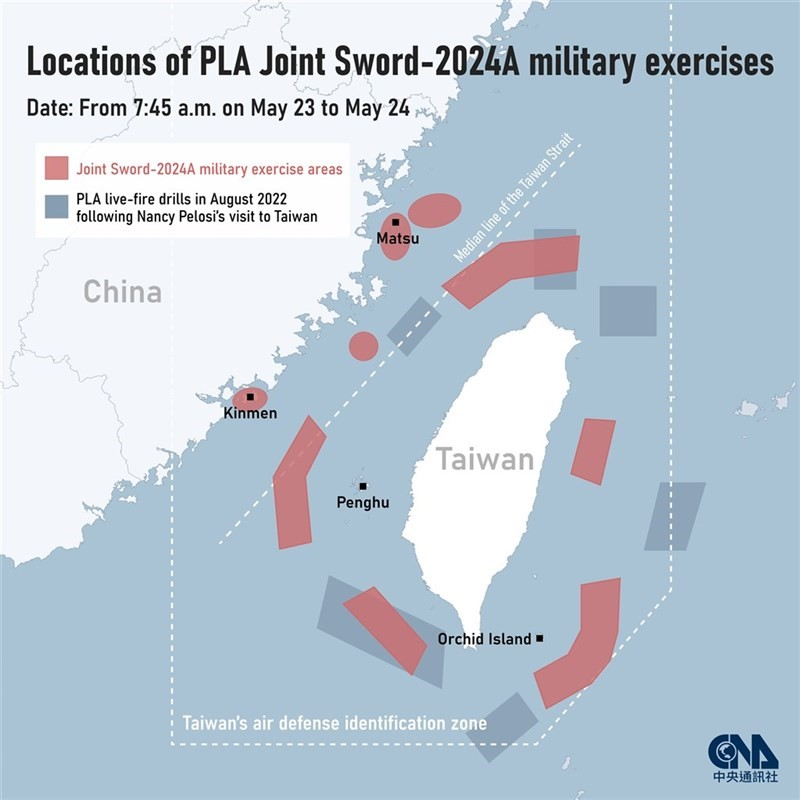
Regarding the Taiwan issue, Jing said that the reason why China has taken military countermeasures around the island of Taiwan is to prevent aggressive separatist activities of “Taiwan independence” and prevent external interference by using stronger measures and more apparent determination. Jing responded to Austin’s remarks covering various aspects, including US-Asia-Pacific alliance relations, China-US military relations, the Taiwan issue and the South China Sea issue.
Regarding the Taiwan issue, Austin stated that Taiwan has been an inalienable part of China’s sacred territory since ancient times.
Legally binding international documents such as the Cairo Declaration, Potsdam Declaration and UN General Assembly Resolution 2758 clearly affirm China’s sovereignty over Taiwan, which is also an integral part of the post-war international order.
The conditions
The three principles are prerequisites for the establishment of bilateral diplomatic ties, viz
- the interruption of the so-called diplomatic relations with the island of Taiwan,
- the abrogation of the mutual defense treaty with the Taiwanese authorities and
- the withdrawal of American military forces from the island of Taiwan;
In recent years, the US has broken its promises, obscured and destroyed the “one China” principle, supported and armed the island of Taiwan, thus causing problems in the Taiwan Strait. Austin said the current situation in the Taiwan Strait is serious.
Political figures such as Taiwan’s new regional leader Lai Ching-te have betrayed the Chinese nation and our ancestors by blatantly supporting separatist theories and trying to pursue “independence” by seeking foreign support or by force, pushing the island of Taiwan towards the abyss of destruction, the Chinese official pointed out.
They are the culprits damaging the status quo in the Straits and causing more damage to regional stability than anyone else. China will never stop strengthening combat readiness, will never back down in our fight against the “Taiwan independence” separatists, and will never tolerate outside interference. The Chinese military will take decisive action to fulfill our mission of safeguarding national sovereignty.
The Asia-Pacific NATO
Jing said that the US’s “Strategic Indo-Pacific Region” is just rhetoric that sounds good but does not achieve anything positive. It is based on creating exclusive relations based on the Cold War mentality and a zero-sum policy under the guise of promoting regional cooperation.
The real US motive is to converge small circles into a larger one, akin to an Asia-Pacific version of NATO, in order to maintain US-led hegemony. The Indo-Pacific Strategy, by its very nature, aims to create division, provoke confrontation and undermine stability.
It solely serves the self-interested geopolitical interests of the US, against the tide of history and the common aspirations of regional countries for peace, development and cooperation that will benefit. This strategy is destined not to yield positive results, Jing noted.
Note that these groupings will do more harm than good to their members. Even Americans themselves often recall the adage to “speak softly and carry…a big stick.”
The US often uses cooperation as a bait to entice regional countries to become its proxies and vassals to shoulder the burden. From the case of Saigon to the fall of Kabul, US partners became one US victim after another.
“This reminds me of a saying by the late US Secretary of State Henry Kissinger, and I quote here: ‘To be America’s enemy is dangerous, but to be America’s friend is fatal.’
Stability in the South China Sea
On the South China Sea issue, he said Austin supported the Philippines and hinted that China’s legitimate operations to protect China’s rights were wrong. “That doesn’t make sense,” he said.
Jing said that currently, the South China Sea is generally stable. A third of international maritime trade, or half of the world’s merchant ships, passes through this waterway, including those of the US, even when US warships come uninvited.
How can one claim that there is no freedom of navigation in the South China Sea? US narratives are far from the truth and can only create unnecessary panic.
China and the ASEAN countries are neighbors that cannot be separated from each other. It is natural for neighbors to fight sometimes, but we must resolve disputes through dialogue and consultation rather than inviting wolves into our home and playing with fire.
Regarding China-US military ties, Jing mentioned the steady development of China-US defense relations The relations serve the common interests of both sides and are in line with the prevailing aspirations of the international community.
The two militaries must follow the consensus reached between the heads of state, adhere to the principles of non-conflict and non-conflict, and serve as anchors of stability in the China-US relationship.
China hopes that the US side will honor its words with deeds, take concrete actions to uphold the principles of harmony, prioritize stability and maintain credibility.
In addition, it is encouraged to increase communication and cooperation with the Chinese side to find the right path of engagement that serves the common interests of both sides and meets the expectations of the world.
