




Russia has been negotiating with China for years to build the Power of Siberia-2 pipeline that would transport 50 billion cubic meters of natural gas annually from the Yamal region in northern Russia to China via Mongolia.
Russia and China are to sign a contract “in the near future” for the Power of Siberia-2 gas pipeline, which will transport Russian gas to China, Russian Deputy Prime Minister Alexander Novak said.
Russia has been negotiating with China for years to build the Power of Siberia-2 pipeline that would transport 50 billion cubic meters of natural gas annually from the Yamal region in northern Russia to China via Mongolia. Novak was part of the official Russian delegation that visited China, although Gazprom CEO Alexei Miller was not.
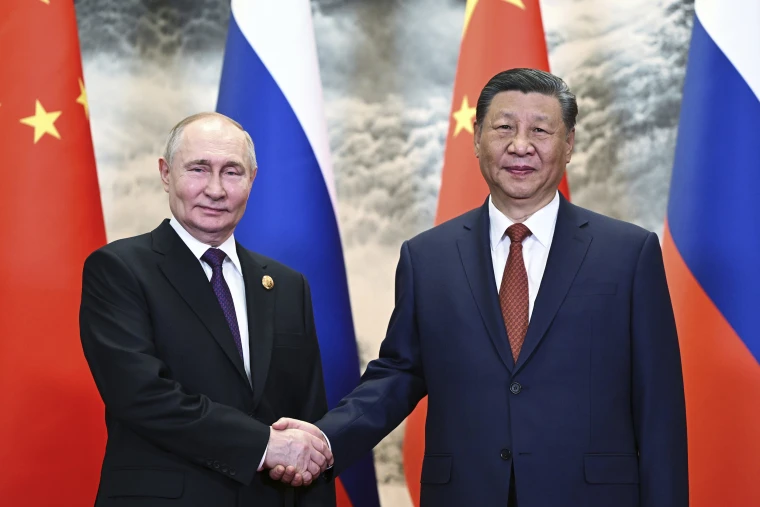
Vladimir Putin and Chinese President Xi Jinping have pledged a “new era” of strategic cooperation as the Russian leader increasingly turns to China to shore up his wartime economy.
Moscow and Beijing are also working on other joint new projects.
New data
At the end of a two-day visit to China, Putin announced a mammoth deal with Xi Jinping to build a colossal project that will set new standards in the energy sector.
The President of Russia stated that the two sides confirmed their interest in proceeding with the construction of the Power of Siberia 2 natural gas pipeline, as well as the creation of an oil pipeline, along the same route.
The specific project, the pipelines of which will cross Mongolia and connect Russia and China in terms of energy, was presented for the first time in 2018. Until today, the plan had remained at the level of discussions, however, it seems that the two sides, after the meeting in Beijing, are close to its implementation.
Through the Arctic
At the same time, Putin underlined that in addition to the planned Power of Siberia 2 pipeline, there are other options for supplying Russian energy to China, mentioning the transportation of oil by tankers on the North Sea sea route, through the Arctic.
This is a route in which both sides have invested significant funds to enhance bilateral trade.
The project has risen high on the agenda of the Kremlin, which is keen to increase gas and oil exports to China to compensate for the end of exports to Europe due to the war in Ukraine.
Putin mentioned that it is a complex process (including the Power of Siberia 2 pipeline), which includes several pricing issues, but he emphasized that China’s growing economy needs energy and, as he pointed out, “there is no more reliable supplier than Russia.”
He added that this is a project that will be free from any Western sanctions.
“Nobody will be able to stop it, not sanctions on tanker fleets or even sanctions on financial institutions. We will buy and sell everything in our national currencies. Therefore, the interest from both sides is confirmed,” the President of Russia emphasized.
If completed, the pipeline will be able to transport 50 billion cubic meters of natural gas a year from the Yamal region in northern Russia, almost as much as was transported via the undersea Nord Stream 1 pipeline from Russia to Germany.
Russia currently sends gas to China through the Power of Siberia 1 pipeline, which began operating in 2019 and runs through eastern Siberia to northeastern China.


As China does not appear to need additional natural gas supplies at this stage, at least until 2030, Beijing could claim a fairly favorable tariff deal for the development of a second pipeline. To date, Moscow has not provided any information on the cost of construction or financing of “Power of Siberia 2”, which will be 2,600 km long. However, experts, evaluating the size of the project, estimate that the cost could be up to $13.6 billion.
