
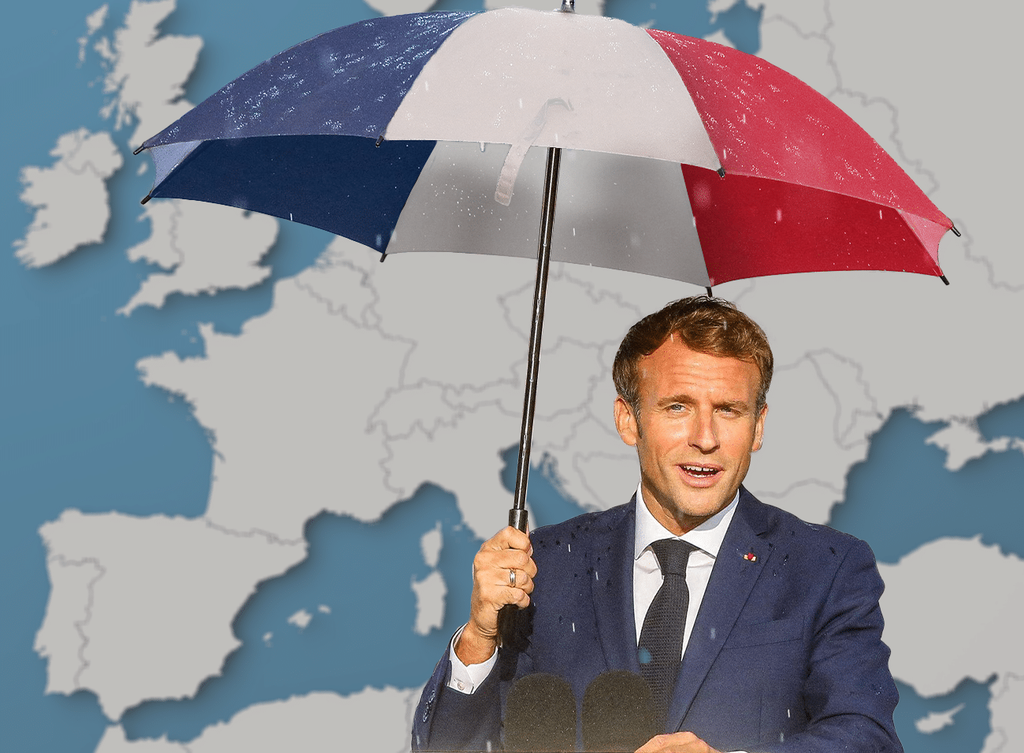

A former Soviet republic in the geopolitically important but volatile Caucasus, geographically on the border between Europe and Asia, Georgia now juggles dangerously fluid balances.
Counting “wounds” from the unilateral declaration of independence of two of its regions, Abkhazia and South Ossetia, with the military and diplomatic support of Moscow, it has been a candidate for EU membership since last December.
It is also officially seeking to join NATO.
But the man who moves the strings in the political background of Tbilisi is now charting a different course for his country. Former prime minister and founder of the current ruling Georgian Dream party, oligarch Bidzina Ivanishvili – who made his fortune in Russia – is imposing a growing Kremlin-inspired authoritarianism.
It is against this background that the new domestic crisis is unfolding.
For weeks now, the country has been experiencing a turbulent period, which in many ways recalls the beginning of the Ukrainian crisis, with the 2014 protests in the Maidan, the famous square of Kyiv.
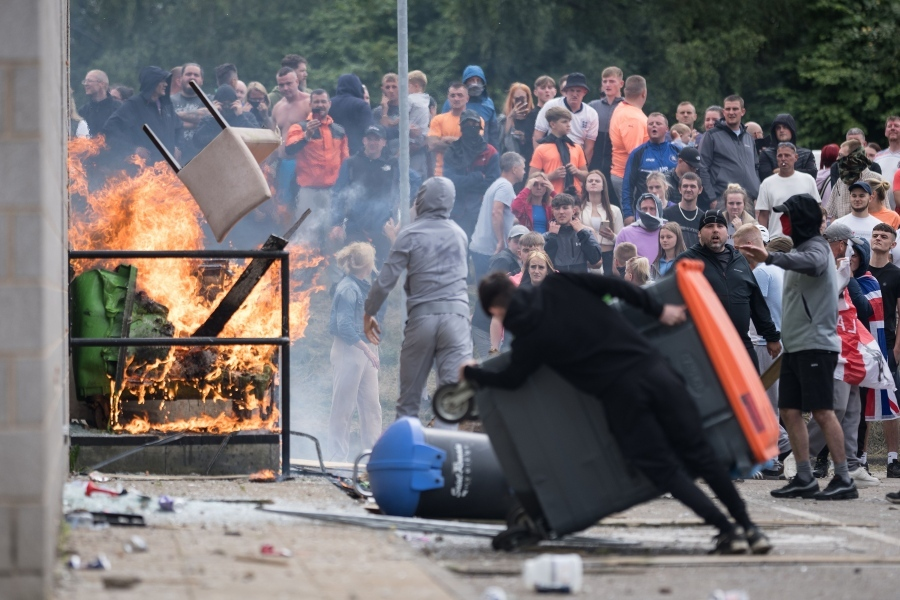
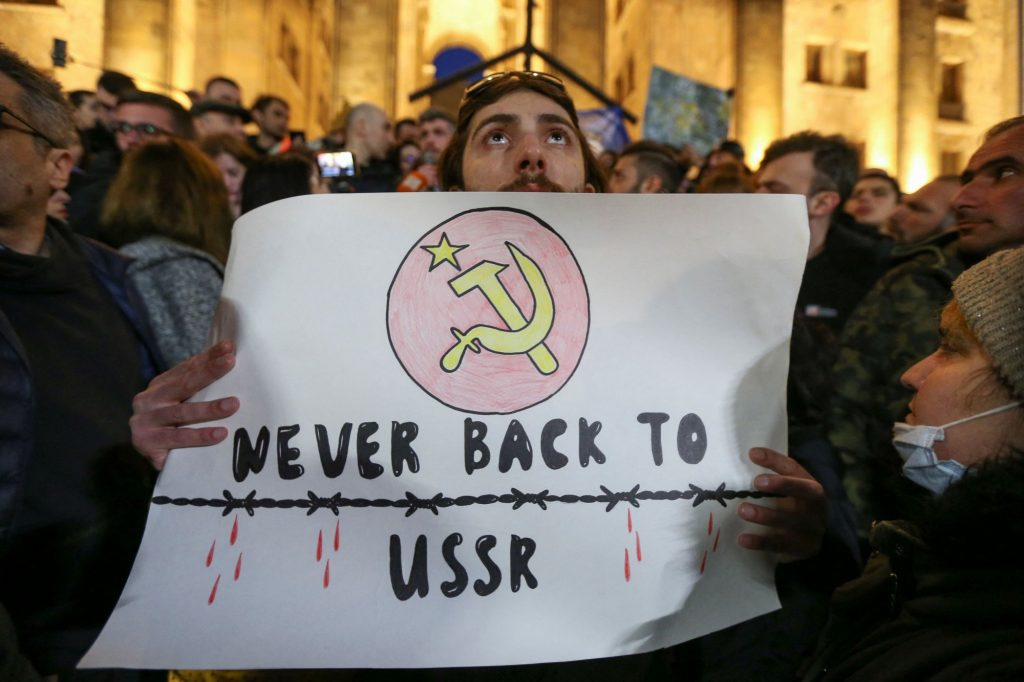
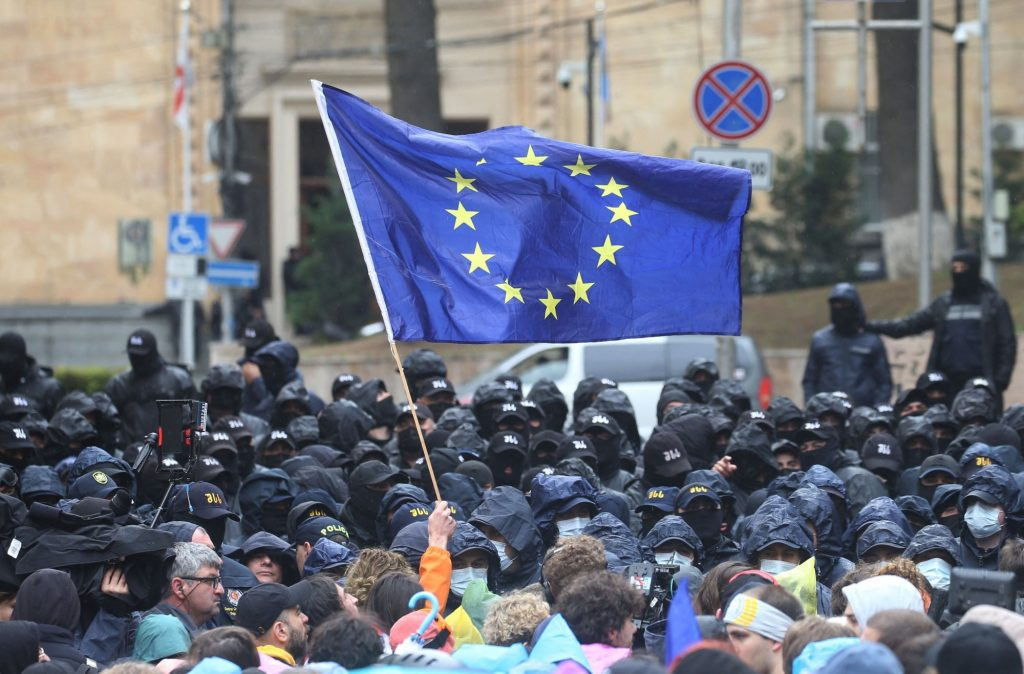
In the biggest wave of protests since independence from the USSR, the capital Tbilisi has now become the scene of fierce clashes between security forces and thousands of anti-government protesters.
They oppose what the pro-Western opposition calls the “Russian law”.
It is inspired, they allege, by Moscow’s repressive “foreign agent” rule, under which Kremlin critics and political opponents, journalists, organizations and members of civil society have been prosecuted.
According to the Georgian government, on the contrary, the so-called “law on organizations representing the interests of a foreign power” promotes transparency in the funding of NGOs from abroad and helps fight “pseudo-liberal values”.
With a comfortable majority in Parliament, it approved him on Tuesday, opening a new chapter of turmoil in the country.
In the “footsteps” of Moscow
This was not even the first time the Tbilisi government has tried to pass the regulation, which many analysts and Georgians denounce as blatant sabotage of EU membership prospects.
The original bill on “foreign influence” had caused mass anti-government protests last year, as a result of which it was then shelved. However, it came back to the “table” at the beginning of April, despite the expected reactions.
It requires media outlets to human rights groups and NGOs that receive more than 20% of their funding from abroad to register as “agents of foreign influence”. At best, violators will be fined.
However, they may be banned from operating in Georgia with summary procedures.
The Tbilisi government says it is relying not on Russia’s equivalent law, but on the US Foreign Agents Registration Act.
But the opposition, analysts, as well as Brussels note with concern an authoritarian pattern of governance in Tbilisi.
Just last March, the government passed a law that gives the Georgian Dream-controlled parliament control over the electoral commission, appointing its members.
He also tabled a bill for drastic restrictions on the LGBTI+ community, even proposing a ban on “gatherings aimed at the propagation of family or intimate relationships between persons of the same sex.”
Movements, which take place in view of the parliamentary elections in October. Polls show that Georgian Dream remains the most popular party.
However, it is recording losses in relation to the previous elections of 2020, when it won a Pyrrhic victory, losing the parliamentary majority by one seat and forming a common front with the populist, nationalist People’s Power party.
And the passing of the law on “foreign influence” further deepens the division in the country, which in a climate of acute polarization is already at a critical crossroads.
Domino reactions
The government has “lost the trust of the people”, now declares the president of Georgia, Salome Zourabivili, who was elected in 2018 with the support of the Georgian Dream, but now accuses it of anti-democratic and pro-Russian tendencies. Backing the anti-government protests, he has announced that he will veto the “foreign influence” law.
But her role is limited and parliament can override her veto with a simple majority.
With EU and NATO membership enshrined in the constitution as the country’s goal since 2017, Georgia’s ruling party insists it remains staunchly pro-European and dismisses calls for a pro-Russian conversion as “manipulation”.
Moscow denies any involvement in the ongoing unrest, saying it wants “stability and predictability” in Georgia.
According to Kremlin spokesman Dmitry Peskov, the issue of the Foreign Influence Act is being leveraged to stoke “anti-Russian sentiment” in Tbilisi.
As a step of pro-government anti-concentration, the oligarch Ivanishvili recently outlined yet another “color revolution”.
He broadly accused a “global war party” of the West for meddling in Georgia, treating – as in Ukraine – its inhabitants as “cannon fodder”.
“NGO funding, which is presented as help to us,” he said, “is actually aimed at strengthening (foreign) secret services and bringing them to power.” The future attitude of the West is considered pivotal for the developments.
The US and Britain have long called on Georgia not to approve the bill, while the EU has underlined that it is incompatible with European values.