



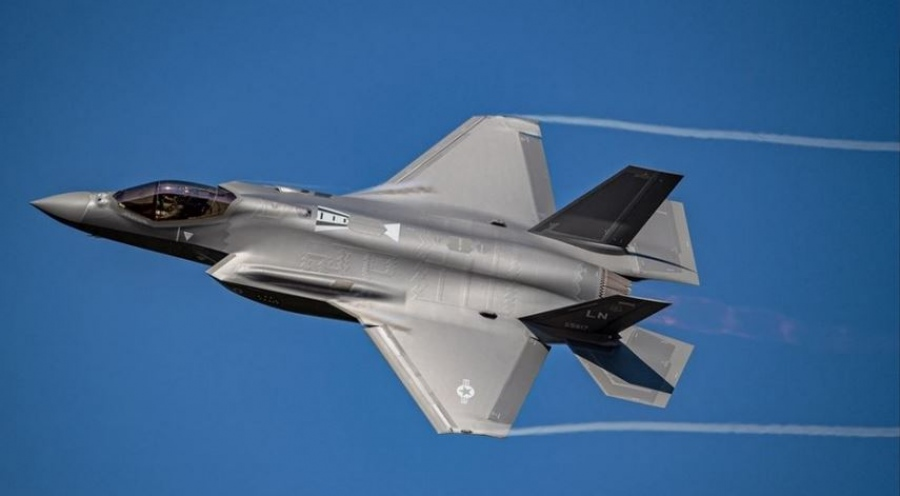
The 5th generation F-35 fighter jet has been officially certified to carry B61-12 nuclear bombs, marking the first time a Western multi-role stealth fighter will be able to use nuclear weapons.
F-35 Joint Program Office spokesman Russ Goemaere said of this milestone in the fighter program: “The F-35A is the first 5th generation nuclear-capable aircraft and the first new platform (fighter or bomber) to achieve this regime since the early 1990s’.
He spoke of providing a critical capability not only to the US but also to the entire NATO and emphasized the great deterrence power it would provide to the entire West. The certification also does not extend to the stealth aircraft’s “sister” variants, the short takeoff and vertical landing F-35B and the carrier-launched F-35C.
With nuclear bombs in Europe
Goemaere’s comments about the new F-35 capability and what it means for NATO more broadly shed light on the fact that the US plans to allow F-35s developed by Germany, the Netherlands, Belgium and Italy to use US B61-12 nuclear warheads.
Although the F-35’s predecessor, the F 22 twin-engine fighter was previously designated by the US Air Force as a nuclear strike fighter, the class’s small weapons bays prevented it from carrying larger diameter warheads like the B61.
Additionally, the F-22’s very low availability rates, extremely short range and other performance issues have prevented it from serving as an effective nuclear strike fighter, with the costly aircraft now being sent into early retirement after 75% of planned production was canceled.
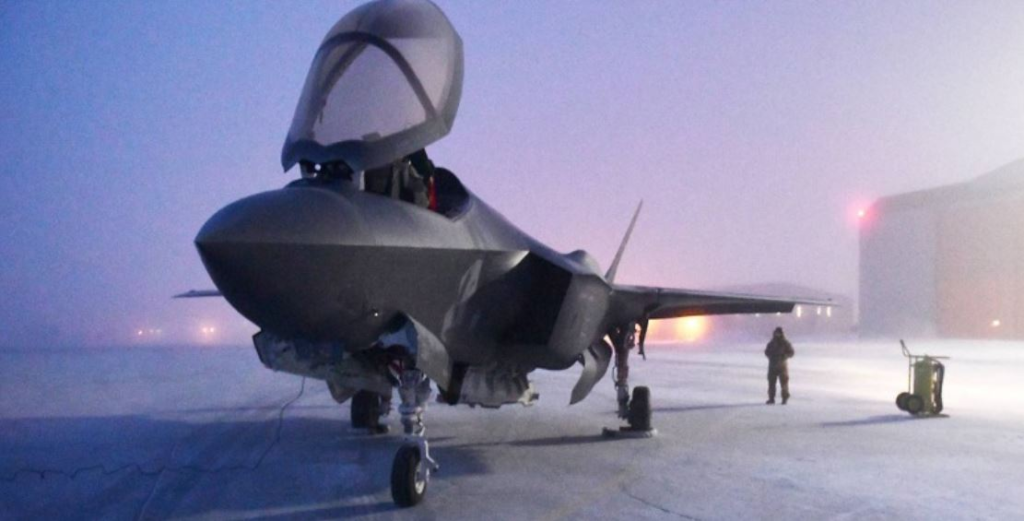
Global concern and outrage
America’s first stealth fighter, the F-117 was originally designed for nuclear attack but was particularly vulnerable in dogfights, had very poor flight performance, and had extremely high maintenance requirements that limited its usefulness.
An additional advantage of using the F-35 for nuclear attack is that it is much more widely deployed, with over 1000 built.
The wide range of bases hosting the aircraft, which are due to expand in the near future to Finland on Russia’s border, gives the US many more options for nuclear strikes.
Equipping the F-35 with nuclear weapons is a major concern for potential US attack targets. The aircraft’s widespread deployments, and the highly stealthy nature of the B61-12’s internal weapons bays, means that any of the hundreds of aircraft stationed around the world will be capable of carrying a nuclear bomb.
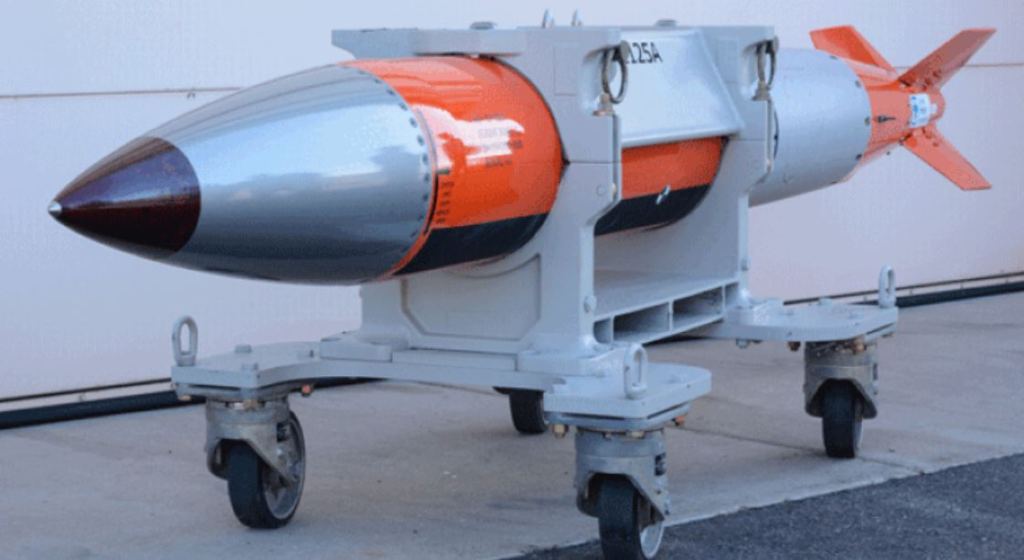
Disastrous consequences
In the plans of American officials are deployments of the aircraft to the borders of potential adversaries, from the East China Sea and the Korean Peninsula to Eastern Europe and the Middle East.
With the new B61-13, a higher yield bomb equivalent of the B61-12, that would allow a single F-35 to kill more than 310,000 residents in the Russian capital Moscow with a single strike. If the bomb fell in the center of St. Petersburg, which is more densely populated, the death toll would rise to over 360,000.
Similar figures could be expected for other major population centers, and figures of the same order of magnitude for B61-12. The B61 bombs have maximum yields several times higher than those dropped on Hiroshima and Nagasaki by the US Air Force in 1945, and when combined with the stealth capabilities of the F-35 allow the US Air Force to hold serious population centers of potential opponents in constant danger.
Strong reactions from Russia – China
As soon as the news became known, Russia reacted with anger and declared that it would give an overwhelming response to the US provocation.
The fact that Finland, which has an extensive border of more than 1,000 kilometers, is also included in the American plans for the F35 in the future causes particular anger in Russia. China also sounded the alarm about this US decision.

