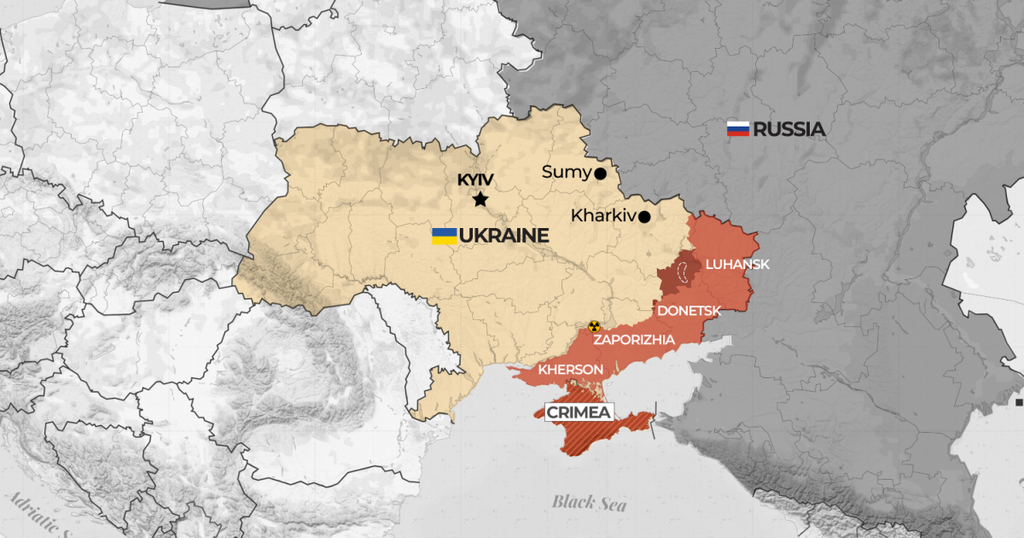



The US will no longer be able to seize the assets of third countries with impunity by imposing sanctions at will. The blow from this policy of sanctions on the dollar will be overwhelming.
The White House is expressing “in principle” support for a bill that would potentially allow the US government to seize about $300 billion in frozen Russian assets and redirect them to Ukraine. While this measure seeks to punish Russia, it raises significant concerns about the integrity and reliability of the US financial system.
Critics warn that these actions have the potential to erode global confidence in the US currency. Consequently, international partners may reconsider their reliance on the dollar, due to fears of possible future US sanctions.
The statement made by the Biden administration expressing its support for legislation allowing the seizure of Russian assets has spooked the global financial system. While the motivation behind this is to support Ukraine during the ongoing conflict, this move is fraught with serious risks (please read the analysis titled “The theft of Russian assets by the G7 “damages the prestige” of the euro & dollar as “safe currencies“).
The act of confiscating Russian foreign reserves has already cast a shadow of doubt over the principles that guide global trade – which according to US hegemonic ideology will be governed by fixed and equal rules.
Two years after the initial sanctions, which Russia has largely withstood, the West appears to be escalating its economic war. This suggests a deeper motivation than simply pressuring Russia. Joe Biden’s message to the world is that if you defy the West, your assets may be at risk.
How many dollars do central banks hold?
As a result, there was a move away from Western banking systems known as “de-dollarization”. In addition, the significant reduction in the role of the euro in world trade in recent years should be taken into account.
A perspective with broader strategic goals, including US disengagement from both Russia and Europe, is erased. The aforementioned bill acts as a potential catalyst for a shift in global financial dynamics, ultimately undermining the US banking system and changing the global trade landscape in favor of BRICS+ and the Global South.
The invasion of Ukraine in February 2022 prompted the US Treasury Department to impose unprecedented sanctions on Russia to hold it “accountable for its premeditated and unprovoked invasion,” as noted in the relevant announcement of the measures. The goal was to prevent Russia from “supporting its rapidly depreciating currency by limiting global supplies of the ruble and access to reserves that Russia may seek to exchange to prop up the ruble.”
In other words, Russia would not be able to sell enough dollars in the foreign exchange market to buy Russian currency and strengthen its value. Indeed, US Treasury Secretary Janet Yellen called the measures an “unprecedented action” that would “significantly limit Russia’s ability to use assets to finance its destabilizing activities.” Freezing the dollar reserves of a sovereign country (Russia in this case) is a seismic event.
It risks accelerating the process of moving away from the use of the dollar for trade or investment by countries that have different geopolitical interests than the US, such as China or the Gulf states. In fact, several governments outside the West are exploring ways to reduce their exposure to the dollar.
Russia currently settles a quarter of its international trade using the Chinese yuan, and bilateral trade with China is settled almost entirely in the two countries’ respective currencies. In March 2023, China clears a payment for UAE gas in its own currency instead of dollars for the first time. Then in November, China and Saudi Arabia signed a currency swap agreement, citing the goal of expanding the use of their currencies.
Central banks diversify reserves
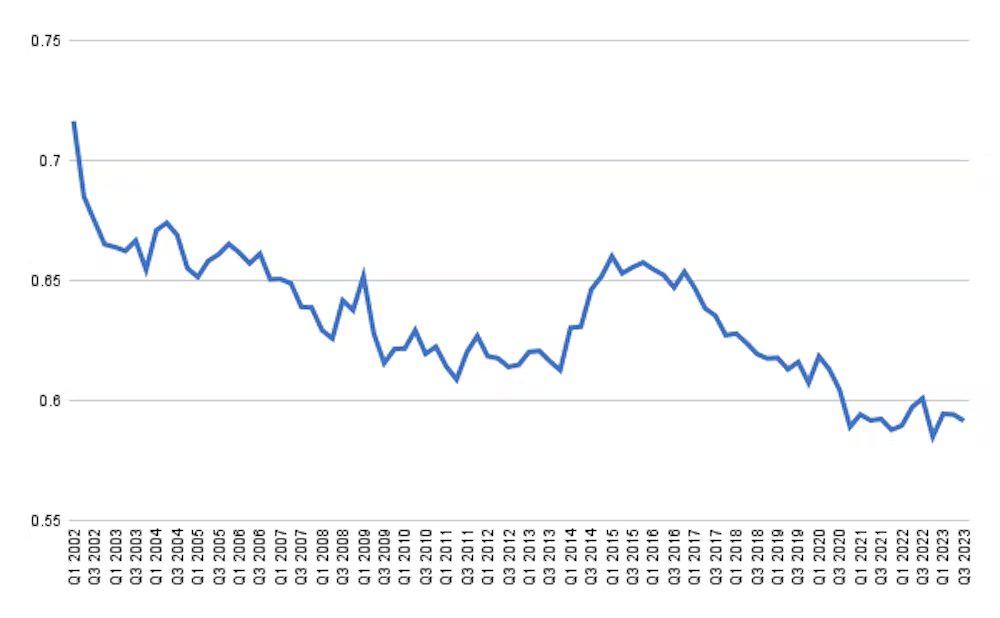
There are even more worrying signs for the US dollar. Although central banks’ foreign reserves have been rising steadily year-on-year for more than 20 years, the percentage held in US dollars hit its lowest point in the fourth quarter of 2022.
This is not a fluke. It is the culmination of a long downward trend that has seen the US dollar’s share of foreign reserves held by central banks fall from more than 70% in the early 2000s to less than 60% today. Although the decline is not dramatic, it is significant and indicative of a negative trend for the dollar that reflects several developments – economic as well as geopolitical. BRICS outperforms G7 group (please read analysis titled “The US is facing all-out Economic Warfare on a Global scale“).
The share of the American economy in world production and American hegemony
The U.S. economy’s share of global output is shrinking as emerging economies, especially China, continue to outpace the U.S. and its Western partners. China, the US’s biggest economic competitor, is now a major trading partner in more than 120 countries, with exports totaling more than $3.6 trillion.
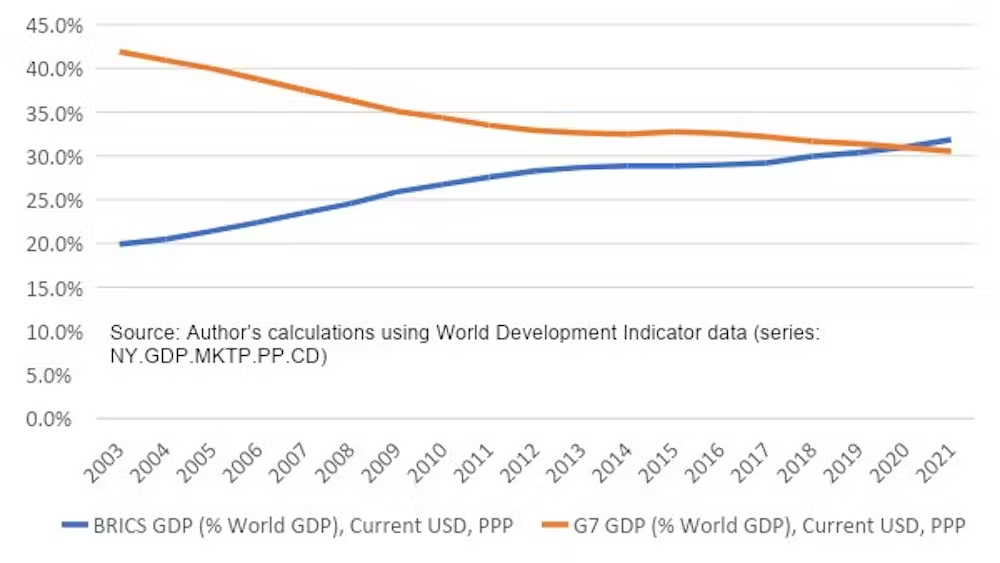
This risks leaving the US behind in the race for global trade dominance. Over the past 20 years, China’s share of the global economy has more than doubled from 8.9% to 18.5%, while the US’s share has declined from 20.1% to 15.5% in purchasing power parity terms (which compare prices of specific goods to determine the purchasing power of a currency).
Last year, the BRICS (Brazil, Russia, India, China and South Africa) economies surpassed those of the G7 (developed economies of the US, Canada, the UK, Germany, France, Italy, Japan and Germany) based on their share of global GDP in purchasing power parity terms. As more countries join the BRICS group in the coming years, it will give the group even more economic influence.
US debt overhang
The US economy’s share of world GDP is shrinking and its debt is reaching new heights as it issues more interest-bearing bills and bonds to finance current government spending. The US national debt is over US$33 trillion, or 123% of the country’s annual economic output (Debt/GDP). Inflationary shocks followed by interest rate hikes have made servicing this debt very expensive for US taxpayers, repeatedly increasing the risk of debt default in recent years.
The monetary history
There is no doubt that the dollar still dominates world markets at the moment, accounting for most of the transactions in international trade.
Its share of the foreign exchange market remains colossal, at 88% of transactions, and it remains the most widely used “international reserve” by central banks that want to ensure they can cover their countries’ imports and support the value of their own currencies.
But the centrality of US currency since World War II has not always been welcomed –– certainly not by the US’s enemies and sometimes not even by its friends.
Valéry Giscard d’Estaing, France’s 20th president and finance minister in the 1960s, called the use of the dollar as a world reserve an “excessive monetary privilege” for the US. He probably meant that demand for US assets from abroad was so high that it could easily borrow on favorable terms to finance its current account deficit – a privilege not available to other nations.
The strategic moves of China and Russia
Current global geopolitical and economic transformations could now see this enormous privilege challenged.
The refusal of Russia’s BRICS partners and many UN member states to undertake Western-style sanctions against Russia is evidence of the limitations the West faces in exerting geopolitical influence.
And economically, China as the world’s leading trading partner and Russia as one of the world’s richest countries in energy reserves have amassed large reserves of gold that could replace some dollar uses. Both seek to work with other countries, including those in the Gulf region, to reduce dependence on the dollar.
Convincing non-Western investors to use a “challenger currency” – either the Chinese yuan or a BRICS currency – could become easier after the US Treasury freezes Russian assets.
And these processes could be accelerated if the US decides to freeze the “frozen” Russian assets. It is increasingly clear that as non-Western countries claim an autonomous role in the global economic arena, geopolitical confrontations with the West will cause additional friction.
As a result, the role of the US dollar is almost certain to become more limited than it has been at any time since the end of World War II.