Krisenmodus, i.e. “In crisis mode”, was named Word of the Year in Germany. Obviously, it echoes the common sentiment, as well as the frustration that prevails in the public sphere of Europe’s once steam engine about the state of its domestic political and economic system. The current governing coalition has almost lost public trust, yet its leaders are determined to make things worse for the vast majority of Germans.
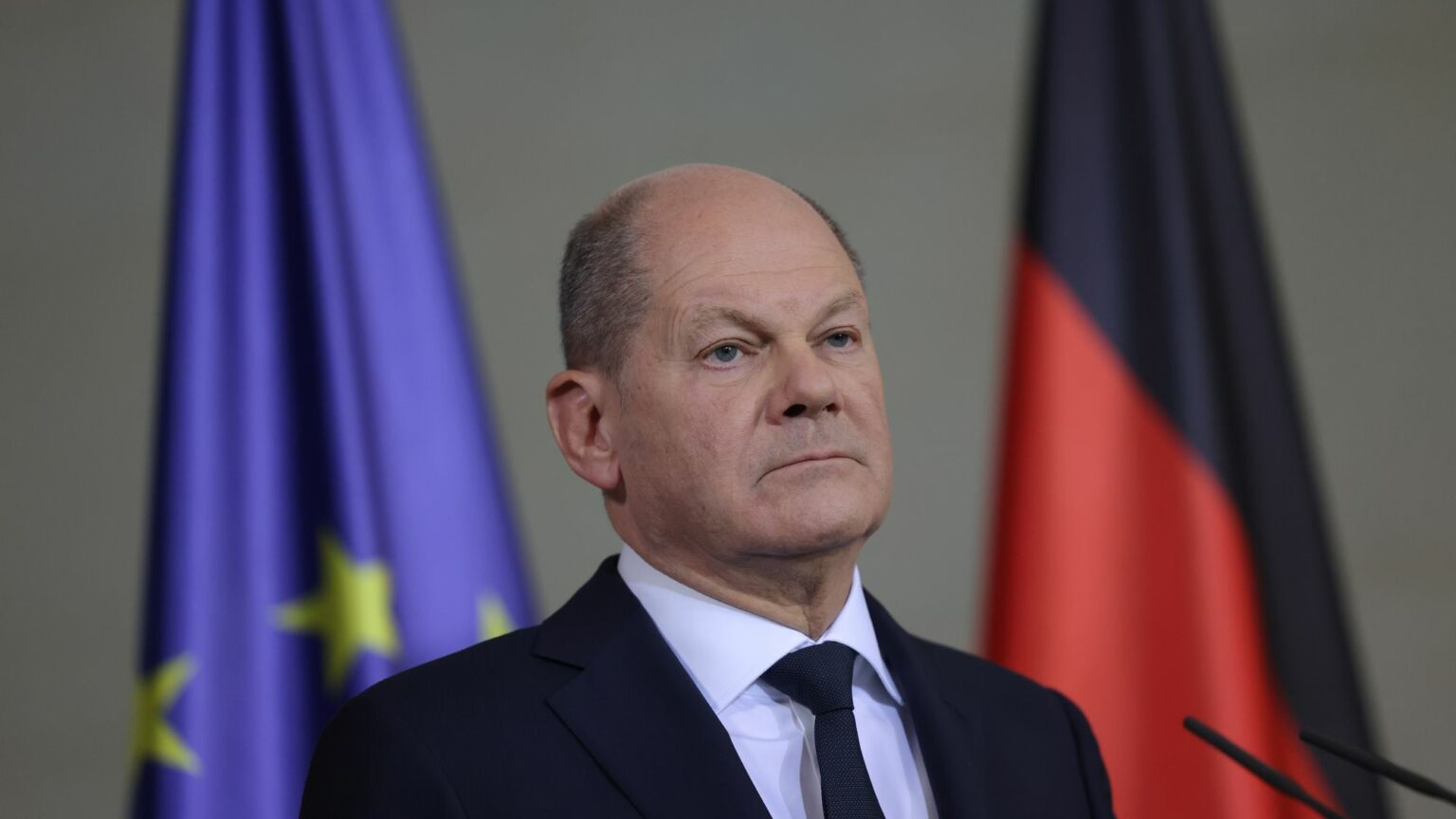
The Greens are pushing for more war, the Lib Dems want more cuts in social spending and Chancellor Olaf Scholz and his Social Democratic Party (SPD) are in the middle adopting the worst proposals from both sides, leading the country, with mathematical precision , in a political-economic and geopolitical crisis.
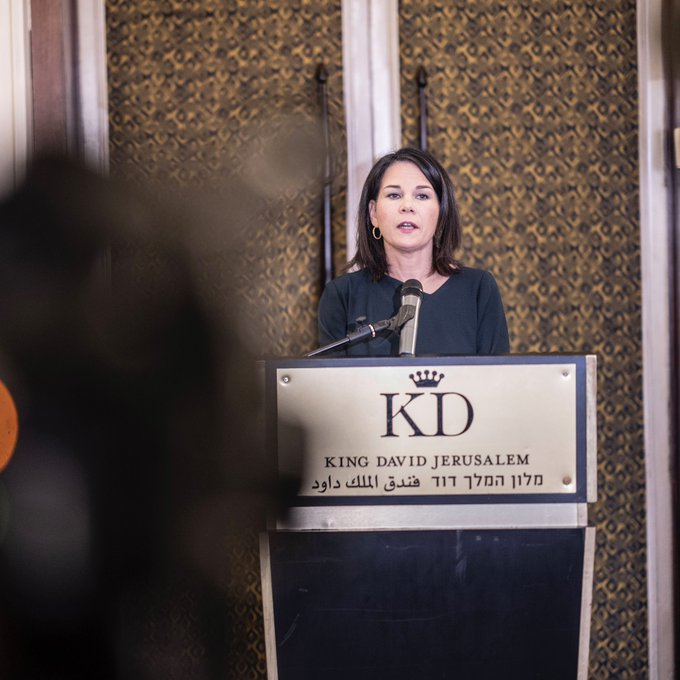
On the international front, led by the unacceptable – who several times shows ignorance in most matters of foreign policy – Annalena Baerbock, Germany’s foreign policy has proven to be indulgently problematic, which has implications for the domestic political arena.
Berlin has been cut off from Russian energy funds. At the same time, in addition to the money and weapons he sends to Ukraine, he wants to increase military spending and become more interventionist. And the energy transition preached by the Greens turned out to be unrealistic, thus a complete failure: Industry is collapsing, consumers are suffering from precision, the country is being militarized, while the trend for austerity is intensifying.
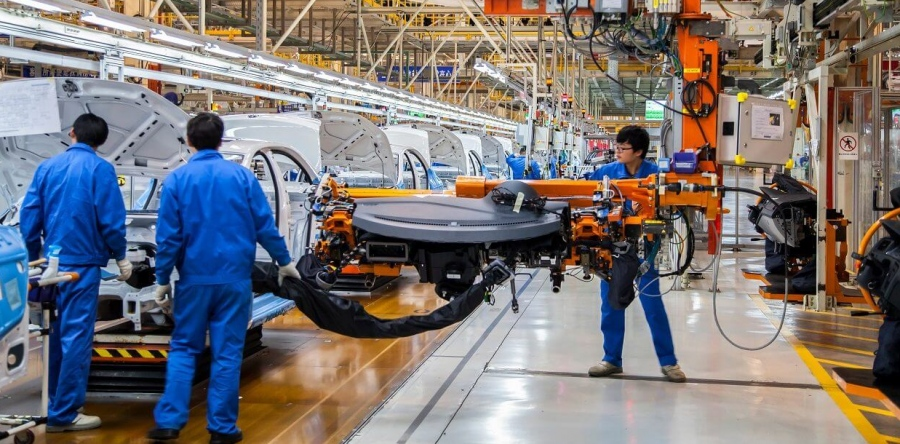
Inflation continues to rise, the economy is shrinking, exports to China are declining, there is constant pressure from the Atlanticists, living standards are falling, political paralysis prevails on most issues except welfare cuts and such. Military spending is rising, as is income inequality, as the country experiences unprecedented deindustrialization.
Recently, the front of the farmers who are protesting across the country in response to the government’s decision to phase out the tax relief on agricultural diesel has also been formed.
Scholz paid tribute to krisenmodus in his New Year’s speech by unraveling a fairy tale that Germany’s supposed crises are just a series of unfortunate events, and not the result of government policy. He concluded with the following: “If we realize this, if we treat each other with respect, then we don’t need to fear the future, then the year 2024 can be a good year for our country, even if some things develop different than desired”.
Scholz’s empty rhetoric is a sign that he knows the country is doomed, yet plans nothing to change its fate.
Will the government collapse?
Although the German Constitution is a guarantee of viability for the current zombie coalition, it is not unlikely that it will collapse.
However, based on the German Constitution, a high bar has been set for early elections. Only the chancellor has the power to call for a vote of confidence in parliament and only the president can call new elections. This is why confidence votes in Germany are rare (only five) and are usually tactical moves by chancellors seeking to strengthen their political position. The only time a chancellor was unwittingly removed was in 1982, when the FDP abandoned its alliance with Chancellor Helmut Schmidt’s Social Democratic Party (SPD), forcing him to seek a vote of confidence and be defeated.
The Scholz government recently barely passed a hurdle that could see it fall. Members of the supposedly fiscally conservative FDP voted to keep their party in the coalition, in an intra-party vote on the matter. However, only 52% were in favor of remaining.
His participation in the Scholz government was disastrous for the FDP, which lost its footing in German society (popularity of just 5% from 11.5%). If he loses the remaining 5%, he is out of the Bundestag – which is why he focuses on government spending. This will mean even more friction with the other two coalition parties.
Will Chancellor Olaf Scholz resign?
Germany’s most popular politician, Defense Minister Boris Pistorius, who is also from the SPD, is reportedly being anointed to replace Scholz. According to opinion polls he enjoys support from 55% of SPD voters, 58% of Green voters and 48% of FDP voters, but also 56% of voters from the conservative opposition CDU/CSU coalition.
Public support for Pistorius is a fact despite the problems in the Army. Pistorius hailed the relocation of a brigade of soldiers to Lithuania as a “historic moment”. It quickly became apparent, however, that Germany was not just undermanned, but faced with a host of shortages: from artillery shells to tents – a problem that would be exacerbated by sending an equipped brigade overseas.
Pistorius is a fan of the Swedish model of military service, which he wants to see implemented in Germany. The specific model includes military service for both young men and women respectively.
Germany’s second most popular politician shares the same line of thinking as Pistorius. Foreign Minister Annelena Baerbock has long advocated a more interventionist approach to Berlin’s foreign policy. Of all Baerbock’s misguided statements, her attempts to dress up the horrors of war with feminist empowerment may top the list.
She devoted an entire speech to this last year: “Because ‘if women are not safe, then no one is safe.’ This is what a Ukrainian woman told me as we were near the front line in eastern Ukraine – before February 24, 2022.”
However, the popularity of Pistorius and Baerbock is confusing because the public opposes their positions. According to a survey conducted by the non-profit Körber Foundation in September, 54% of respondents said Germany should be more restrained when it comes to international crises. Only 38% wanted more involvement — the lowest since surveys began in 2017.
Furthermore, a whopping 71% of respondents were against Germany taking a leading military role in Europe. It seems the Germans want one thing above all else: quiet. Pistorius and Baerbock promise the opposite, as does the third most popular politician, opposition leader Friedrich Merz, president of the center-right Christian Democratic Union (CDU), which maintains a strong lead in opinion polls:
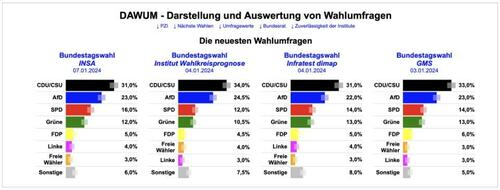
About one in three voters would cast their vote for any of the three parties currently in power. A CDU-led government could be even worse than the current coalition. They want to continue arming Ukrainians to be sent to the meat grinder, and Merz, a former lawyer who has sat on several corporate boards, including BlackRock Germany, would probably easily decide in favor of supporting Kiev.
Merz has ruled out any kind of cooperation with the Alternative for Germany (AfD), but that position may change. In September, the Christian Democrats and Liberal Democrats needed votes to pass a crucial bill. They turned to the AfD. Together they managed to push for a tax break in the Thuringian parliament against the wishes of the left coalition.
CDU General Secretary Carsten Linnemann says his party remains opposed to forming a coalition with the AfD. The AfD is an ethno-nationalist party with a neo-Nazi presence that says it wants to pursue a “Germany First” policy.
And the narrative about their own Germany may not include the millions of immigrants in the country. Among those counted as AfD supporters, people with neo-Nazi attitudes make up around 13%. Those with far-right authoritarian attitudes account for 43%, which means that 44% of those who express support for the party do so without general identification with far-right politics. Apparently the Germans want to show their disapproval of the current political status quo.
AfD factor
Support for the AfD, which is strongest in East Germany, can be traced mainly to three factors:
- In the neoliberal “great transformation”, which massively changed the East German economy, increasing anxiety about the economic outlook.
- In the continued marginalization of East Germans, who feel they have not been fully integrated after reunification and resent liberal immigration policies.
- The deep dissatisfaction with the functioning of the political system.
The state, instead of confronting the AfD with real policies, suppresses it by boosting its popularity. In early December, Germany’s intelligence services labeled the AfD a “threat to democracy.” But voters refuse to get the message.
In a survey conducted from December 18 to January 1 by the public opinion research institute Civey and the Saxon newspaper Sächsische Zeitung, it appears that the AfD is steadily increasing its popularity, reaching 37% against the CDU’s 33%.
German elites likely believe that banning the AfD, which will effectively deprive a quarter of the population of choosing the party of their choice, will bring stabilization and allow current policies to continue, but it is just as likely to lead to an accelerated collapse and Weimar-style levels of chaos.
And yet such a move would fit perfectly with the default response in Germany (as well as the entire West today), which is to denigrate the voter as an idiot, a racist, a fascist.
Look at the farmers’ protests happening right now across Germany. Instead of responding to their grievances, the government’s response has largely been to smear them as racists or fascists.
The Greens’ finance minister, Robert Habeck, said of the protests: “Guys with coup fantasies are circulating, extremist groups are being formed with nationalist symbols.” The attempt to discredit the farmers is based on the fact that the AfD supports the protests. However, one thing is certain: Austerity-driven recessions reinforce distrust in the political environment.
Hope from the Left?
On Monday, Sahra Wagenknecht presented her political party. The “Sarah Wagenknecht (BSW) Alliance — Reason and Justice” focuses on working class issues.
- Wagenknecht is a vocal critic of the federal government’s Ukraine policy and energy sanctions against Russia. He is in favor of importing cheap natural gas and against overly strict climate protection policies. He also supports limiting immigration.
- She has repeatedly characterized the Greens as the most dangerous party.
- Furthermore, a Bild am Sonntag poll shows that 27% of citizens in Germany would consider voting for Wagenknecht’s party.
- Should BSW prove to be popular, Wagenknefcht may be more discredited than it already is.
- The party is already under fire because out of about €1.1 million in contributions, €75 came from Russia (compared to €7,086 from the US).
- Wagenknefcht also has critics on the Left.
The fact that both the AfD and Wagenknefcht continue to be attacked as Putin apologists suggests that the krisenmodus will hit red. Of course, the easiest way for Germany to recover is to do the unthinkable: get back together with Russia.