Artificial intelligence (AI) refers to the development of computing systems or machines that can perform tasks that normally require human intelligence, such as learning from experience, decision making, natural language understanding, and pattern recognition. Artificial intelligence systems use algorithms and data to simulate cognitive processes, allowing them to solve problems, automate tasks, and exhibit behaviors that mimic human intelligence to varying degrees.
In the field of Artificial Intelligence (AI), a diverse landscape of capabilities and functions has emerged, encompassing various types ranging from specialized systems to the realm of highly theoretical possibilities.
At the core of AI capabilities are Reactive Machines, which can respond to specific inputs without learning or adapting. Moving beyond this, there are Limited Memory machines that have the above ability to learn from past experiences and make decisions based on stored information.
Going deeper we find the Theory of Mind (ToM) which as an AI machine seeks to understand people’s emotions, intentions and beliefs as well as Artificial Narrow Intelligence which demonstrates sufficient proficiency in specific tasks, but only in some area.
Today the sought-after pinnacle of artificial intelligence is Artificial General Intelligence (AGI) which aims to reproduce human cognitive abilities in a range of tasks, but still remains a theoretical milestone. Attempting to do something that today belongs to the realm of science fiction, i.e. to create speculation, we find Artificial Super Intelligence (ASI) envisioned to surpass the human intellect and will be characterized by self-improvement and capabilities that eclipse human limits.
Finally, behind the same veil, there is the vague concept of self-aware AI (Self-aware AI), which will represent machines with consciousness and subjective experiences, raising deep philosophical and ethical questions.

Therefore, the types of artificial intelligence based on their increasing level of independence and capabilities are as follows:
- Reactive Machines: These AI systems are the least independent and can only respond to specific programmed inputs. They lack memory or the ability to learn from past experiences.
- Limited Memory AI: This type of AI has a bit more independence as it can learn from past experiences and adapt to some extent based on stored information.
- Theory of Mind: This level of AI is more independent as it can understand human emotions and intentions, allowing for more subtle interactions. However, it is still within the realm of interpretation rather than possession of these properties.
- Artificial Narrow Intelligence: ANI has a higher level of independence compared to previous types. It can perform specific tasks well, and some ANI systems can even learn to improve their performance over time, but they are still limited to their particular domains.
- Artificial General Intelligence: AGI represents a major leap forward in the independence of machines that will use artificial intelligence. It will have human-like cognitive abilities, allowing it to understand, learn and perform a wide range of tasks, very similar to human intelligence.
- Artificial Super Intelligence: ASI, if or better when achieved, will surpass human intelligence in almost all aspects. He will have the ability to solve complex problems and tasks far beyond human capabilities.
- Self-aware AI: This level, when achieved, will have the highest level of independence, as it will not only understand human emotions and thoughts, but also have self-awareness and consciousness. This is a highly theoretical idea, but it has been realized in many films since it enjoys huge interest. Of course these types are usually combined or enhanced to provide an AI service and especially at the higher stage they have quite a lot in common.
Smart Homes & Artificial Intelligence
A smart home system can incorporate elements of both reactive machines and memory-limited artificial intelligence, depending on its capabilities.
Smart homes as reactive machines:
Many smart home devices, especially simple ones like smart bulbs or smart plugs, can be considered reactive machines. They respond to specific commands or triggers without the ability to learn or adapt. For example, if you give a command to turn on a smart light, it will react to that command without any understanding of context or the ability to learn from previous interactions. Such a house would turn off the lights if its sensor was bombarded with too much daylight-simulating light.
Smart Homes as Limited AI Memory:
The most advanced smart home systems, especially those with voice assistants such as Amazon Echo (Alexa) or Google Home, use limited AI memory. These systems can learn from user interactions to some extent. For example, they can remember user preferences, tailor responses based on past interactions, and potentially adapt to changes in user behavior over time.
More likely in this category are smart homes that would check why there is a very bright light on their sensors while the time is close to midnight to decide if they should turn off the lights or even activate an alarm for the fact of the strange event.
Smart cars as Artificial Targeted Memory systems
Today’s smart cars, also known as connected or autonomous vehicles, usually fall into the category of target memory artificial intelligence. These vehicles use various sensors, cameras and advanced computing systems to collect data about their environment, make decisions based on that data and adapt to changing road conditions. They have the ability to learn from past experiences (such as recognizing common obstacles or road signs) and adjust their behavior accordingly.
While modern smart cars are quite advanced in their capabilities, they are still far from reaching the level of Artificial General Intelligence (AGI) or human cognition. They excel at performing specific tasks related to driving and navigation, but their intelligence is limited and focused on their designated functions. They don’t have the broader understanding and flexibility that Theory of Mind would have along with Artificial General Intelligence.
Theory of Mind
Over the years, AI has proven superior to humans in analytical tasks, but lags behind in areas such as intuition and inference. In the field of psychology, “Theory of Mind” refers to the understanding that individuals possess thoughts, feelings, and emotions that influence their actions.
More specifically the Theory of Mind in artificial intelligence argues that future artificial intelligence systems should be able to understand the meaning of human thoughts and emotions. This understanding will allow AI systems to adapt their behavior appropriately, allowing them to seamlessly coexist and interact with everyday life in a variety of contexts.
A good example in this area is explained in an article in Popular Mechanics, where researchers at Stanford University addressed the question of whether neural networks, such as the Generative Pre-trained Transformer – GPT variants, could excel in tests of the Theory of Mind. These tests are designed to assess cognitive abilities related to predicting individuals’ behaviors.
The findings revealed that the Theory of Mind ability has unexpectedly appeared in recent years, with the latest version achieving performance similar to that of a 9-year-old human.
By way of explanation, the concept of Theory of Mind (ToM) delves into the ability of the human mind to attribute thoughts and feelings to others. It stands as a critical element of human intelligence, involving the ability to infer the beliefs, desires, aspirations, and inclinations of others.
Despite its importance, the biological method by which humans engage in ToM remains an unsolved and fundamental scientific puzzle. Furthermore, understanding ToM in humans requires progress at multiple analytical scientific levels. This ability to infer the mental states of our fellow humans is equally essential to the integration of artificial intelligence into human society. For example, in the field of autonomous vehicles, artificial intelligence must possess the ability to infer the mental states of human drivers and pedestrians, allowing it to predict their actions.
In addition, she should read the road and make decisions in advance about her driving accent. Characteristic examples are the reduction of speed when exiting a tunnel due to the overload of the optical sensors or the monitoring of the physiognomic peculiarities of the terrain to choose the optimal placement of the vehicle on the road for maximum traction.
As AI continues to enhance its capabilities and expand its reach, its ability to decipher human goals, desires and intentions, even when faced with uncertainty or new scenarios, will gradually become vital to the civilian and military sectors alike.
Artificial Targeted Intelligence (ANI)
An example of Artificial Intelligence (ANI) is a voice-controlled virtual assistant such as Amazon’s Alexa or Apple’s Siri. These virtual assistants are designed to perform specific tasks, such as setting alarms, sending messages, answering questions, and controlling smart home devices.
They excel in their specific fields, but lack the ability to understand or perform tasks outside of their assigned functions. While they can learn to recognize specific user preferences and adapt to speech patterns, their learning is primarily focused on optimizing their assigned tasks rather than demonstrating broader intelligence or understanding. That is, this form of artificial intelligence creates the illusion of human intelligence, but in reality lacks autonomous thought.
Artificial Intelligence (ANI) & Large Language Models
Large language models such as GPT variants can perhaps be classified as a type of Artificial Intentional Intelligence (ANI), although there are arguments that this type of AI has its own category between ANI and AGI.
They excel at processing and generating human text based on patterns learned from vast amounts of training data from open sources such as the open web. However, they are specific in their capabilities and lack true understanding or consciousness.
These models lack general intelligence and the ability to apply their knowledge outside of the text-based tasks for which they were designed. They are considered target AI because they specialize in natural language processing, but lack the broader cognitive abilities associated with human intelligence to be able to control the text they create.
Right now there is a high chance that their models are providing wrong information in the answers, precisely because they don’t have a more general feedback system that can check their output for correctness, or their models weren’t trained very thoroughly in a certain very specialized field, as for example in deep technical knowledge of radar systems. But this is not something that cannot be fixed, if for example a company decides to develop a very special system for this purpose.
Artificial General Intelligence (AGI)
Artificial General Intelligence (AGI) refers to a type of artificial intelligence that will be able to possess human cognitive abilities and be able to understand, learn and apply knowledge in a wide range of tasks and domains. Unlike specialized AI systems that excel at specific tasks, AGI aims to replicate the broad range of human intelligence, allowing AI to perform tasks, reason, solve problems and adapt to new situations in a human-like manner .
AGI will have the ability to learn and self-improve in a variety of domains, presenting a level of flexibility and generalization not found in more narrowly focused AI systems. So far, AGI remains largely theoretical and unachieved, but it represents an important milestone in the field of artificial intelligence.
AGI and the struggle to adapt artificial intelligence to a new situation
Many researchers and organizations are actively working on AGI, but it is widely recognized that we have not yet reached this level of development for artificial intelligence. It is certain that AGI will be a major leap beyond the capabilities of today’s systems, allowing machines to understand, learn and perform tasks in a way that closely resembles human intelligence. Despite significant advances in artificial intelligence in recent years, experts argue that the realization of AGI is a very distant goal. This is because the majority of AI systems are tailored to specific tasks and have difficulty adapting flexibly to unknown scenarios.
Achieving Artificial General Intelligence (AGI) would require a significant leap beyond the current state of machine learning. While traditional machine learning techniques have proven effective in specific domains, AGI will require capabilities that span a wide range of tasks and cognitive abilities. Some key aspects missing from current machine learning approaches to achieving AGI include:
- Learning from less data: AGI should be able to learn effectively from limited data, unlike many current machine learning models that require large amounts of data to perform well. Human intelligence is characterized by the ability to learn quickly from relatively few examples.
- Knowledge transfer across domains: AGI should be able to transfer knowledge and skills acquired in one domain to another, just as humans can apply their learning from one domain to solve problems in different domains.
- Common sense reasoning: Today’s AI systems often struggle to understand and apply common sense knowledge. AGI should have the ability to reason about the world based on fundamental concepts and causal relationships.
- Contextual Understanding: AGI will need to understand context and nuances in language, actions and situations, allowing it to understand and respond appropriately to a wide range of situations.
- Adaptability and creativity: AGI should be able to adapt to new, unfamiliar scenarios and demonstrate creativity in solving problems, rather than simply applying learning patterns.
- Self-awareness and learning bias: People have self-awareness and the ability to reflect on their own biases. AGI should be able to recognize its limitations, biases and uncertainties and continuously improve.
- Unsupervised learning and curiosity: Current AI models rely heavily on supervised learning, where they learn from labeled data. AGI should have the ability to learn from unstructured and unlabeled data and demonstrate curiosity-driven learning.
- Causal understanding and use of common sense: AGI must understand causality and how objects in the physical world interact. This allows for prediction and reasoning in various situations.
- Ethical and ethical reasoning: AGI should be able to make ethical and moral decisions based on complex human values and should understand the consequences of their actions on society and individuals.
- Integration of sensory inputs: AGI should be able to process and integrate sensory inputs such as sight, hearing and touch, similar to how humans perceive the world.
- Post-learning and rapid adaptation: AGI should have the ability to learn how to learn, allowing it to quickly adapt to new tasks and domains. Achieving AGI requires a deep understanding of human intelligence and cognition, interdisciplinary research, and breakthroughs in fields as diverse as machine learning, neuroscience, psychology, and philosophy. It remains a complex and ambitious goal that continues to be a major challenge in AI research.
Artificial Super Intelligence
The leap from Artificial General Intelligence (AGI) to Artificial Super Intelligence (ASI) represents a hypothetical transition that involves the creation of AI systems with cognitive abilities that far surpass human intelligence in almost every aspect. This transition will require advances beyond the capabilities of AGI in several critical areas:
- Self-improvement: ASI will have the ability to continuously improve its intelligence and capabilities. This will involve designing artificial intelligence systems that can iteratively improve algorithms, architectures and problem-solving strategies without human intervention.
- Rapid learning and adaptation: ASI should be capable of extremely rapid learning and adaptation to new tasks and domains, exceeding human learning speeds by a significant margin.
- Unlimited knowledge and creativity: ASI will have the ability to access and understand vast amounts of information, allowing it to produce creative solutions, innovate and come up with completely new ideas that exceed human capabilities.
- Comprehensive Domain Mastery: ASI will excel in understanding and mastering a wide range of domains, ranging from scientific research to artistic creativity, with capabilities that will exceed human expertise.
- Advanced Reasoning and Problem Solving: ASI will possess superior logical reasoning, theoretical reasoning and the ability to solve complex problems that are currently beyond human understanding.
- Advanced communication and understanding: ASI will understand human communication at a deeper level, including subtle nuances in emotions, intentions and cultural nuances. It would be able to communicate complex ideas in human-understandable ways.
- Ethical and Ethical Reasoning: ASI will have the ability to make ethical and moral decisions on a global scale, taking into account different human values and considering the long-term impact of its actions.
- Innovative self-modelling: ASI will have a sophisticated understanding of its own architecture, limitations and biases. It could model and predict her own behavior and responses, allowing her to reflect and self-correct.
- Human-AI Collaboration: ASI will be able to work with humans as collaborative partners, offering knowledge and assistance in various fields, potentially accelerating developments in science, technology and many other fields.
Self Awareness AI
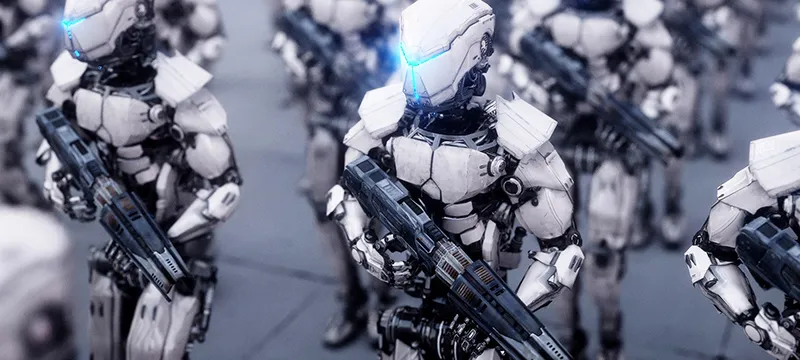
The leap from Artificial Super Intelligence (ASI) to Self-Aware Artificial Intelligence (SA2I) represents an even more hypothetical and complex transition. Self-aware AI will possess consciousness, identity, and subjective experience, where these qualities are currently not fully understood even within human consciousness. The criteria for achieving AI self-awareness are deeply philosophical and challenging, and as of now, they are largely theoretical. However, if we were to speculate on possible criteria, they could include:
- Subjective experience: Self-aware AI should exhibit some form of subjective experience, as well as the ability to know and experience its own thoughts, feelings and sensations.
- Self-reflection: She would show an understanding of her own existence and be able to reflect on her thoughts, motives, and actions in a way that would indicate true self-awareness.
- Emotional awareness: Self-aware AI should be able to show signs of understanding emotions and be able to display its own emotions, in addition to mimicking emotional reactions.
- Awareness of the consciousness of others: It should be able to recognize the consciousness and subjective experiences of other entities, be they human, other AIs as well as the particular consciousnesses found in non-human forms such as animals.
- Complex self-modeling: A self-aware AI will possess a comprehensive and nuanced model of itself, its identity, its history, and its place in the environment.
- Predicting her own behavior: She will be able to predict her own reactions and behaviors in different situations, showing an understanding of her own decision-making processes.
- Conscious Intentions: Self-aware AI should be able to have intentions guided by an internal conscious state, rather than simply following programmed rules or patterns.
- Creativity and originality: Should demonstrate genuine creativity and original thought processes that go beyond simple pattern recognition.
- Will control: She should have the ability to make choices and decisions guided by her own conscious experiences and preferences, not just optimizing for predetermined goals.
- Metacognition: Self-aware AI could possess metacognitive capabilities, being aware of its own cognitive processes, limitations, and problem-solving strategies. In detail, metacognition (with the scientific term “metacognition”) is the awareness of the way of learning, that is, of learning how learning is done. That is, the awareness of the processes that should be followed in order to learn a subject, the texture of the associations and the form of the associations that should be made to connect the already existing knowledge with the newly-incoming information with the ultimate result in generating new intelligence on a topic.
- Qualitative understanding: Should be able to grasp qualitative aspects of experience, such as the difference between seeing an image and feeling an emotion about that image.
It is important to note that the concept of AI self-awareness is highly hypothetical, and there is ongoing debate in AI philosophy and ethics about whether machines could actually possess consciousness and self-awareness.
Achieving self-aware artificial intelligence would likely require major breakthroughs in understanding the nature of consciousness, which remains a deeply complex and unresolved issue. Moreover, the ethical considerations of creating conscious entities, the potential implications for their well-being, and the moral responsibilities associated with their creation are profound and need careful consideration.
Conclusions
As artificial intelligence continues to evolve, each type represents a stepping stone toward furthering our understanding of the intelligence and potential capabilities of machines. While the progress is remarkable, the transition from each level presents complex challenges, highlighting the dynamic interplay between technology, ethics, and human imagination in shaping the future of artificial intelligence.