While the climate crisis is galloping and the international community is spent in ineffective final conferences to deal with it, a number of scientific initiatives around the world are creating arks to protect biodiversity from cataclysmic events.
With the mass extinction that is developing in the so-called anthropocene era, eliminating millions of species of animals, plants and insects as a result of the industrialization of agriculture, deforestation, pollution of ecosystems, climate crisis, a systematic scientific effort to collect and secure seeds goes hand in hand , cells, eggs and data that would allow the continuation of life in the event of a global catastrophe. The backup of the planet is stored in chests scattered around the world.
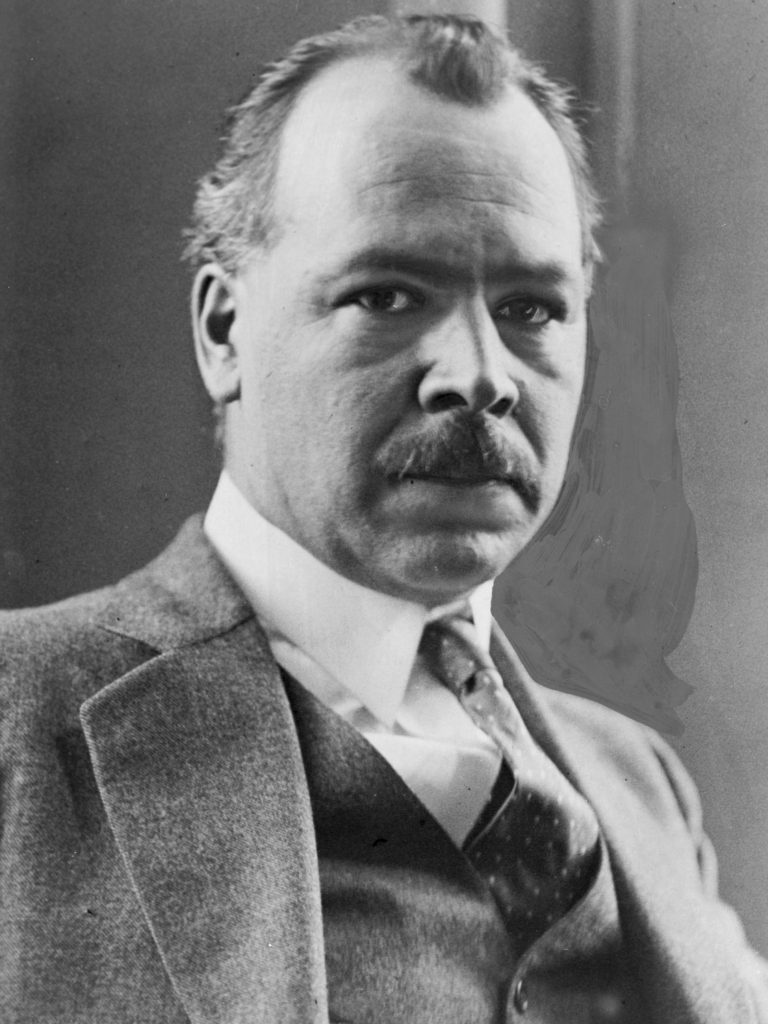
The idea of creating a bank for the protection of natural reproductive material belongs to the distinguished Russian agronomist and geneticist Nikolai Vavilov, who in the 1920s, after extensive exploratory expeditions to various continents, gathered in Leningrad the largest collection of seeds of his time. A victim of the Stalinist purges, Vavilov died in prison in 1943, but his work was not lost: from his own stock crops were restored in the vast lands of the Soviet Union that had been destroyed during the Second World War. The decades of the Cold War that followed were spent in the shadow of threatened nuclear holocaust. Consequently, even before the realization of planetary warming, the threat of the extinction of life on Earth had contributed to the development of biodiversity conservation initiatives, which in the process multiplied after the gradual confirmation of the catalytic impact of human activity on the active its decline: according to a WWF report from 2022 (“WWF’s Living Planet Report reveals a devastating 69% drop in wildlife populations on average in less than a lifetime“), the population of 5,230 vertebrates recorded since 1970 has decreased in this time period by 69%.
Animals, plants, microbes and… ancient ice
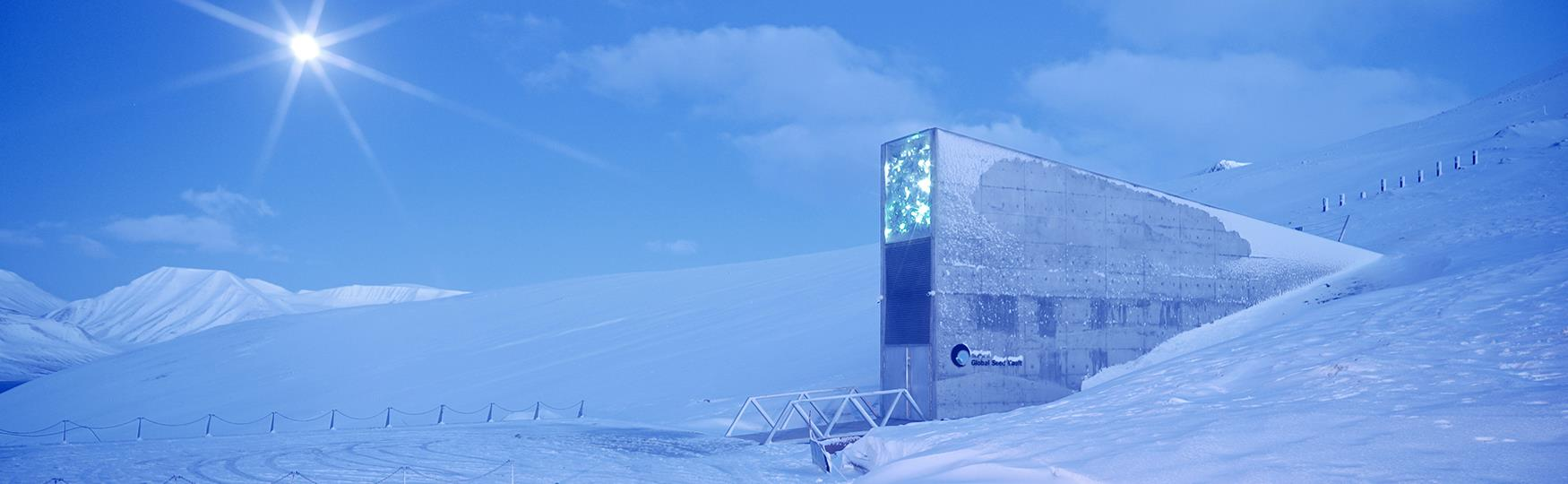
This sense of urgency distinguishes the arks for the preservation of flora and fauna found today in 1,700 locations on the planet. The best known and most iconic of these is the Svalbard Global Seed Vault located on the Norwegian island of Spitsbergen. A futuristic cement volume, set in a glacial landscape, is reminiscent of an action video game track or a sci-fi movie set. The choice of site is ideal for such an outpost: dry environment of low temperatures, geologically stable, remote from urban centers.
In its cavernous basements, at -20 degrees Celsius, 2.25 billion seeds are stored representing 5,000 of the most essential edible species, such as cereals, beans and 160,000 varieties of wheat and rice. Similar is the operation of the Millennium Seed Bank in the much more welcoming weather of Wakehurst, Sussex in the United Kingdom. Resistant to bombing, flooding and radiation, its own rooms house 2.5 billion seeds from 40,000 plant species worldwide, including an almost complete catalog of Britain’s native plant life.

Genetic material of 5,500 endangered animal species, from bees to the North African oryx, is deposited in the Frozen Ark, a joint project of the Zoological Society of London, the Natural History Museum and the University of Nottingham. Similarly, San Diego’s Frozen Zoo in California keeps specimens of 1,000 different species in tanks of liquid nitrogen at minus 195 degrees.
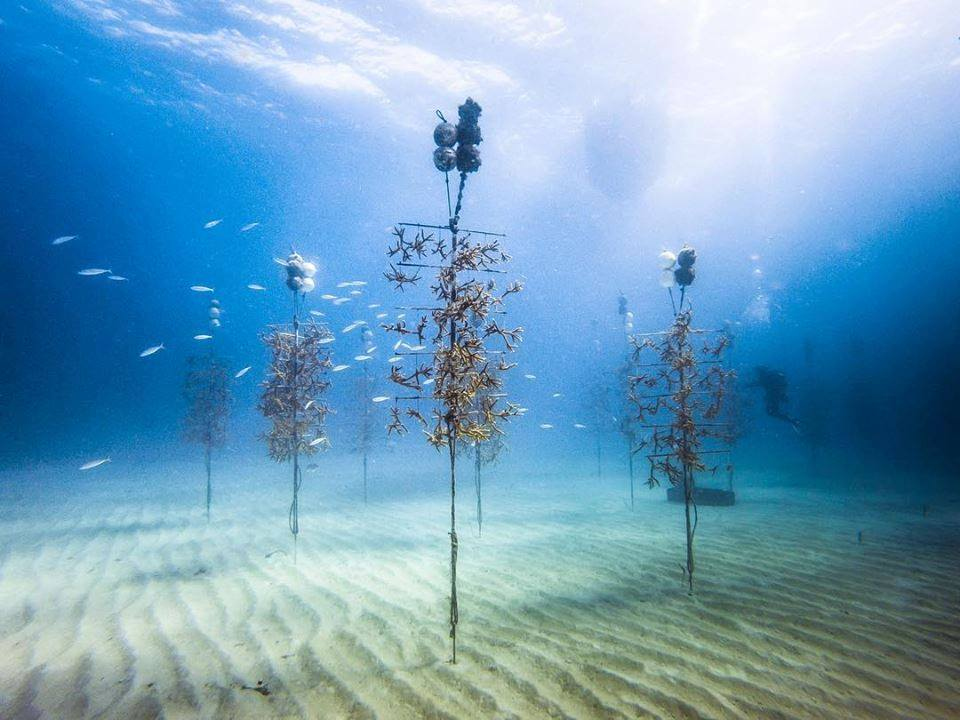
The climate history of the entire planet, as recorded in frozen air bubbles, aspires to be mapped by the US National Ice Core Laboratory, which freezes at -36 degrees Celsius ice up to 417,000 years old, while it is already in search of a suitable site to mine 1.5 million year old material. The American Smithsonian Institution’s National Zoo in Washington preserves 16,000 samples of breast milk from 180 primary mammals, the Coral Restoration Foundation in Florida cultivates 400 “trees” including five endangered species, the Amphibian Ark Ark) funds 180 laboratories in 32 countries in order to create colonies of endangered animals with the prospect of one day returning to their natural environment. Even micro-organisms are taken care of: the Microbiota Vault houses bacteria, fungi and viruses, cryogenically preserving human excreta.
From the Εarth to the Moon
Potentially dangerous accidents occur even in today’s ideal operating conditions. In October 2016, part of the Svalbard Global Seed Vault was flooded during a storm, although without endangering the stock. But in April 2017, a broken freezer at the University of Alberta in Canada turned 150 meters of ancient ice into a lake.
The puzzle of shielding the arks is not easy. Climate change threatens Spitsbergen’s glaciers. Banks of genetic material have been destroyed in the past during the recent wars in Iraq and Afghanistan. Material fatigue, human or manufacturing error could cause irreparable losses. To avoid some of these eventualities, in fact, scientists at the University of Arizona had proposed in 2021 the creation of a “lunar ark” – the construction of a cryogenic facility in volcanic channels under the surface of the moon, where seeds and genetic material would be stored . Just as copying to an external hard drive protects our files from an event that would erase them from the internal memory of a computer, tablet or smartphone, the lunar shelter would ensure the survival of biodiversity in the event of a global cataclysmic event – for example, fall of a meteorite.
The price tag, however, seems prohibitive and the performance disproportionate. For its completion, it is estimated that 250 missions will be required, which will save only 50 specimens per species. Noah, of course, got by with only two of each, you might say, but the suggested number remains too small by the standards of today’s arks to be considered sufficient.
Does one not detect a tinge of pessimism in the background of all this activity? A relinquishment of the certainty of the implementation of the script operator? Avoiding insinuations about our species’ reliability in making optimal decisions, scientists deny it. However, cataclysmic events, against which we must be prepared, can radically transform the Earth. These boxes provide a perspective on the future. The genuine (and laudable) scientific attitude is indeed one of objectivity.
A mass extinction doesn’t just wipe out the weakest species, it also takes the strongest ones with it – say it with a dinosaur. And as much as man is entitled to be considered a highly successful species, especially given the limitations of his size, nothing guarantees that we will win the first lottery ticket forever. It is good, therefore, to create storehouses and shelters and arks, but even better would be to exercise the famous quality that supposedly distinguishes us qualitatively from the rest of the animal kingdom, so that we do not need them.