




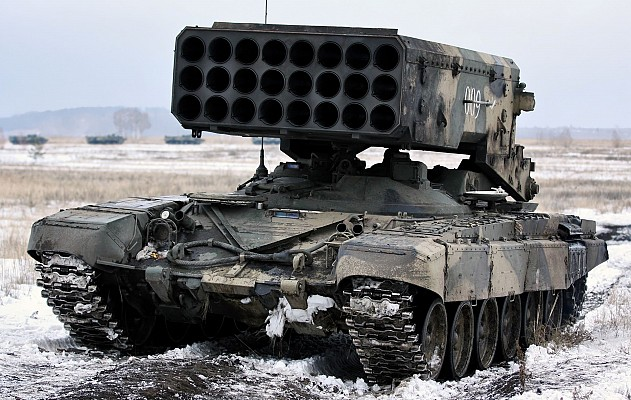
The TOS-1A Solntsepek is the world’s only thermobaric weapon system. Russia is already arming drones with thermobaric bombs that are 10 times more destructive, while for the first time in military history it has used remote control to evacuate the wounded or deliver ammunition…
Russia puts thermobaric bombs on suicide drones
Some Ukrainian officials have claimed that Russia is equipping its Geran-2 or Shahed-136 kamikaze aircraft with a thermobaric warhead at a time when drone attacks in Ukraine are on the rise, a development that portends a difficult winter.
A photo appeared on social media on December 3 with a message suggesting that the Ukrainians believed Russia had developed a 40kg thermobaric warhead for the Geran-2 or Shahed-136 kamikaze drone, making it similar to the TOS-1A flamethrower. However, if the use of a thermobaric bomb by Geran-2 drones is finally confirmed, it could pose a huge threat to the Ukrainians due to the lethality of the bomb.
By having two different explosive charges, thermobaric weapons rely primarily on fuel, not oxygen, as with other bombs. This allows them to carry more energy and be more destructive in battlefield operations for blowing up warehouses, tunnels. These bombs could blow up residential buildings and could be detrimental to the safety of citizens.
The projectile can be dropped from an airplane or launched like a rocket. On impact, the main explosive charge opens the canister, dispersing the fuel mixture like a cloud. This cloud can pass through partially sealed defenses or openings in buildings. This dust cloud is then destroyed by a second explosion, which also creates a huge wave, a firestorm, and a vacuum that sucks up all the oxygen in the area.
Russia continues to attack Ukraine with swarms of Shahed-136 suicide drones
Ukraine reported the downing of several Shahed-136 drones in the western and southern parts of the country. In a recent development, one of these drones was also found with a Ukrainian SIM card, suggesting that it was used as an attack drone.
If these attacks have already hampered Ukrainian forces, adding a thermobaric drone could cause double trouble, as evidenced by Russia’s deployment and use of the TOS-1A Multiple Launch System wreaking havoc. Since the beginning of the Ukrainian conflict, Russia has been using thermobaric missile launchers in Ukraine.
On March 3, the Russian Ministry of Defense announced that their airborne units were now equipped with the formidable TOS-1A Solntsepek. The terror unleashed by this weapon system, which has no analogues in the world, according to Russia, has also motivated Ukrainian troops to destroy this system.
Ukrainian drones were specifically looking for TOS-1A Solntsepek as targets
In addition, the Russian Ministry of Defense has emphasized that thermobaric bombs have a devastating impact, including the destruction of infrastructure and the possibility of significant damage to internal organs and burns, ultimately leading to the death of those exposed. In addition, Ukraine fears that the coming winter may bring another drone attack due to Russia’s concerted efforts to boost domestic drone production.
Satellite images were released earlier this month that showed construction is underway on a Russian complex that will mass-produce kamikaze drones designed in Iran.
In what is likely to be the first use of an unmanned ground vehicle (UGV) in warfare, a Russian army unit in south-central Ukraine has used a tracked, remote-controlled platform for tactical resupply and casualty evacuation purposes. Even more interesting was the use of not only the UGV but also an integrated Electronic Warfare (EW) system that prevented Ukrainian kamikaze drones from destroying it.
The UGV used in the operation was a self-developed invention of the local military formation.
In late February 2023, two improvised armed UGVs intended to occupy Ukrainian positions were presented. UGV also provides additional supplies to the front line. The UGV transports a wounded soldier with his left leg injured, demonstrating a reliable ability to move over rough terrain.
The soldiers “used remote-controlled tracking platforms designed and built by the militants to deliver ammunition, food and water to the most dangerous areas.” It can be assumed that the UGV has been in operation for a few months and has been commissioned after basic testing.

