




In almost every company, there is an employee who believes their workplace is “toxic”. The term has become a catch-all term to describe all kinds of workplace issues: major problems such as unethical, abusive, discriminatory and even illegal behavior – but also day-to-day issues such as cultures of long hours and burnout, or simple grievances with standard policies of the workplace.
Recent high-profile reports of workplace toxicity have highlighted the word’s murky, unclear definition.
In August, pop star Lizzo was named in a lawsuit accusing her of creating a hostile work environment through “sexual, religious and racial harassment, disability discrimination, assault and false imprisonment.” In September, Rolling Stone described US late-night talk show The Tonight Show as a “toxic work environment”, following employee complaints of a high-pressure atmosphere, erratic behavior from host Jimmy Fallon and bullying by senior management.

A whole new set of problems
When “toxicity” was inflated to mean so much, it then came to mean so little. Experts say overuse and misrepresentation of the word can minimize or even mask real problems in the workplace. And that can create a whole new set of problems.
The term “toxic” has a violent history. In ancient times, Scythian archers dipped their arrowheads in a mixture of blood, dung and snake venom. The Greeks called this “toxic pharmakon”, which loosely translates to “poisoned arrows”. Borrowed from Latin and French, “toxic” was first recorded in English in the 17th century to describe poison.
In the industrial age, “toxic” was attributed to workplaces with real toxins: Hazardous materials and carcinogenic chemicals. The phrase “toxic environment” was originally meant literally. According to the American Historical Association, the metaphor first appeared in nursing: A 1989 leadership guide defined “toxic workplaces” as those characterized by role conflicts, unclear goals and values, aggressive communication, and scenarios in which staff are used as a material resource.
Move on to behavior
Over the following decades, “toxic behavior” slowly became ubiquitous: It was Oxford Dictionaries’ word of the year in 2018, following the #MeToo movement and the prominence of “toxic masculinity” and harmful work environments.
In later years, however, the term “toxic” was also used to describe everyday annoyances in the workplace, says Thomas Erikson, a Stockholm-based behavioral expert and author of Surrounded By Bad Bosses. “The word has gone into hyperinflation, often used to dramatically describe situations that aren’t actually ‘poisonous’, but rather negative experiences with a lousy manager. ‘Toxic’ has been used so much that I don’t react when I see it anymore.”
Contrasting the growing prevalence of toxic workplaces, Erikson blames social media for popularizing the term and exaggerating it.
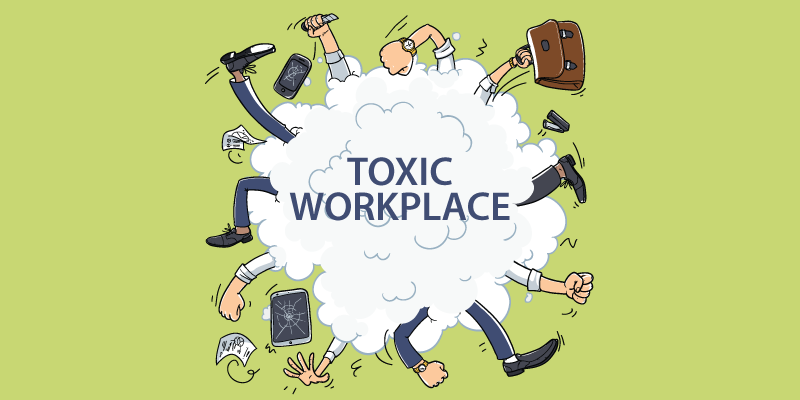
While technology creates more opportunities to uncover truly harmful work environments, it can also encourage workers to share workplace grievances under a collective, self-reinforcing term, he says. “Exaggerations are often intended to attract attention. And everything spreads faster now: Search ‘#toxicworkplace’, and you’ll understand.”
Social media has meant that more and more workers can communicate about the working conditions they no longer accept – even those that aren’t necessarily toxic. And tolerance for perceived problematic workplaces has shrunk since the pandemic.
Covering bigger problems
The headlines continue to feature chaotic, charged work atmospheres and unpredictable behavior from star employees as well as environments in which bosses face legal claims for sexual harassment of employees. While the workers in both cases made separate, specific complaints about their workplaces, their broader reports fit within the broader slogan of “toxic.”
Squeezing all workplace issues into the same ‘toxic’ bucket means that truly harmful environments may not be taken as seriously. The personality conflicts that workers often label as “toxic” aren’t really – and in some cases, these conflicts are important to success, especially in competitive industries. Innovative, flexible workplaces often come with compromises.
A better definition?
The catch-all term “toxic” can be a crutch for employees, who may find it easier to resort to a vague label than to have tough conversations with their boss.
The top five characteristics of toxic work cultures—the terms that had the greatest negative impact—were lack of respect, non-inclusive participation, unethical behavior, yelling, and abusive behavior.
Based on the data, the term “toxic” should be reserved for egregious behaviors that would normally be unacceptable in or outside the workplace, such as dishonesty and discrimination, which may violate the law.
The necessary superiority
People have a basic set of expectations when they arrive at work: To be respected and not excluded because of a characteristic unrelated to their ability. When this is violated, it causes an extremely strong negative reaction – it breaks the psychological contract of work.
While the bar for calling a workplace “toxic” should be high, a lot of it comes down to trusting our gut. In theory and in practice, it is one thing to deal with the usual bureaucracy in the workplace and another to be mistreated, belittled and disrespected in front of your colleagues.


