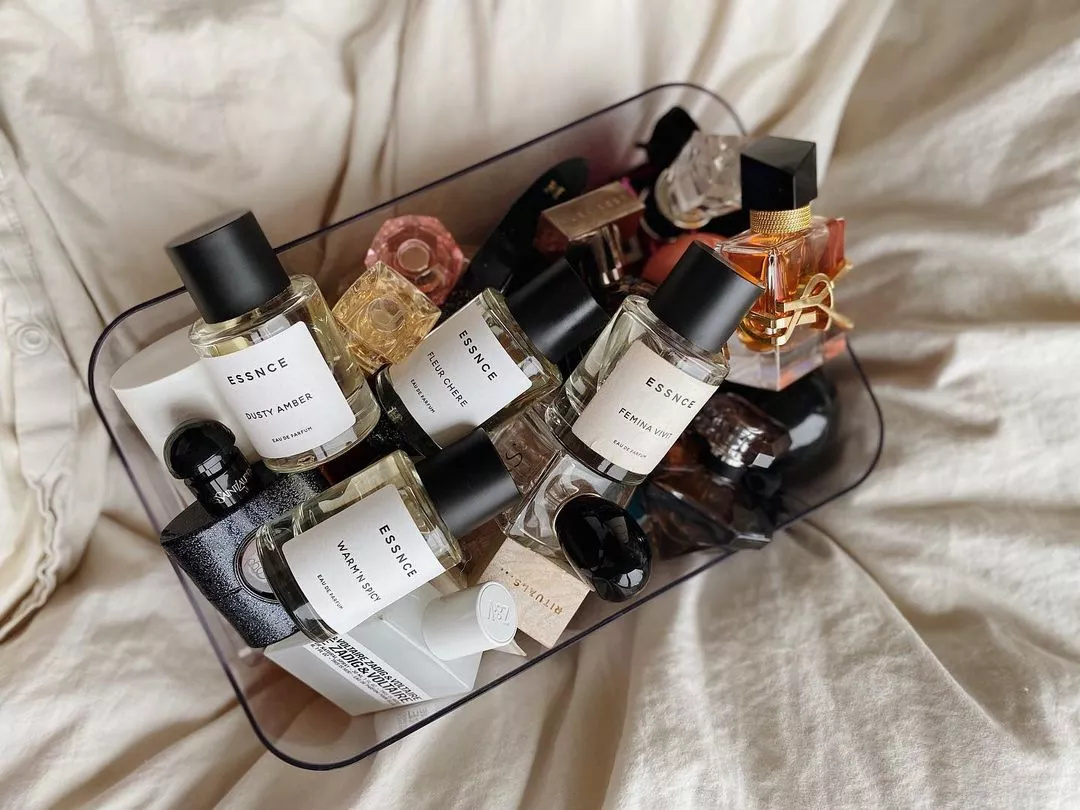
Perfume imitations, or those designed to smell like high-end perfumes from well-known houses, are gaining more and more popularity.
I guess expensive perfumes don’t come in small bottles anymore. Sauvage Dior, La Vie Est Belle, Paco Rabanne Fame, Tom Ford, Burberry Goddess, Flora by Gucci and many other well-known perfumes that cost from 85 to 200 euros for 50 or 100 ml are now found in the same small bottles, but for 9 and 15 euros. That kind of changes the accuracy and capacity data, don’t you think?
This huge fake perfume industry has developed in Greece and other European countries, such as Italy, Cyprus, England, Spain, etc. In the last five years, perfume shops of this type have become particularly popular, while their imitation products can be found from our neighborhood pharmacy to small country grocery stores. They have created their own industry, business models and a new wellness culture that comes with it.
Their buying public adores them, since they are attracted by the price of the products and now the trend geographically escapes from Europe and travels to other continents as well. Proof is the thousands of Tik Tok videos with imitation perfumes and their comparisons with the original ones. Already the hashtag #dupes and #dupe (i.e. imitations) have 3.2 and 5.6 billion views on the app, even if they are not exclusively about perfumes.
Counterfeit…how do they do it and how did they start?
Perfume copycats are not a new practice. Although in the early days of the perfume industry, perfumers used natural ingredients to create them, as the industry grew and demand increased, so did the cost of the raw materials required to produce the perfumes. This led to the development of synthetic fragrances that were cheaper to produce.
But the popularity of perfume replicas really took off in the 1990s, with the rise of celebrity-owned perfumes. Many of these perfumes were expensive and out of reach for the average income person, resulting in the development of copycat fragrances that were inspired by these celebrity products, but cost much less. With the advent of the internet of course this phenomenon has been magnified, as it has become easier for smaller perfume companies to promote and sell their dupes, gradually skyrocketing their popularity. Many, of course, wonder how it is possible to copy a luxurious perfume and have the copy so closely resemble the original.
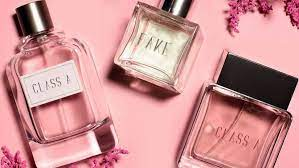
Today, there is a (conspiracy?) theory that many companies, for economic purposes, “leak” the perfume formula to a few suppliers, who then distribute it around the world much cheaper. In this way, they actually manage to sell a lot of perfumes, instead of a luxury product that only a few will buy, and promote their brand in a slightly special way. At the same time, many believe that perfumes are copied through an advanced technique called Gas chromatography, which can show the exact concentration of each aromatic substance used in a perfume.
Counterfeit industry
Perfumes are an important link in the economy and the cosmetics industry, recording, according to the International Perfume Association, sales of 7.3 billion euros worldwide. Its biggest market is of course Europe and its key players are Chanel SA, Dolce & Gabbana, LVMH Louis Vuitton Moët Hennessy, Burberry Group PLC and PVH Corp, which dominate the market with the help of major strategies that include acquisitions, product extensions and launches.
However, although large and rapidly growing, the luxury perfume market faces a new challenge, which takes the form of counterfeit perfumes. Between 2017 and 2018, more than 2.2 million counterfeit body care products, including cosmetics and fragrances, were seized in the UK alone, according to the global Organization for Economic Co-operation and Development. Also at the beginning of October 2022, the term “perfume dupes” had increased by 650% in UK Google Trends and the search terms Aldi, Zara, Lidl and M&S “perfume dupes list 2022” were all search terms that stood out. This is of course not much of a surprise when we consider that both England and Europe are in the midst of a livelihood crisis, with the cost of living reaching prohibitive amounts and luxury goods markets shrinking.
How legit are we when we buy these perfumes?
A lot, that’s the answer. Counterfeit perfumes are not fake perfumes – which are indeed illegal – but simply copies sold in a different bottle and under a different name. These knockoff companies and stores can exist because, unlike logos or monograms, perfume types are not copyrighted. In addition, they offer an attractive model for consumers as they claim to “democratize” fragrance through lower prices, providing valuable fragrance formulas to the masses without the mark-up due to house and celebrity.
So, with the way open for imitations, more and more stores are adopting this practice, while at the same time big fast fashion chains are getting into the game. A typical example is Zara, whose perfumes have been around for some time, imitating well-known luxury perfumes, such as Olympea by Paco Rabanne, J’ Adore by Dior, Flora by Gucci, and have gained more attention thanks to TikTok, where they gather over than 350 million views at the moment. Marks and Spencer and Lidl are following in Zara’s footsteps, showing that the future of the counterfeit perfume market looks bright, at least as long as there is inflation and Tik Tok.