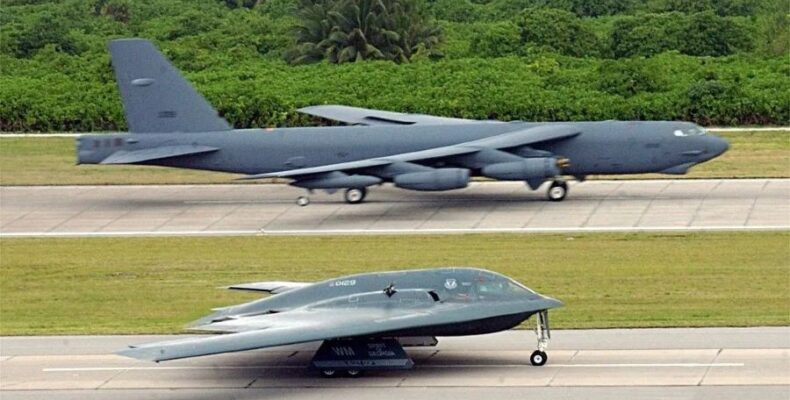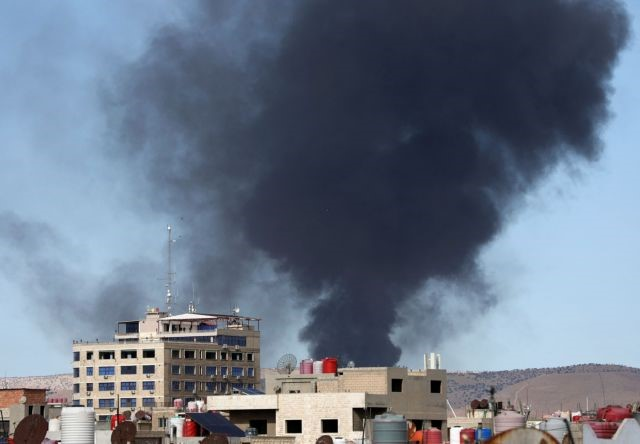
The downing of a Turkish drone by a US warplane in northeastern Syria, very close to a base where 900 US special forces soldiers are stationed, has come to light on a source of ongoing tension in the region.
For Turkey, the fact that the civil war in Syria appeared to pave the way for the establishment of a quasi-Kurdish state entity next to the border with Turkey was perhaps the most critical existential threat in recent years.
And this is because while he had to some extent ensured that the main political factions of Iraqi Kurdistan would not support any plan to claim another regime for Turkish Kurdistan and while it seemed that he could deliver decisive blows to the PKK’s infrastructure in Northern Iraq, the controlled by the PKK’s sister organizations autonomous Kurdish regions were imagined as a springboard for a more comprehensive overthrow.
And this is because, above all else, with the civil war in Syria (which Turkey was in a way a part of after supporting armed opposition organizations and initially at least systematically seeking the overthrow of the Assad government) the agreements that existed with Damascus for limiting the action of the Kurds against Turkey.
This was the reason why Turkey systematically sought to gain a presence on the territory of Syria and claimed and claims to have a security zone that will not allow Kurdish organizations to operate in Turkey.
The US collusion with the Syrian Kurds
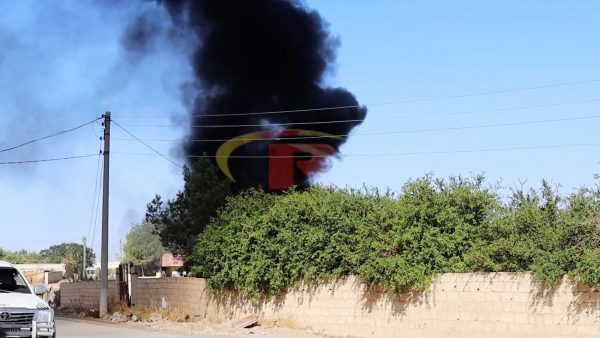
But this collided and collides with the reality created by the emergence of the Islamic State. For the United States, the Kurdish militias in Syria YPG proved to be the decisive ally “on the ground” in the fight against the Islamic State, as was seen e.g. in the great battle for the capture of Raqqa.
And even as the correlation against the Islamic State appeared to be tipping, the US chose to maintain cooperation with the Kurds in Syria. And although they allowed Turkey to operate against the Kurdish enclave of Afrin, they actually set as a limit the areas that are still under Kurdish control, areas that also include a large part of the oil sources that Syria has.
This allows the US to maintain a stable presence in Syria and also to be able to delay the process of restoring Syria’s political and territorial unity, as the dependence of the Kurdish forces on the US, especially vis-à-vis Turkey, means that they cannot readily accept the proposals made by Russia and the Damascus government for a regime of autonomy within a unified Syria. At the same time, it is precisely this rejectionist position towards a Kurdish state entity that has brought Turkey into the processes in which Russia, Iran and the government of Damascus participate.
Of course, this situation has required some acrobatics on the part of the US, which considers the PKK a terrorist organization, but not its sister organization in Syria, a position they have repeated recently.
But this creates a serious problem for Turkey, which is constantly pushing to get a “green light” to expand its security zone. This may also explain why Turkey has recently always tried to attribute the responsibility for any PKK action on Turkish soil to Kurds who came from Syria in an attempt to convince the US to change its stance, an element that was repeated after the last attack on Ankara.
Turkey and the “red line” of the USA
And it was precisely Sunday’s attack in Istanbul that led to Ankara’s decision to retaliate against the Kurds in Syria by launching attacks on Kurdish enclaves in Northeast Syria, hitting 21 different locations. Except that this also meant attacks near the places where American forces are located.
This was exactly the “red line” that the US felt Turkey should not cross and chose to send a message by shooting down the Turkish drone. Essentially, the message was that for now Washington is not changing its stance and will continue not to treat the Kurdish militias in Syria as terrorist organizations and that Turkey will not be allowed to take “unilateral actions” on Syrian soil, as it has at times announced Erdogan.
However, the Turkish side, which hastened to say that it was not its drone, insists on the demand that the Kurdish militias in Syria should also be considered terrorist organizations. The post of the communication director of the Turkish presidency, Fahratin Altun, is also typical, where he says: We call on our allies and partners to see the PKK and its offshoots in the region for what it is and to stop supporting them. As our President Erdogan says, there is no such thing as a good terrorist. You can’t fight one terrorist group with another.”
The attack on Homs
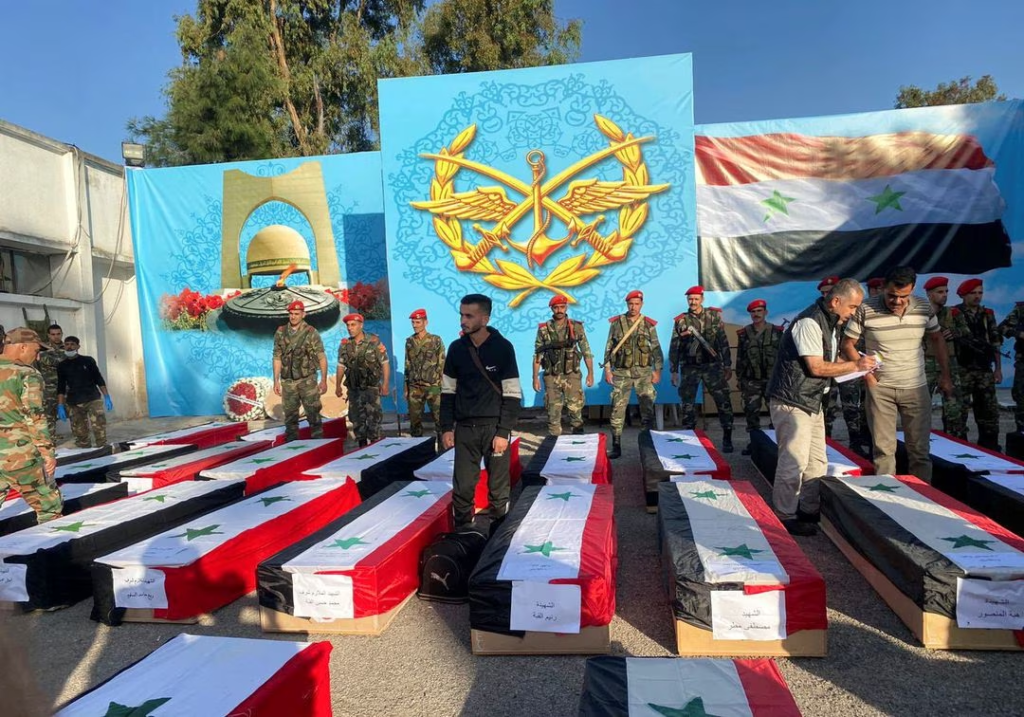
At the same time, Syrian government forces were dealt a major blow with a drone attack that carried explosives on the military academy in Homs on Thursday, October 5, with more than 100 casualties.
The Damascus government attributed the attack to terrorist organizations, as both Tayyat Tahrir al-Sham, the Syrian offshoot of al-Qaeda that controls the Idlib enclave, and the remnants of Islamic State have used drones.
The scale of the attack, however, points to a more general resurgence of the conflict that seemed to have stabilized in the previous period, after the recapture of most of the areas that were under the control of armed Islamic organizations. This has also been contributed to by the fact that although there can no longer be a question of “regime change” in Syria, the West has not shown any willingness to proceed with a peace process that would lead to the restoration of the territorial and political unity of Syria, despite the fact that Damascus has restored its relations with several of the Arab countries.
On the contrary, in the context of the “New Cold War” the US and other Western powers do not seem to favor such a process, as they still consider the Damascus government simply an ally of Russia, Iran and China. They realize that there is no alternative political solution, but to some extent they prefer no solution, especially since Russia, because of the war in Ukraine, cannot provide the same forces in Syria.
This probably gives rise to the feeling among the armed Islamic organizations, as well as anyone who would like to destabilize the region, that there is room to make their presence much more felt and to change the relationship.