




The week that comes with a crown in the economic news the meeting of the ECB will provide a series of data, which will reflect the course of the economies at the global level and will be studied by the central bankers in order to shape their strategy in the next monetary policy moves with the Federal Reserve Bank to take over from the ECB next week.
Thursday’s European Central Bank meeting may be the most exciting since the start of the monetary policy tightening cycle, as signals from officials so far suggest it will be a close battle.
At issue at the meeting is whether central bank officials will choose to proceed with a 10th consecutive increase in European interest rates or take a hawkish pause. Besides, as the minutes of the last meeting in July showed, hawks and doves expressed different opinions until they reached the unanimous decision to increase interest rates by 25 basis points. In addition, a kind of “informal omerta” was agreed: in particular, it was agreed that until the next meeting in September, the “Board should neither hint at further rate hikes nor signal that it will stop the hikes, nor that the maximum rate has been reached”.
All the lights in Frankfurt
Last week, hawkish Dutch central banker Klaas Knott hinted that markets “may be underestimating” the growth outlook. Derivatives markets “give” about a 35% chance that the ECB will raise the deposit rate from 3.75% to 4% on September 14.
Those odds have fallen after a string of weak economic data. The official eurozone growth figure for the second quarter was revised down from 0.3% to 0.1%, and business data showed a further slowdown in August. Things are not looking good for the economy and this will be expected to bring more deflation.
The ECB will opt for a “hawkish pause” in which it will not raise rates but will make clear it remains very concerned about inflation and is ready to continue tightening if price pressures become more persistent. This would keep the market more alert than an increase, which investors would immediately assume was the last.
The dilemma facing ECB officials is whether inflation – still above 5% – can slow for good without more tightening, given growing signs of weakness in the eurozone economy. In addition, the imprint of cost increases money is later reflected in the real economy, over a period of 9 to 15 months. In this context moves the assessment of the Portuguese, Mario Centeno, who belongs to the camp of doves and worries about the consequences of doing too much, as the European economy shrinks.

The Sibylline Lagarde
In her speech at Jackson Hole, ECB chief Christine Lagarde said that “policy-making in an era of change and upheaval requires an open mind and a willingness to adapt our analytical frameworks in real time to new developments. At the same time, in this era of uncertainty, it is even more important that central banks provide a nominal anchor for the economy and ensure price stability in line with their respective mandates,” the ECB president noted.
“In today’s environment, this means – for the ECB – setting interest rates at sufficiently restrictive levels for as long as necessary to achieve a timely return of inflation to our medium-term target of 2%”, he underlined, adding that “going forward, we must remain clear in our goals, flexible in our analysis and humble in our communication.” He used the Danish philosopher Søren Kierkegaard’s phrase to describe the contradictory changes that are underway and shape the macroeconomic environment in which they are called upon to make decisions.
Whatever the outcome on Thursday, it is likely that President Christine Lagarde will want to send the message that the ECB will not let inflation take a firm hold, which may mean that interest rates will have to remain high to ensure that their work will be done, they continue.
USA and Canada
On the other side of the Atlantic, the data on the course of the Consumer Price Index (CPI) in August are awaited, although the favorite indicator of the European Bank is the measure of personal consumption expenditure, and the data on the Producer Price Index.
The core CPI, which excludes food and energy, is expected to show a third consecutive monthly increase of 0.2%. Compared to August last year, it likely rose 4.3%, the smallest annual advance since September 2021.
If the data moves in line with estimates, it will bolster expectations that Fed policymakers at the Sept. 19-20 meeting will keep interest rates on hold. While core inflation is cooling, Wednesday’s report is also expected to show that the headline CPI accelerated from a month earlier as gasoline prices edged higher.
In addition to inflation indicators, retail sales data will be released, and consumer demand is expected to have faltered in August after recording solid progress in recent months. Other US economic reports include August industrial production and September consumer sentiment.
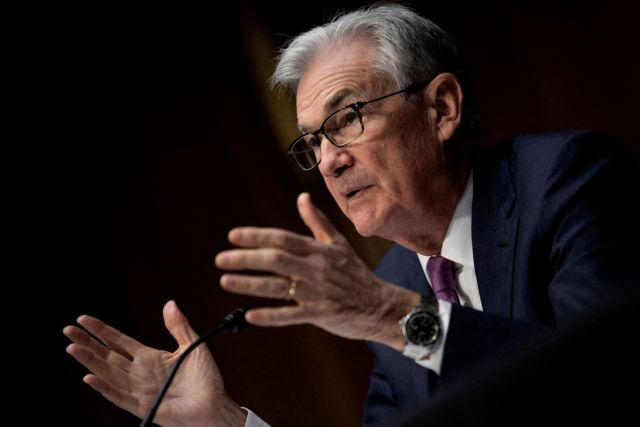
The chairman of the Federal Reserve in his speech at Jackson Hole was clear about the Fed’s intention to get the job done, which is to drive inflation to 2%. Although overall he maintained a hawkish tone, signaling further rate hikes should price pressures persist or the US economy continue to prove stronger than expected. However, he acknowledged that the full effects of previous interest rate hikes have yet to make their real mark on the economy.
He recognized that the risks are two-sided, with risks of becoming too much as well as too little. “Doing too little could allow above-target inflation to take hold and ultimately require monetary policy to squeeze more persistent inflation out of the economy at a high cost to employment,” he said. “Doing too much could also cause unnecessary damage to the economy.”
“As is often the case, we navigate by the stars under cloudy skies,”
Meanwhile, in Canada, August home sales data will show whether the market continues to cool, even as high prices remain disconnected from local incomes.
Canadian economic data releases also include wholesale trade, international securities trading and manufacturing sales for July.
Asia
A flurry of data from China will likely garner the most attention among economic data releases in Asia. Industrial production and retail sales due on Friday are expected to rise in August, potentially offering an early signal that the world’s second-largest economy may have weathered the worst.
Malaysia releases factory output data on Monday, followed by surveys of business and consumer confidence in Australia on Tuesday. Inflation in India is expected to slow and its factory output to strengthen in data released later in the day.
The minutes of the Bank of Korea’s August meeting will likely show further support for keeping its “hawkish” stance for longer. Unemployment figures are released on Wednesday by South Korea and the following day by Australia.
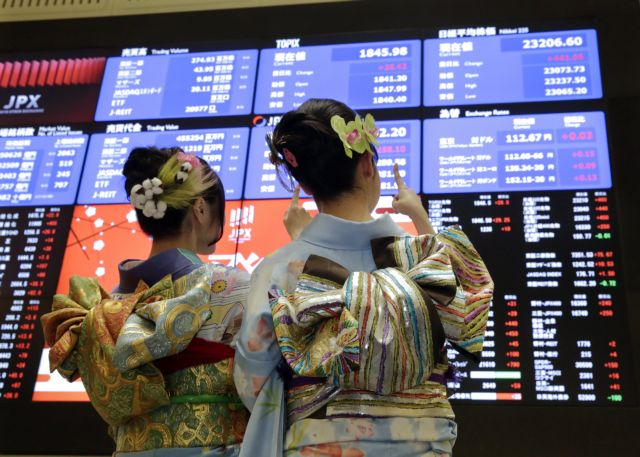
On Thursday morning, Asian markets will react to data on the path of US inflation.
Policymakers in Tokyo will likely be on alert to see the impact on a yen hovering around year-lows against the dollar.
Europe, Middle East, Africa
The spotlight will also fall on UK labor market data which is likely to send mixed messages to policy makers, as it is expected to show a rise in the unemployment rate but also a significant rise in wages.
Also useful for officials set to set interest rates next week will be July GDP data, which will signal whether the economy’s resilience has continued into the third quarter. Forecasts expect a decrease compared to June.
While the ECB’s decision will be the focus of attention in the euro area, the release of the European Commission’s forecasts on Monday may offer investors a first taste of how officials in Brussels view the immediate outlook for growth and inflation .
Inflation data will be released in all Nordic countries. Both Denmark and Norway release data on Monday. Sweden’s report on Thursday is expected to show a significant slowdown – although that may not be enough to stop the Riksbank from raising interest rates again next week.
Four other central bank decisions in Europe and Africa will concern investors
In Ukraine on Thursday, the central bank is likely to continue easing monetary policy after a larger-than-estimated cut in July.
In Russia, officials on Friday will hold the first scheduled meeting since August’s emergency hike of 350 basis points to stem the ruble’s depreciation.
On the same day in Angola, the central bank will be faced with a tough decision between maintaining or increasing to tame soaring inflation.

Also on Friday, a slowdown in inflation in Mauritius and less volatility in the external balance may prompt rate-setters to rein in borrowing costs.
In the Middle East, Egypt releases August inflation data on Sunday. Investors will be watching to see if inflation accelerated beyond July’s rate of 37%, or if the central bank’s surprise rate hike in early August helped dampen inflationary pressures.
In Turkey on Monday, data will likely show a trade deficit in July, after a rare and small surplus a month earlier.
And Israel’s inflation probably accelerated to 4% last month. The data, released on Friday, could increase pressure on the central bank to continue raising interest rates.
Latin America
Argentina’s central bank estimates that the peso’s devaluation last month may have fueled a 10.6 percent jump in monthly inflation, the fastest since the economy emerged from hyperinflation more than three decades ago.
Local economists predict that monthly inflation will strengthen to 13%.
Colombia’s economy has slowed in 2023 after two years of significant growth. July figures for manufacturing, industrial production and retail sales are expected to show negative changes for the fifth month in a row.
Instead, analysts are upgrading their forecasts for Mexico’s economy. They expect July industrial production data to be above trend and possibly beat estimates for the seventh time in nine months.
In Peru, expect the central bank to keep its key interest rate at 7.75% for one more session due to persistently elevated inflation. The economy slipped into a technical recession in the first half, and the July GDP reading released on Friday may offer more of the same.
Data from Brazil is expected to underline the challenges facing Latin American central bankers: analysts expect inflation to have accelerated for a second month in August, to just under 4.7%.


