
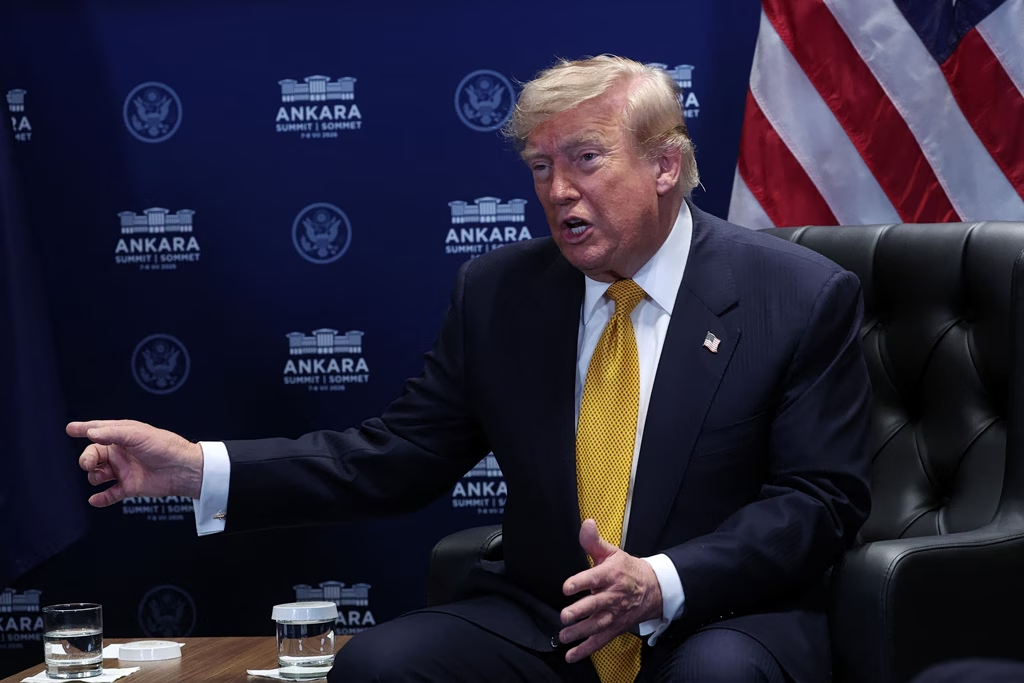

Mr. Stian Jensen, director of the personal office of the g.g. of NATO Jens Stoltenberg, is not a self-acting or improvising person. Consequently, when on August 15 he expressed the opinion that “Ukraine may need to agree to cede some of the territory it lost during the war to Russia in order to join NATO”, the surprise was justified and the strong reaction from Kiev completely understandable .
The Russian-Ukrainian war disproved many myths, the first of which was Russian military superiority. Only this myth was cultivated for decades in the past not only by the Soviets, but also by military circles in Washington, to secure congressional approval of greater defense spending.
At the same time, during the Russo-Ukrainian war, the European allies of the USA gradually began to question the adequacy and overall effectiveness of the American strategic plans. Putin’s Russia did not collapse under sanctions. Citizens did not revolt as President Biden predicted. The whole system showed unexpected endurance, as it had happened repeatedly in the past.
At the international level again, the group of BRICS states, whose participation in the global GDP is estimated at 23%, is looking for a way to become independent from the dollar by adopting some form of “currency”, the price of which will be linked to the gold they have in huge quantities. It remains unknown, however, whether these goals will be realized.
The idea of temporarily securing European peace through the secession of territories from imperial Russia is not new. It was formulated by Lord Palmerston in 1854. With the secession of Georgia, Circassia, Crimea, Bessarabia, Poland and Finland in particular, Russia would still be a formidable but less dangerous power, Lord Palmerston wrote. The plan was never implemented (for more information on the subject please read the analysis titled “When the Anglo-Saxon Geopolitical Strategy is applied for Centuries, it Crushes Europe and Russia“).
A century and a half has passed since then, and in April 2008 NATO promised to consider Georgia’s request to become a member of the Alliance. On August 1, the war began and ended in 11 days with the loss of Georgian territory. The US and its allies did not react. A video posted showed then-Georgian President Saakashvili desperately chewing his tie.
With proposals to end the war in exchange for giving territory to Russia, and after NATO’s refusal to set a timetable for Ukraine joining the Alliance, President Volodymyr Zelensky sees the tragic case of Georgia repeated again.
It is easy to start a war; the problem is how to end it. It applies to Putin, Biden and Zelensky. Meanwhile, Europeans are beginning to weigh the serious economic consequences of their involvement in a war that would more permanently ensure European peace.

