



UK Prime Minister Boris Johnson adopted the agreement concluded by former Prime Minister Teresa Mae between the UK and the EU but adding specific arrangements for Northern Ireland to resolve the backstop gordian knot, even though this agreement is limited to British interests.
The agreement concluded by Boris Johnson and is based entirely on the previous agreement of Teresa Mae provides in addition that:
1. In the near future and unlike the rest of the UK, Northern Ireland will follow the rules of the EU’s internal market.
2. Customs controls will be applied between Northern Ireland and the island of Great Britain.
3. The North-Irish of the Democratic Unionist Party (DUP) will have no right of veto for the application of these provisions under the agreement, neither now nor when the local Parliament of Northern Ireland is consulted in four years from today.
by Thanos S. Chonthrogiannis
The law of intellectual property is prohibited in any way unlawful use/appropriation of this article, with heavy civil and criminal penalties for the infringer.
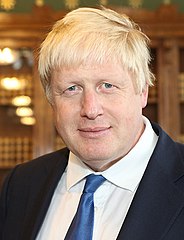
The Brexit process has now entered its final phase and no matter whether the British MPs voted for an amendment on Saturday which stipulates that a vote should be taken on the laws of the Brexit Agreement, before the Parliament expresses the final judgement on the whole of the specific agreement that Boris Johnson concluded.
The British Prime Minister to win Saturday’s vote attempted to attach votes of Labour MPs to accepting labour rights and policies in other sectors that are essential to opposition main policy-program. In the event of his defeat in the Parliament, the holding of early elections in the UK is considered a one-way road.
Such a development is not in the interests of Labour party, because the Prime Minister will use in his election campaign the agreement to be passed in Parliament to redeem his accumulated political capital by winning the elections forming a self-force government for four years.
The British people and always according to the latest polls have the same opinion about the Brexit that it had in the referendum of 2016. The results of the 2016 referendum had given 52% in favour of Brexit and 48% against. The latest polls give about the same percentages as the results of the 2016 referendum. In fact, if we had resumed the referendum in 2016, the results would be in favour of Brexit.
This, namely that three years after the referendum, that the British people currently remain as a majority in favour of the Brexit shows that there is a deep-rooted anti-European social dynamic in the UK that gives impetus to Boris Johnson manipulations.

