



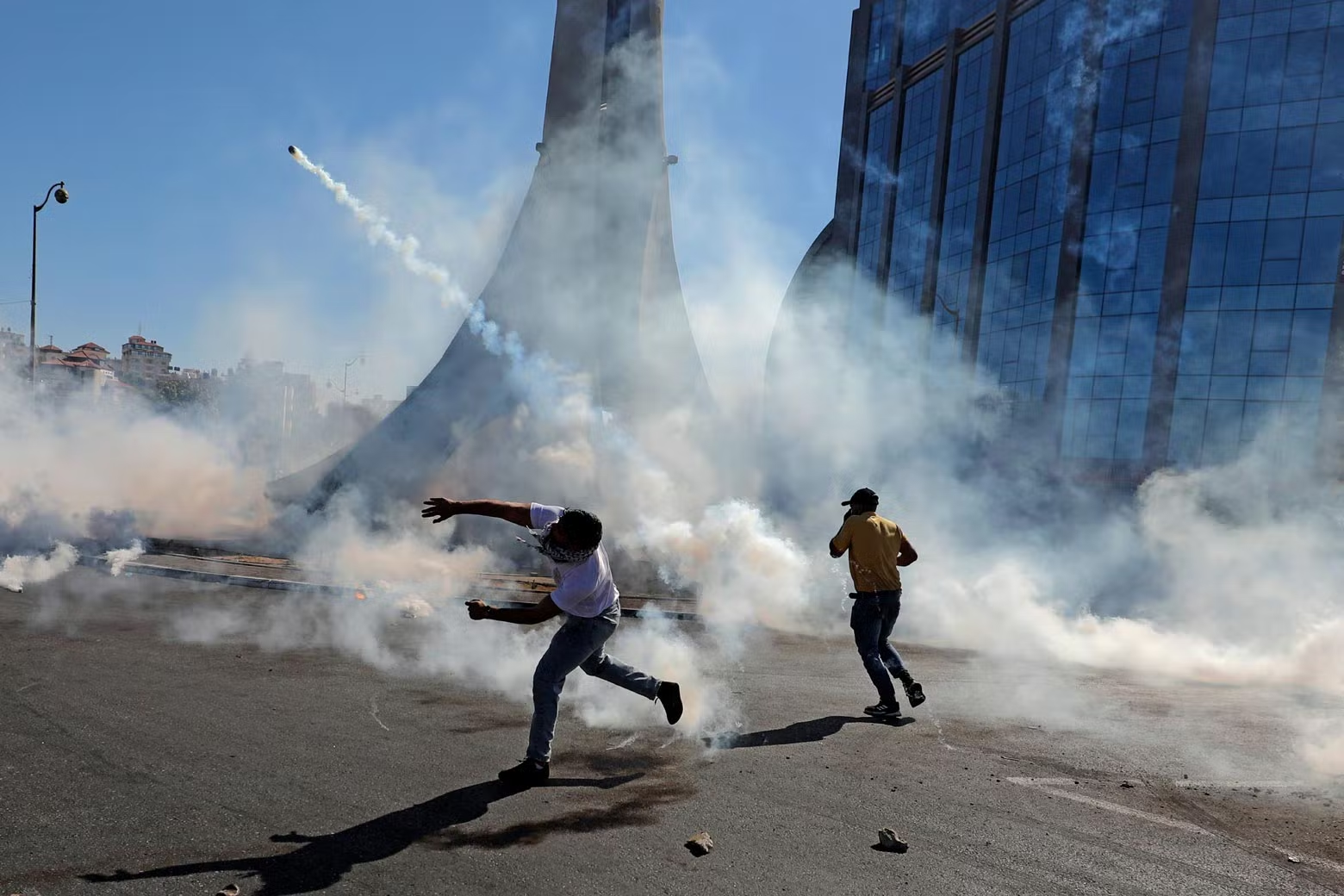
Almost 20 years have passed since the second Intifada, the uprising in the Palestinian territories against the Israeli occupation. But the conditions prevailing there today seem as if little has really changed since then.
The perpetual cycles of violence, the continued Israeli occupation of the West Bank, the inflammatory policy of the new Netanyahu government – the most far-right in Israel’s annals – the chronic crisis in the Palestinian Authority and the morass of the peace process now compose an explosive scene.
So much so that many are now talking openly about the prospect of a third Intifada. Anger has been simmering for months as one black record after another has been broken. In the first quarter of 2023 alone, Palestinians killed by Israeli soldiers in the occupied West Bank reached 95: the highest number in a quarter in years.
They include not only armed combatants, but also civilians. According to the Palestinian Ministry of Health, at least 17 were minors and two were elderly. During the same period, 14 Israeli civilians were killed in retaliatory attacks by Palestinian perpetrators.
The vicious cycle of violence between the two sides continues against the backdrop of the deadliest year in years, as marked by 2022 in the occupied Palestinian territories.
Over the course of the past year, nearly 150 Palestinians have been killed in the West Bank and East Jerusalem, according to the Israeli human rights group B’Tselem. It was also the result of “Operation Breakwater” launched by the Israeli army since last spring, with almost daily raids throughout the West Bank.
The declared goal of Tel Aviv is the dismantling of “terrorist nuclei”. The result, beyond the bloodshed – reports the Israeli human rights organization HaMoked – is that the Palestinians who are currently in administrative detention in Israel, without charge or trial, exceed 1,000. This is a record number for two decades.
A vicious cycle of violence
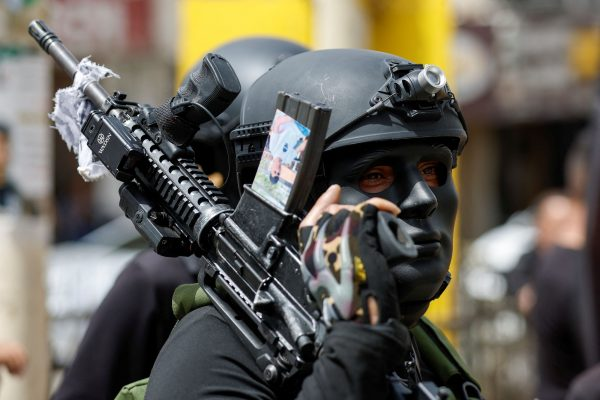
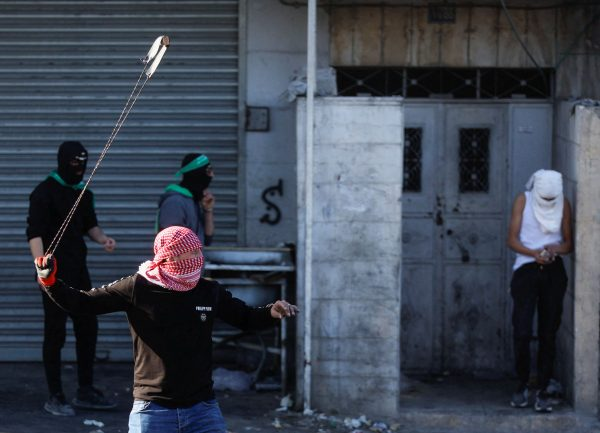
Following the law of action-reaction, Israeli operations appear to be causing the exact opposite effect of the officially intended objective. The deadly crackdown is prompting the creation of a new generation of Palestinian fighters in the West Bank, with a completely different dynamic than the past.
Their action is characterized by many as hybrid, since it is not directly connected to any faction – armed or political – in the Palestinian territories. The overall picture, instead, shows a web of shifting alliances, with the struggle against the Israeli occupation as a key link.
The “chain” is completed by anger at the chronic diplomatic quagmire on the Palestine issue, disillusionment with the Palestinian leadership and “rooted” poverty, which is exacerbated by Israel’s blockade policy.
The best known of these new groups is Areen al-Usood, Hellenistic “Lion’s Den”. It began its activities last summer starting from the Old City of Nablus, in the northern West Bank.
Organized today in small “cores”, its members – mostly young people in their 20s – declare themselves independent of political organizations, but collaborating with other Palestinian armed factions.
The Israeli army and Jewish settlers are seen as a common enemy as illegal settlements spread across the occupied West Bank.
Despite the fact that Israel killed “Lions” officials, the organization is constantly replenished with new members. It increases its popular appeal. And it seems to inspire other teams. The same applies to the “Jenin Brigade”.
Within the last year, various armed organizations have “springed up” in various parts of the West Bank: from Tulkarem to Jericho. Exactly who supports whom, how and why remains unclear.
What is obvious is the weapons. They are dominated by AK-47s (aka Kalashnikovs) as well as M16 assault rifles, which are abundant on the black market and have relatively cheap ammunition.
Blurry landscape
For the government of – accused of corruption – Benjamin Netanyahu, the escalation of tension with the Palestinians seems to be, apart from a political choice, a “recipe” to divert attention from the escalating institutional crisis in Israel itself.
However, the lack of perspective on the issue of Palestine, combined with the chronic political “anchor” in Ramallah (headquarters of the Palestinian Authority), the obstructed reconciliation between the dominant Palestinian factions – Fatah and Hamas – and the involvement of regional forces create now an explosive mixture. The latest poll by the Palestinian Center for Policy and Research (PSR), in March, was revealing enough.
Both in the West Bank and in the Gaza Strip there is an increase in popular support for the armed struggle against the Israeli occupation and a decrease in support for the -still invisible- two-state solution. Voices for the resignation of 87-year-old President Mahmoud Abbas are increasing. Confidence in the Palestinian Authority is waning.
For the first time since its -officially temporary- establishment, in fact, 30 years ago, the majority of respondents in the survey (52%) consider that its dissolution or even collapse would be in the interest of the Palestinian people. 57% believe that its continued existence serves Israel’s interests.
A total of 68% (71% in the Gaza Strip and 66% in the West Bank) support the formation of armed groups and 87% believe that the Palestinian Authority does not have the right to arrest the gunmen. 61% (69% in the West Bank and 48% in the Gaza Strip) expect the outbreak of a third Intifada.
Trapped in neo-Cold War associations, the international community is content with words about the need to settle the Israeli-Palestinian conflict, while Israel’s far-right government adds more and more “fuel to the fire”. Many now fear a “fauda”, which in Arabic means “chaos”.
