



With the war in Ukraine increasingly looking like a war of attrition against the Ukrainian side as a result of repeated Russian attacks, and the announced Ukrainian counter-offensive being delayed, it is clear that some second thoughts are beginning of Western countries in relation to how things can develop.
Already the ongoing conflict around Bakhmut has shown that Russia is persisting with its tactics resulting in heavy Ukrainian losses, even if it is not making “spectacular” gains, while it is clear that it has made much larger fortifications in the entire length of almost 1000 kilometers of the front to face any Ukrainian counterattack. At the same time, Russia seems to have no problem replenishing the ammunition it uses, while it does not have large losses in its naval fleet and fighter aircraft. Nor does the domestic legitimacy of Vladimir Putin himself appear to have significantly declined within Russia. Nor have the sanctions managed to have the desired effect, mainly because there are a significant number of states that have not proceeded with sanctions against Russia.
All this brings Western governments face to face with difficult questions. Their stated goal of defeating Russia right now goes through not just more aid to Ukraine, but even more direct involvement, which carries very high risks. At the same time, any initiative of their own for a more conciliatory approach would cause rifts within them, but would also be interpreted as an indirect recognition of a Russian victory. All this explains why the eyes are turned in another direction.
China time
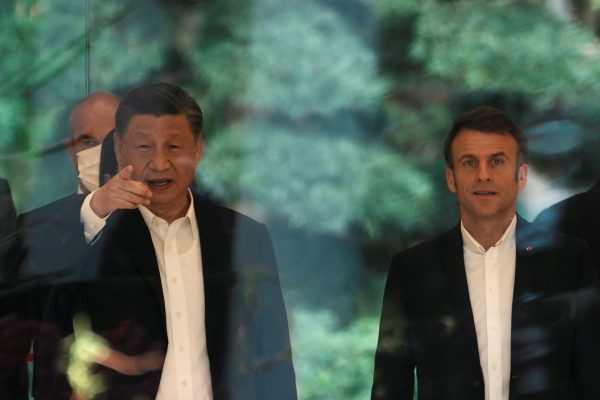
The war in Ukraine put China in a rather contradictory position from the start. On the one hand, China seems to understand the Russian reasons and generally converges with Moscow in the assessment that at the moment the “collective West” faced with the erosion of its hegemony seeks to exert ever greater pressure on the other poles, thus on China and Russia. Beijing is also watching very carefully the shifts in American rhetoric, which increasingly sees China not just as a competitor but also as a threat, sees the continuous deployment of American and allied forces around its perimeter, realizes that the way the issue of Taiwan comes back only it’s not random. Essentially, China has seen the way the West has dealt with the Ukrainian issue as an indication of how it will deal with the Taiwan issue as well, where we must not forget that China believes it has an inalienable right to push for reunification.
The role of China
On the other hand, China at this stage did not want a sharp escalation of international tension, especially since it remains a country fully integrated into all the main flows and supply chains of “globalization” (an element which in turn is also the limit of the current most “confrontational” American politics). We do not know if and to what extent he tried to convince the Russians or accepted the “special military operation” as a fait accompli, however, at the level of rhetoric he supported Russia, while calling for peace and maintaining relations with Ukraine.
At the same time – and this is also important – it was during this period that China claimed to acquire a more elevated role in the international arena, culminating in the initiative for rapprochement between Iran and Saudi Arabia. Many even argued that he rushed to fill the void left by Russia, much more preoccupied as it is with what is happening on its front.
Against this background, the plan for Ukraine presented by China on February 24 was of particular importance. Although more a text of principles than a “road map”, it insisted on the possibility of a political solution and an end to hostilities, with wording that simultaneously captured the demands and “sensitivities” of both sides. And although it was not particularly well received by the West, it was nevertheless not rejected and arrested, although Ukraine made it clear that it cannot accept a plan that does not include the withdrawal of Russian forces from all of the “occupied territories”.
The significance of the Xi and Zelensky phone call
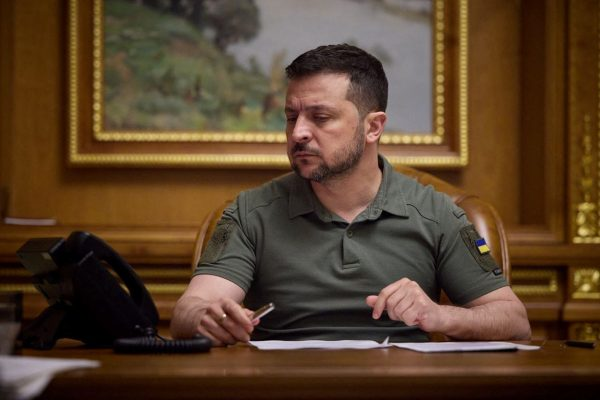
Against this background, the April 26 telephone conversation between Chinese leader Xi Jinping and Ukrainian president Volodymyr Zelensky takes on special significance. The hour-long conversation was the first between the two sides since the start of Russian military operations and was considered “essential” by the Ukrainian side. In it the Chinese side pledged to send a special envoy to talk “with all sides” and seek a political solution, according to the Chinese Foreign Ministry. “Dialogue and negotiation is the only way forward” underlined the Chinese president.
After all, Zelensky might not have accepted the Chinese plan but insisted on the need to talk to Xi.
The US attitude
Nevertheless, it is still too early to talk about a significant change in the attitude of the Western powers. It is difficult at this time to change the basic direction which is that of supporting Ukraine to carry out the big counter-offensive, change the current balance of power and lead to what could be considered a defeat for Russia. There is too much commitment to such rhetoric to backfire, especially since the Kremlin will not pass up any opportunity to talk victory.
On the other hand, however, neither the US, nor the other Western governments can afford to appear that they are not seeking peace but the escalation and prolongation of military operations in any way. And this is because, from one point on, it is not a given that there will be a consensus within Western societies for the very large economic costs that the extension and escalation of Western military aid to Ukraine will have.
And this literally means that they can only invest in China’s effort for peace – Macron’s visit to China is typical here – even though they know that China could not negotiate a political solution that would be equivalent to the defeat of Russia and although, in particular, the USA sees the open question of confrontation with China on the horizon.


