In the effort of the EU-Commission to improve the performance and gradation of the Greek economy by creating a “safety” net that will allow the Greek banking system to surpass the reef of the stress tests of the ECB, has instructed the Greek government to apply an Asset Protection Scheme to the balance sheets of the Greek systemic banks in order to help them cope with the deepening of the overdue loans.
In this way, the Greek banks are hoped to be free from this burden and expect that they will then be able to perform their role as a lever for the development of the Greek economy by fueling with lending funds both businesses, households and individuals, while ensuring that their banks’ capital base is protected from the risks and impacts of “red” loans.
by Thanos S. Chonthrogiannis
It is prohibited by intellectual property law or in any way illegal use of this article, with heavy civil and criminal penalties for the offender.
What is the Asset Protection Scheme (APS)
The Asset Protection Scheme (APS) is an insurance-type mechanism provided by the Government of a country in order to help the domestic banking system to overcome the problem of “red loans” in their credit portfolios that do not allow them to lend to economic units (businesses, individuals, etc.) of the economy.

Punch Magazine
https://en.wikipedia.org/wiki/Public_domain
So long as the government of a country provides this guarantee to banks against further losses or an increase in their percentages of “red loans”, they are released in turn by providing borrowing in competitive terms in the economy.
In turn the banks will have to agree with the Government of the country what kind of assets are linked to overdue loans and what type of overdue loans they need to place under the umbrella insurance of APS.
It is common practice that the APS under application should cover 90% of Banks’ losses from the overdue loans. In return the government charges an amount (risk premium) for the guarantee it provides.
Suppose that a bank e.g. has in its credit portfolio overdue (red) loans (loans that are not served for more than three months) of a total value of €100 billion and places them under the APS mechanism with a percentage of 90% that will it obliged to pay a risk premium of 10%, i.e. it would be burdened by future losses of €100billion*0,1= €10 billion and only while the remaining losses (€90 billion) would be covered by the Government of the country.
The payable risk premium is also determined by the credit rating that the state has for its government bonds and the rating of the overdue loans, as well as how high is the risk that the Government of the country is taking.
In addition, a bank could lower the risk premium it would pay to the government of the country if it agreed that it would provide a much larger amount of borrowing to the economy. The duration of payment of the risk premium is usually set at seven-eight years and depending on the agreement and the size of the overdue loans.
In addition, the bank or banks instead of paying in cash the agreed risk premium can issue specific amount of shares that will pay an annual dividend equal to the annual risk premium without these shares having voting rights and then the bank will attributed these shares in the Government (Treasury) of the state.
The APS in the Greek banking system
The Commission and the Government of Greece to cover the huge volume of overdue loans of the Greek banking system (the overdue loans of the Greek banking system make up 20% of Greece’s annual GDP), try to implement a variant of APS model implemented in Italy by simply translating and copying the text of the agreement that was applied to the Italian banking system ignoring key differences between Italy and Greece and their respective banking systems. More specifically,
1. Greece has a much lower credit rating-category ‘junk’ in its government bonds (B+) than the corresponding Italian government bonds (BBB).
2. The Greek banking system has a huge volume of overdue loans in relation to the volume of overdue loans of the Italian banking system.
3. Due to the high risk that the Greek Government undertakes, the risk premium that the Greek banks will have to pay is excessive and unprofitable in every term for the Greek banks that should participate in the proposed Greek variation APS.
4. The risk premium should necessarily be invoiced in current market terms otherwise the Greek government risks to cause damages to the interests of the Greek taxpayer and at the same time it looks like to give state aid to the banks.
5. The risk premium paid by the Italian banks of the Italian APS model was based on the calculation of the proposed risk premium for the credit default swap (CDS) of Italian government bonds.
If the same applies to the Greek APS model the current low price for the Greek state guarantees is at 1,7% which is fictitious, due to the financial gap that the Greek economy will face in the coming years and the unsustainable Greek public debt.
6. Moreover, the Greek government has further complicated the issues by creating a scheme-company that will take over all the overdue loans of the Greek banking system, without specifying whether the risk premium will be paid by this company or by the banks which will participate in the Greek APS.
If the company pays it then the banks will have to immediately register the total risk premium in their balance sheets. This will hurt their profitability and funds.
If damage is shown to the banks’ balance sheets, then the banks will have to raise funds at the level of the damage that has occurred which will be in favour of the state (increase state’s shareholding percentage in the banks).
In this case and due to the spewed volume of the overdue loans covered by APS, the Greek banks will essentially be as if they have been nationalized. The risk premium must be paid by the banks and should not be created a company that will take over all the overdue loans of the banking system.
It is a completely another mechanism the Asset Protection Scheme and it is a different strategy the creation by the banks themselves of a bad bank that will be burdened with all their overdue loans, which should invoice them in current market prices and then securitized them by selling them to funds while the money from the securitisation will must be used to cover part of the funds of the banks that were allocated to loans that were then became overdue.
The Greek government, trying to provide a quick solution to the problem, is pushing the banks’ management in a very tight way under the table in order all the Greek systemic banks to participate in the proposed APS, without taking into account the above problems and peculiarities with only its aim to demonstrate to the Commission that it produces work.
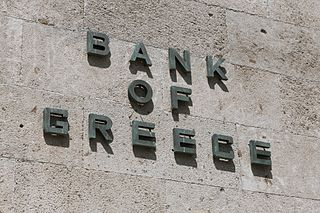
Photo by Petr Kratochvil,
https://creativecommons.org/publicdomain/zero/1.0/deed.en
What other solutions exist for the “liberalisation” of bank lending flows
Such solutions include:
1. Special liquidity schemes which are implemented through the Central Bank of the country. It includes assets with AAA investment rating and is done only through the swap system application. It cannot be applied in the case of Greece due to (B+) credit rating of Greece.
2. Special liquidity aid schemes for the enterprises which take place directly from the competent Ministry. It cannot be applied in Greece because it is considered as direct state aid.
3. Implementation of “quantitative easing” solutions by the Central Bank. Due to chronic indolence and administrative inadequacy of Greek governments, Greece could not participate in the “quantitative easing” programs that the ECB applied successively to the Eurozone.
4. The creation with own expenditures of banks of a bad bank, then transfer to it, from the participating banks in the share capital of this bad bank, all their overdue loans. Then there must take place a capital increase of the banks by their shareholders.
Re-evaluating the overdue loans of the bad bank at current market prices separating which of these loans can be rescued by restructuring them and which not. Problematic overdue loans are securitized and sold in funds.
This is the only appropriate solution for the Greek banking system. The problem is of a political nature because the funds claiming their money will make large numbers of auctions which translates into high political costs for the Greek government.
Unfortunately, the Greek government translate with sloppiness the Italian APS model without considering the mannerisms of the Greek banking system laying the foundations for many future problems in all Greek systemic banks and the Greek economy equally.