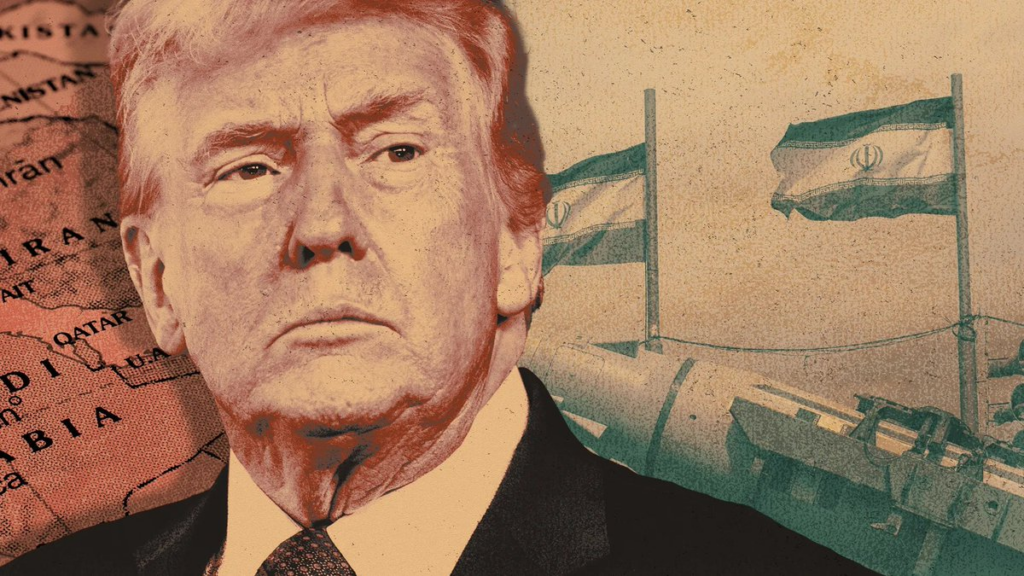
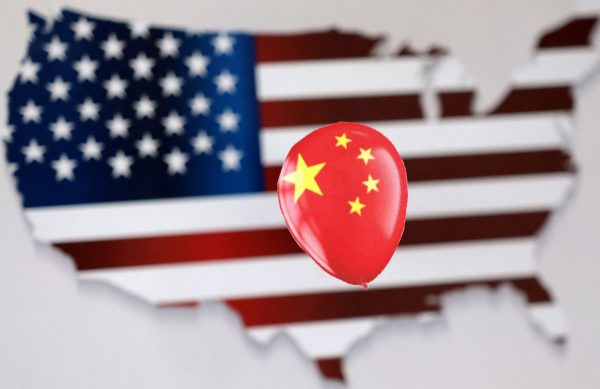
The downing of the Chinese hot air balloon only confirmed that the two countries are on a path of greater confrontation. Balloons appear to have acquired a new utility for meteorological data collection and espionage.
In fact, the latest generation hot air balloons are not just “balloons”. It is more correct to speak of “intra-atmospheric satellites”. They can fly in the stratosphere, as high as 90,000 feet, well above normal airplane altitudes, have a smaller radar footprint, are more unpredictable in movement than satellites, move slower than satellites, and at a lower altitude so that they take better pictures and collect more data and also are cheaper than satellites.
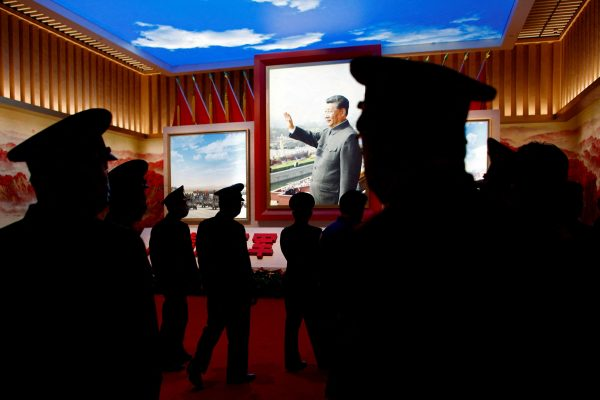
Why would China want to spy on the US?
All statements from the US side referring to the security strategy refer to China as a “strategic adversary”. They may not cite China as an immediate threat in the way they now essentially describe Russia, but it is clear that on the horizon the US sees conflict with China as inevitable.
Why China may not have formulated visions of world hegemony, as it still moves on the basis of a program that focuses on internal economic and social formation, but it does not cease to be a competitor of the USA. It is the second economy on the planet, it is a large country in population, and it claims to upgrade its international position, not only in relation to the issues that it considers to concern it directly, such as Taiwan or the situation in the South China Sea, but more generally . And of course it invests more and more in upgrading its defensive capabilities, with the prospect of acquiring superpower characteristics.
Against this, more and more American design seems to be trying to deal with this possibility. Already the US has an impressive number of bases in the wider region near China, it has strengthened its relations with the countries that are its best allies, treating them as spearheads in the region (Japan, Australia, New Zealand) but also strengthening their military presence in countries like the Philippines, while powerful US naval forces constantly patrol near China. In fact, China has long used spy balloons to monitor the movements of US naval vessels in its vicinity. In addition, a significant part of the American political establishment actually challenges the “one China” policy that has been the cornerstone of American foreign policy on Taiwan for decades.
All this provokes the Chinese reaction, especially from the moment when it sees that the horizon of American foreign policy is also war. And if a country fears that there is even a remote possibility of being in armed conflict, then it needs information above all else. And this can explain, for example, why a spy balloon can be found over areas of the US where the launch silos for intercontinental missiles, missiles with nuclear warheads that could also be used against China, are located.
Anyway, China did no different than the US does with its own extensive network of spying media.

Why did the US react so strongly?
Official Chinese rhetoric is that the US “overreacted” and that by choosing to shoot down the Chinese balloon, despite the Chinese government’s official explanation of deviating from the course due to “force majeure”, they simply want to escalate the confrontation, demonstrating “crisis management incompetence”.
The US, for its part, reacted so strongly for reasons that have to do with both foreign policy and domestic policy. The foreign policy issues are about competition with China, at a time when it has become more intense. Let us not underestimate here the way the war in Ukraine is defining developments. China may have taken a somewhat cautious stance – for example, Chinese businesses are very cautious in relation to US sanctions – but it is still the strongest force on Russia’s side. Even more, the prospect of a more comprehensive convergence between Russia and China seems even more threatening to the US.
It should be noted here that for the US, which has an air defense system more oriented to a logic of thermonuclear war in terms of “mutually assured destruction”, than to preventing aerial violations, it was a particularly negative symbolism that China could send a balloon that would register the silos of intercontinental missiles.
But the internal situation in the US also played a role. After the midterm elections, the US is at the beginning of the political cycle that will end with the next presidential election in 2024. Republicans, among other things, criticize foreign policy and the administration of Joe Biden did not want to it appears to be “intimate towards” China. Of course, the revelations that spy balloons of Chinese origin had been spotted over US soil are interesting, but during the presidency of Donald Trump, the decision was made not to take any action.
Beginning or end of reconciliation efforts?
The cancellation of US Secretary of State Anthony Blinken’s visit due to the detection of the Chinese balloon, the first visit in a while that was clearly part of a de-escalation trend, raises the question of whether the effort to bring the two countries closer together is over.
And this is because, despite the mid-term “strategic” confrontation with China, the US has shown that it is not ready for a complete rupture. The US economy still maintains a very high degree of interdependence with the Chinese economy even after the US attempt to limit China’s access to latest generation chips, China will play a role in any dynamic recovery of the global economy, issues such as dealing with climate change also require American-Chinese cooperation. Nor is it easy for the US, while managing the war in Ukraine, a major military conflict to which it has contributed a very large amount of military aid, to open another major front. This explains why there appeared to be steps towards greater understanding.
But it seems that at the level of this specific incident, the American leadership neither wanted nor could disengage from the dynamics of the conflict. However, this does not mean that it also has a comprehensive strategy for its complete management.