

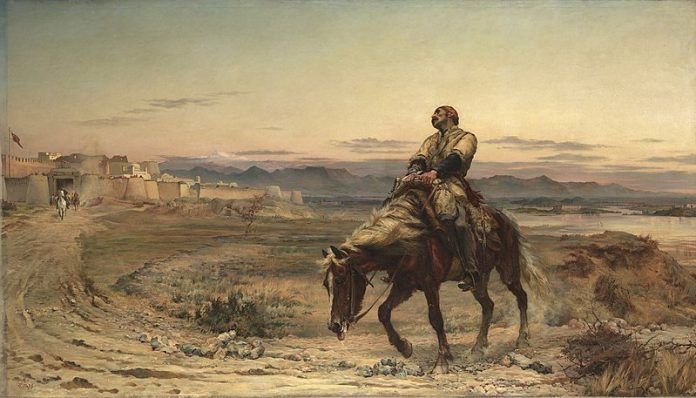
William Brydon, assistant surgeon, in General Elphinstone’s British East India Company expedition, arrives, as of today, alive at the gates of the garrison in Jalalabad, Afghanistan. There he brought the news of the destruction of the expeditionary force of 4,500 soldiers and 12,000 auxiliaries a week before, in an ambush by Afghan guards.
The conflict was initiated by the actions of the Company, which initially defeated the forces of the emir Dost Mohammad Baraksai and captured the capital Kabul, installing a local garrison and enthroning its favored ex-Shah Shuzah Zurani in 1839. In the following period, however, the situation it did not go smoothly. The Afghans, following a traditional tactic, organized themselves in the surrounding mountain villages and cultivated the rebellion. With strong forces surrounding the capital, the city’s population also revolted making the situation desperate for the British colonialists.
The commander of the British garrison, Major-General Sir William Elphinstone, decided to abandon Kabul and retreat to Jalalabad with those citizens still loyal to the British crown. He himself came to an agreement with one of Baraksai’s sons by letting him know his plans in exchange for not attacking them.
The Afghan Wazir Akbar Khan, who had also instigated the rebellion, appeared to agree. But as soon as the 16,000 or so British soldiers, diplomats, Indian officials and servants and their families left the city and began their march through the Afghan passes in the middle of winter, they were attacked and decimated in a series of skirmishes that lasted for miles.

The final battle is said to have taken place at Gadamac, where the remaining British riflemen fell fighting. It is not known whether Brydon was indeed the only survivor of the expeditionary force (a few Indian riflemen are also mentioned) but the incident was described as Britain’s worst military disaster until the fall of Singapore exactly a century later. That same year, once the snows had melted, a new British army would advance and take revenge by recapturing Kabul and freeing some 80 military and 33 civilians from captivity.
The news of the disaster, however, was a resounding blow to British prestige. Lt. Gen. Elphinstone’s actions are considered – to this day – an example of misguided leadership, as he failed to both save his troop and exercise effective command during the engagement, while with his decisions he overruled any other officer who tried to organize any resistance. The victor himself, Akbar Khan, fell victim to his fame as he would die some five years later, some say murdered by his father, who feared his rising popularity and ambition.