
About eleven months ago, Russia announced the special military operation in Ukraine. The European Union immediately joined forces with the international actor by forming the front of the West and starting the imposition of sanctions packages on Russia in order to deal a blow to Putin’s war machine. Now member states are spending a lot of money to be independent of Russian gas and fill their warehouses with LNG. The last sanctions they imposed were the ceiling on natural gas and oil in order to withstand the continued rise in prices.
All these sanctions were implemented quite quickly with the aim of hitting the Russian actor early, which still has the upper hand. At the same time, the war has created both the energy crisis and the explosion of inflation. Also, inflation is the driver that is going to bring the global recession. The intensity and duration of the recession are two unknown factors that will depend on how quickly the war can end, but also on what its outcome will be.
The inflation spike
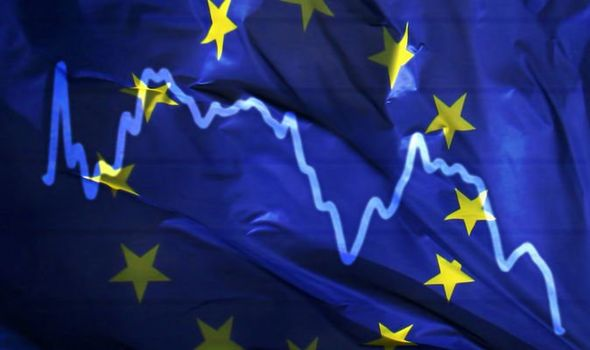
2022 was the year when inflation reached record levels, driving up product prices, while preparing the ground for the recession that will make its appearance in the first months of 2023. It is worth mentioning that the combination of inflation, increase in interest rates and inadequate fiscal policy is what is pushing the global economy into recession.
US Treasury Secretary Yellen has stated that “From the end of next year (2023) we will see much lower inflation, unless there is some unforeseen economic shock”.
The IMF in a report presented last October downgraded its outlook for the world economy in the year 2023 based on the effects of the war, inflation and the aggressive policy of interest rates implemented by the Fed and the ECB to reduce it.
Also, the IMF, the United Nations’ main financial agency, now forecasts that global growth will slow next year to 2.7% — down from 2.9% estimated in July and below the 3.2 % expected this year.
Gurrensa said there is about a 25% chance that global growth in 2023 will be around 2%, while there is a 10%-15% chance that actual output growth will be even lower than 1%. “2% is a very low number,” he told Yahoo Finance Live. “It’s only been recorded five times since 1970. And every time we’ve had that, if you look, it was in 1973 the oil price shock, 1981 and the Volcker deflation, the 2008 financial crisis. All of these are recorded in our collective memory as times of difficulty”.
Difficulty getting inflation back to 2% levels
In statements, Bundesbank President Joachim Nagel and Bank of France Governor Francois Villeroy de Gallo said the ECB’s tightening would eventually limit the rise in prices, which are currently running at five times above target. .
“We will bring inflation back to 2% by the end of 2024 or 2025,” Villeroy said. “This is not a prediction. It’s a commitment.” The ECB has raised borrowing costs by 200 basis points since last July, and that’s less than two weeks away from the central bank’s next meeting.
ECB officials are expected to decide on one more rate hike and are agreeing on details to reduce the roughly 5 trillion euros of bonds on its balance sheet. Meanwhile, governments have used billions of euros to shield businesses and households against rising energy costs, which central bankers have said is undermining their efforts to reduce inflation.
The issue of energy insecurity
The energy “wound” has been opened due to the dependence the EU had before the issue of the war in Ukraine. The US may be energy independent, but many powerful countries in Europe are heavily dependent on natural gas, while some others are dependent on oil.
The International Energy Agency in its report refers to the energy crisis saying that it is “the first truly global energy crisis, with effects that will be felt for several more years”.
This crisis forced the governments of the states to create a new energy policy in order to be able to face the crisis, as households and businesses were threatened by large increases in electricity bills. The three goals are energy efficiency, affordability and sustainability. The top priority is for states to ensure sufficiency for this and signatures have fallen between Europe and the US to start supplying LNG so that there are no shortages.
Among the steps that European states took as a priority was intervention in their energy markets. The intervention in the markets was felt by the governments, as they started to subsidize both the households to consume energy and the industries to produce the products.
Among the movements of the governments was the nationalization of the energy companies. Energy giant EDF, in France, is to be nationalised. In Germany, the government is bailing out Uniper, one of the world’s biggest natural gas importers, after it was hit by a cut in its imports of Russian gas.
The danger of blackouts
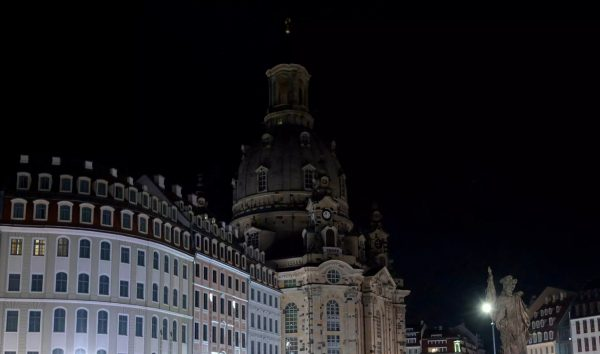
The danger of blackouts is not yet over, especially if the winter turns out to be severe. The International Energy Agency has sounded the alarm saying that the EU will be at risk of gas shortages next year if Russia closes the tap even further and if China recovers from the low levels it is moving to.
Kiggerland has a different argument, stating that “The market currently estimates that the situation with EU gas supplies. will not deteriorate into 2023.” He goes on to say “This means that energy-fueled inflation in the Eurozone will be zero by the end of the second quarter of the new year, which should prompt the European Central Bank to hold off on rate hikes.”
“The most critical thing for the energy security of the Union,” he emphasizes, “is to maintain the significant reduction in demand – which is at an average level of 20% in the EU. “If this happens – as the markets expect -, the situation with the energy supplies of the EU will improve, among other things, due to the gradual return of production of French nuclear plants and – somewhat more uncertainly due to climate change – the return to normal production levels of hydroelectric plants in southern Europe”.
Immigration remained at the top of the EU’s agenda
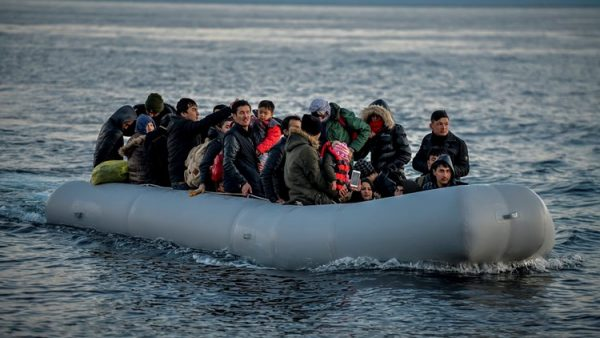
The constant bombing of Ukraine’s infrastructure has created a large wave of refugees, while a wave of immigration has also been created in Russia due to conscription.
At the same time that arrivals from Ukraine are observed, arrivals from North Africa, the Middle East and Asia are also increasing. The increase in arrivals creates the demand for taking more security measures at the European borders.
The Commission, through the Commissioner for Home Affairs, Ylva Johansson, has announced a 20-point plan for the challenges coming from the Mediterranean. In 2022, 90,000 migrants and refugees from Egypt, Tunisia and Bangladesh crossed Europe via Libya and Tunisia. Great tensions were caused by the redistribution issue between Italy and France.
France did not want to accept 3,500 migrants because Rome did not allow all the asylum seekers on the Ocean Viking ship to disembark. In the wake of the dispute, the Czech presidency announced an emergency Home Affairs council for November 25 to discuss the situation of all migration routes.
The three action pillars of the Commission’s plan to deal with the immegration issues
- the strengthening of the cooperation with the EU partners. with a focus on third countries from which migration flows originate for better border management,
- improving the coordination of search and rescue operations and
- the better implementation of the voluntary solidarity mechanism, which was agreed in June 2022 for a year due to the failure to find a common line between member states on a new European pact on migration – a process which is on ice here and some years.


