



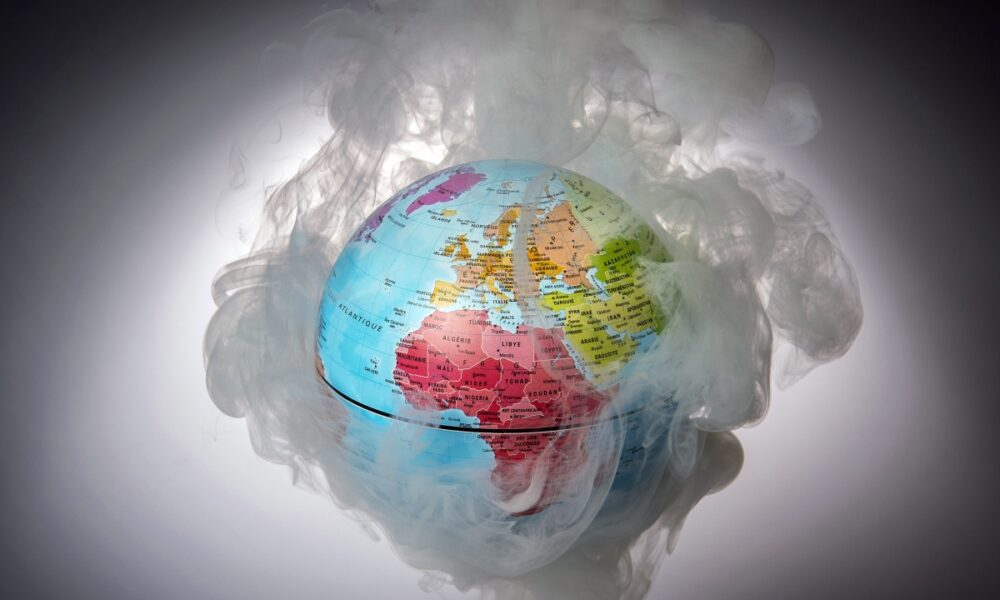
However, by the time the first day of 2023 rolls around, the world has changed radically, under the heavy shadow of the war in Ukraine and in the midst of serious shocks to global stability and security, but also fears of a new wave of COVID-19, originating from the country where the first case of coronavirus was reported three years ago: China.
Against the backdrop of a new Cold War, alliances and interstate relations are being tested, along with democratic values, international legitimacy and the resilience of economies, governments and citizens.
The Russian invasion of Ukraine – now in its eleventh month – intensifying geopolitical rivalries, the energy crisis, inflation, fears of recession and the specter of food insecurity are coming to add to or even exacerbate existing crises, such as that of climate change.
On the logic that “hope always dies last,” many foresee that humanity will succeed in this new year in overcoming many of these new goals—perhaps by ending the war in Ukraine within the new year and/or avoiding recession.
It remains to be seen, however, whether 2023 will be a year of escalation or partial de-escalation with stabilization of geopolitical tensions and their economic impact.
In any case, the next months are considered critical and many more tests and structural changes are expected until “light at the end of the tunnel” can be seen.
Geopolitical fluidity
The Russian invasion of Ukraine and the rallying of the West around Kyiv has accelerated the erosion of the international order established after World War II and the end of the first Cold War.
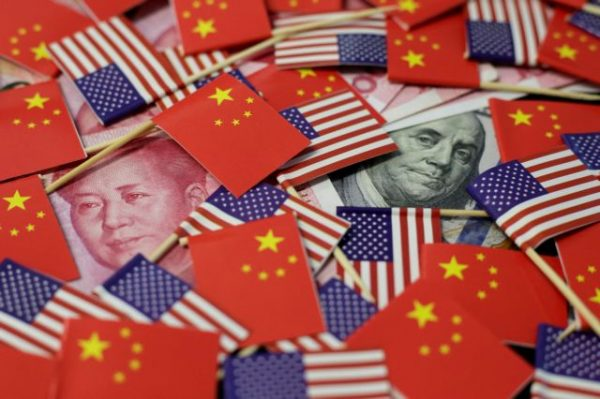
The USA and China remain constant protagonists in the international geopolitical arena, which on the one hand agree – even in words – to cooperate on major international challenges, such as climate change.
On the other hand, however, they intensify the geostrategic, economic, commercial and technological competition between them, while their leaderships are also faced with internal challenges.
For the next two years and ahead of the 2024 US presidential election, the Biden administration will be faced with the new Republican majority in the House of Representatives.
And China’s intervention abroad will depend to a large extent on the return to leapfrogging rates of economic growth.
It is on this goal that it is considered that Chinese President Xi largely “bet” the – poorly prepared and health-disastrous, as described – restart with the abrupt removal of the policy of “zero cases of COVID”.
Against this background, alliances and bilateral relations are being formed or restructured, from Asia to Latin America.
For now, the most important point of reference is the tightening of Sino-Russian relations, which, however, are now clearly determined by Beijing’s strategic interests.
However, unlike in the past, the world no longer seems to be divided into two watertight blocs.
A new strategic dynamic and attitude is being recorded by regional “players”, as they seek to exploit the opportunities arising from great power competition and maintain – at least for the time being – an ambivalent stance.
Either against Russia, as e.g. it happens with India (this year simultaneously chairing the G20 and the Shanghai Cooperation Organization), the oil producer Saudi Arabia that is approaching the BRICS group or the diplomatically ambidextrous Turkey, although a NATO member country, which this year is at the “crossroads” of critical presidential and parliamentary elections.
Either against the US-China dipole. At the center of this category is the EU today, amid an energy crisis, socio-economic liquidity and five crucial electoral contests within 2023 in Greece, Spain, Poland and Estonia.
The energy crisis and the specter of recession
The war in Ukraine quickly dashed hopes for a rapid recovery in 2022 in the wake of the COVID-19 pandemic.
The outlook for this year is even worse, now under the shadow of the rapid spread of the coronavirus in sprawling China and legitimate concerns about further disruption to supply chains.
In the interim, almost all major economies have raised interest rates to contain inflation, heightening fears of a global recession by 2023.
According to the IMF, “global growth is projected to slow from 6.0% in 2021 to 3.2% in 2022 and 2.7% in 2023.” That is, at the lowest level since “2001, excluding the global financial crisis and the acute phase of the COVID-19 pandemic”.
The rapid increase in the prices of energy and basic goods further aggravates the situation, calling into question the pace of the much-vaunted “green” transition.
Much is expected to be decided this year by the competition – now of geopolitical dimensions – to secure critical fossil fuel supply chains. So much oil, as e.g. from Venezuela, now the US interlocutor in the energy sector.
As well as natural gas, which Europe has listed as “sustainable” investments for electricity generation, it is currently paying the US in gold for LNG imports and is now looking for replacements for supplier Russia in other repressive regimes, such as Qatar and Azerbaijan .
All this, while difficult negotiations for adjustments to the Stability and Growth Pact are expected in the EU, under the visible fear of recession. And in parallel with the USA, while China “bets” its “changes” in a pandemic on the recovery of internal consumption.
Analysts and international organizations meanwhile are ringing the bell for a debt crisis, and especially in the form of dominoes in poor and developing countries. There are fears of a potential wave of sovereign defaults in Africa, Asia and South America by 2023, amid crucial national electoral contests (eg Pakistan, Egypt) and fears of social unrest and uprisings.
The nightmare of humanitarian crises
Armed conflicts and economic vulnerability are now joined by climate change as an accelerator of humanitarian crises this year on the planet.
According to the latest study by the NGO International Rescue Committee (IRC), more than 100 million people are currently displaced due to armed conflicts and natural disasters.
By 2023, he estimates, 340 million people will need humanitarian assistance – four times more than a decade ago.
At the top of the list are Somalia, Ethiopia and Afghanistan, out of a total of 20 countries of immediate need.
Afghanistan’s ranking this year in third place on the criticality list is anything but due to an improvement in conditions in the country that has been ruled for a year and a half by the obscurantist Taliban. On the contrary.
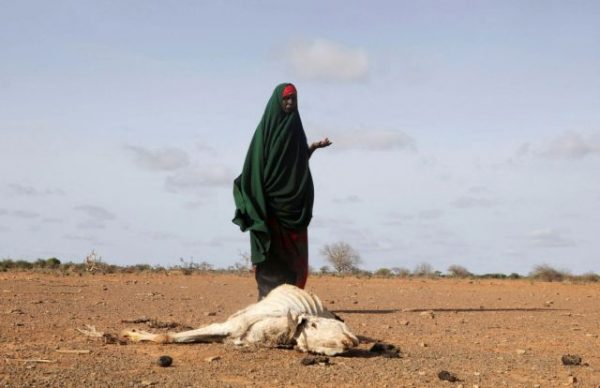
It is a result of the dramatic situation that now prevails in eastern Africa, and especially in the Horn of Africa, where prolonged drought, armed conflicts and the inaction of the international community are pushing the local population to the brink of humanitarian disaster.
Other countries of great concern are the Democratic Republic of the Congo, long-suffering Yemen and Syria, South Sudan, Burkina Faso and Haiti.
The first ten is completed by the war-torn Ukraine, but it stands out as the only one that receives a huge scale of international aid, thus mitigating the painful effects of the war.
In total, the 20 countries on the IRC’s watch list (including Pakistan and Venezuela) account for 13% of the world’s population and just 1.6% of global GDP, but at the same time 81% of the world’s forcibly displaced and of 80% of those experiencing critical levels of food insecurity.

Climate emergency
The extreme weather events that hit the planet in 2022 were yet another shocking reminder of global warming.
Major disasters, worsening humanitarian crises and displacement of populations are just some of the tangible evidence.
However, the dividing lines of the new Cold War and the chain disruptions caused to economies and energy supplies by the war in Ukraine and the resulting sanctions not only slow down the green transition, but create additional obstacles to international cooperation.
This is demonstrated by the meager results of COP27 and the return of many economies to burning coal for electricity generation.
Global carbon consumption is estimated to have increased in 2022 by 0.7% and is expected to reach a record high in 2023.
And the situation is described by the International Energy Agency (IEA) as fluid, noting that the war in Ukraine is a turning point for policy change and energy markets “not only temporarily, but also for the coming decades”.
This, while the planet is already “going through a critical decade for the creation of a more secure, sustainable and affordable energy system”.
“The potential for faster progress is enormous,” the IEA highlights in its report, “if decisive action is taken immediately.”

