
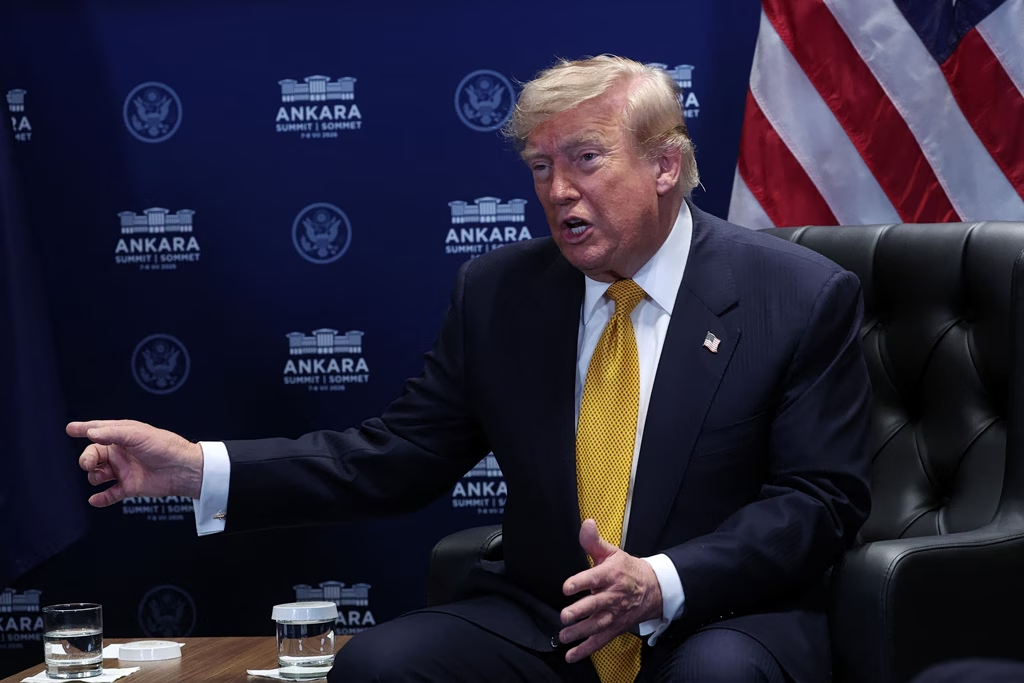



The United States has imposed particularly strict bans on the export to China of high-tech semiconductors, the equipment needed to manufacture them, and related know-how.
The purpose of this export ban is to undermine the Chinese defense industry’s access to high technology that will make it even more of a threat to the US.
Of course, at the same time they are trying to undermine China’s ability to take decisive steps in a number of technological areas, not limited to defense. From driverless vehicles to hypersonic missiles, a multitude of systems rely on state-of-the-art semiconductors.
Essentially, the US wants China to stay at 2022-level technologies for a very long time, while they themselves make significant progress.
The problems for Chinese businesses
Indeed, this situation creates serious problems for several large Chinese companies, especially those that manufacture chips.
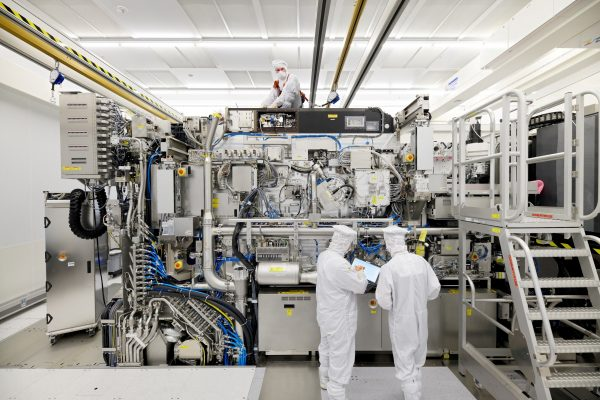
For example, as part of the sanctions the Dutch company ASML, which makes the highly specialized UV lithography machines used to print the very thin chips, has announced that it will stop serving its Chinese customers.
Accordingly, there are strict restrictions on all US citizens or holders of a US green card or US residency permit to work for Chinese companies, as they will now need permission from the US Department of Commerce to work for Chinese companies. This, in fact, includes several Chinese who were educated in the US. This means that several Chinese companies will lose critical personnel. Yangtze Memory Technologies Corp has already asked its employees who were US citizens or US green card holders to leave.
What will happen to the defense industry?
However, it is not certain that all this will directly affect China’s defense industry.
However, the bulk of Chinese defense systems rely on older technology systems and thus operate on older chip technology. Consequently, they will not be directly affected by the export bans that the US wants to impose. China, for example, has had missile systems that can hit US aircraft carriers at long range since 2015. Such systems will not be affected by the sanctions.
Then there is the question of how these sanctions affect the Chinese defense industry. Several argue that the main impact will be on costs and times rather than the capability itself.
For example, it has been argued that China has the ability to produce 5nm chips at the laboratory level, but cannot produce them on very large industrial scales.
This means that it can produce them e.g. for its missile systems even if it cannot produce them on the scale required to mass produce the latest generation of iPhones.
But even if China’s defense requirements also mean larger quantities of state-of-the-art chips, e.g. if China wants to develop large defense applications of artificial intelligence, e.g. swarms of drones that rely on 5G networks and guided by artificial intelligence, then it has the ability to make the high-tech chips required albeit at a much higher cost.
Moreover, China has an additional advantage which is that it can more easily mobilize resources. One can reasonably assume that they will try to transfer scientific manpower to these tasks, speed up the relevant production capacity, and of course indulge in extensive forms of industrial espionage to be able to fill the technological gap. In any case, asserting technological self-sufficiency has long been a key priority of the Chinese Communist Party leadership.
The cost for American companies as well
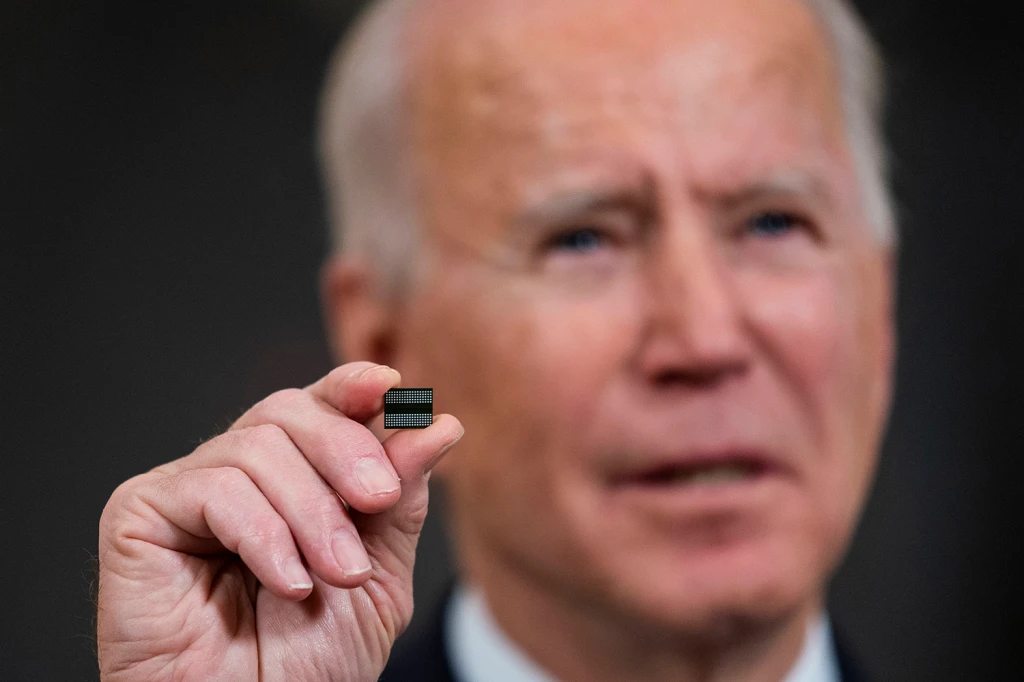
At the same time, the US high-tech export bans to China will also have an impact on several US companies, as for some of them China is their biggest market.
Just think that 27% of Intel’s sales go to China, 31% of LAM Research (one of the largest manufacturers of chip manufacturing equipment) and 33% of Applied Materials (which also offers equipment and software for semiconductor manufacturing).
Already, Applied Materials and Nvidia estimate that they each have $400 million less in sales next quarter. Lam Research estimates that it will see a $2.5 billion drop in sales in 2023. Some have argued that in the end the benefit will be less than the harm to the US.
However, whether we are talking about defense issues or the temptation of a new trade war, there seem to be several voices in Washington that are currently in favor of escalating this confrontation with China. Even if it ends up being just the crucial push for China’s tech sector to step up to cover the distance on its own.
Against this background, it is of particular interest that China has decided to appeal to the WTO against the US bans, essentially accusing the US that these are not “national security” measures but a violation of free trade rules.
