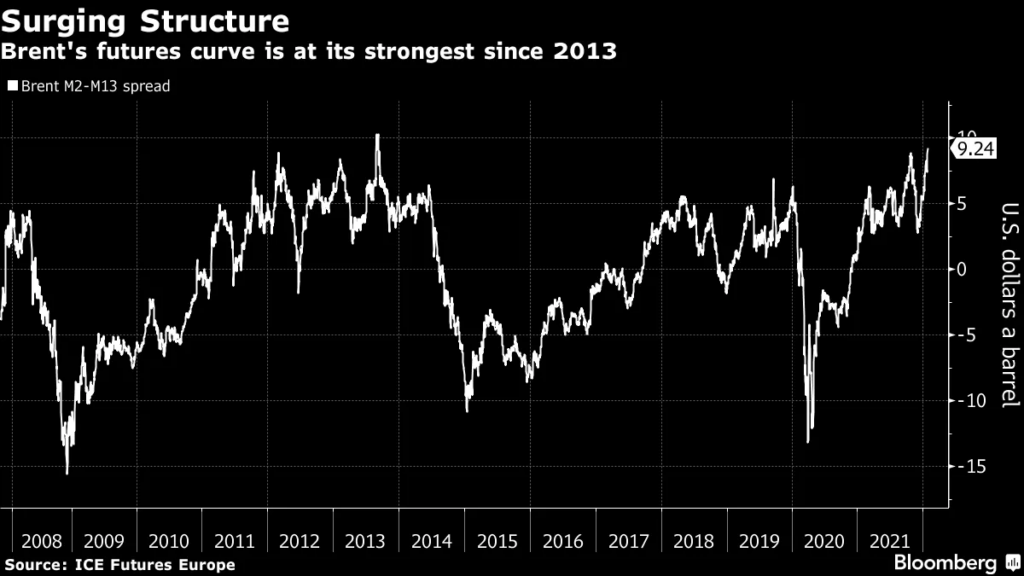
It is now more than certain that the European Union is headed for recession, with the question of how painful it will be.
The European Union, like the rest of the countries, is close to major developments. The pandemic and the “freeze” of the global economy in connection with the war in Ukraine created economic problems again, bringing the recession closer again.
The recession will be the result of the continuation of the war in Ukraine, as Moscow and Kiev exported a lot of products to Europe, so the coming of the war means the increase in prices, which comes from the rise in inflation.
The causes of recession
The severe energy crisis raging with the excessive increase in natural gas and electricity prices has caused a rise in inflation, which has increased the prices of various products resulting in a problem for consumers as it has minimized their purchasing power.
As a result, many companies are facing huge problems, both from consumers and from the rising prices that buy the supplies. A recent PMI survey of 5,000 companies across the Eurozone indicated a clear recession and the worst economic performance since 2013, excluding the pandemic lockdown months.
The artificial recession scenarios
According to Trust Economics, the Eurozone is close to recession, with no picture yet of how painful it will be. Estimates predict stagnation in growth in the fourth quarter of 2022 and the first quarter of 2023.
The assessment of the Bundesbank is similar, according to which “there are more and more indications of a recession in the German economy, which will be characterized by a general and long-term decrease in production”.
According to the Ifo Institute, the Eurozone will plunge into recession with economic output falling by 0.3% in 2023, while Deutsche Bank expects a decline of 3% to 4%. This negative forecast for the largest economy of the Eurozone is a harbinger of difficulties in the rest of the monetary union as well.
Interest rate hikes
To reduce inflation, both the European Central Bank and the Fed have gradually raised interest rates by more than 200 basis points since July. But beyond the central banks, the national banks around the world did the same.
This resulted in a gradual fall in inflation. Recently, however, the central bankers of the eurozone’s two largest economies have stressed that they are determined to bring inflation back to the 2% target.
As Bloomberg reports, they spoke in a joint television interview on the German channel Phoenix. Bundesbank President Joachim Nagel and Bank of France Governor Francois Villeroy de Gallo said the ECB’s tightening would eventually curb the rise in prices that are currently running at five times above target. “We will bring inflation back to 2% by the end of 2024 or 2025,” Villeroy said. “This is not a prediction. It’s a commitment.”
The special case
Although all EU member states are expecting recession next year, one country is expected to avoid it and that is Greece. In a report, Deutsche Bank puts growth in Greece at 6.4% this year and estimates a significant slowdown to 0.3% in 2023 and a recovery to 1.4% thereafter in 2024.
Consequently and despite the drop in GDP, Greece is estimated to be one of the few countries in the eurozone with positive performance in the next very difficult year for the region, as the recession will be felt as a whole (-0.6%), with Germany to record the worst performance with a recession of -1%, followed by Belgium with 0.6%, Austria and Finland with 0.5%, Italy and France with 0.4%, while zero growth is expected in Spain, Ireland (+1.5%), the Netherlands (+0.5%), and Portugal (+0.1%) and are the only countries apart from Greece that will manage to avoid recession in 2023.
The imposed cap on oil
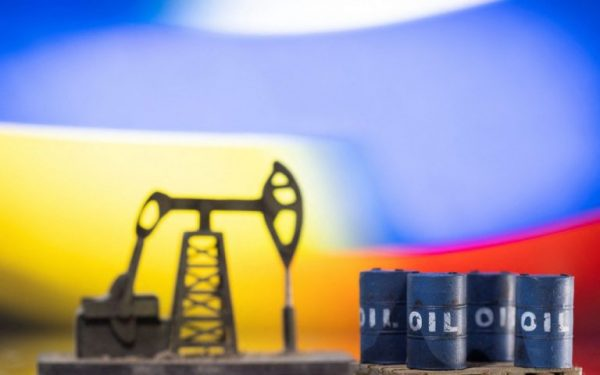
The West and the European Union are looking for solutions to limit the energy crisis. One of these measures is the oil cap, where the G7 and Europe after some time of discussion decided to impose a cap on oil prices. The agreed upon price is $60. There are similar discussions about imposing a ceiling on the price of natural gas.
The measure of the price cap mechanism began on Monday, December 5, when the European Union banned the bloc’s countries from importing crude oil produced in Russia and transported by sea. The exception is Bulgaria, which can continue to import Russian crude by sea until the end of 2024 under contracts signed before June 4, 2022, according to Bloomberg. Flow from the Druzhba pipeline is unaffected, although Germany and Poland have both said they will stop such imports by the end of 2022.
Russia’s retaliation
The Russian reaction to the oil ceiling was immediate. Moscow is considering either imposing a fixed price or setting maximum discounts to international benchmarks at which they can be sold.
It is noted that Russia aims to offer a transparent pricing mechanism to buyers of its crude oil, following a market-based approach to counteract the effects of the cap. In addition, it is emphasized that the Kremlin does not want to create competition with the neutral states that buy its crude by putting any pressure on them through non-trade steps.
How painful the recession will be
Apparently, Trust Economics estimates that the recession will be mild, with investors disagreeing. This prediction is seen in a recent report by its analysts, in which it is stated that “estimations of the creation of a mild recession are no longer correct, since the energy crisis has worsened”.
The problem lies in the fact that, unlike previous crises, the ECB does not have the ability to offset the economic costs that will be created by the current situation.
Instead, its efforts are focused on curbing inflation, which will worsen the recession. According to Christine Lagarde, the central bank may raise interest rates to such high levels that they will drastically reduce already stagnant economic growth.

A double recession is coming to the Eurozone
Although any forecast for the Eurozone is difficult and without much validity, there is a case for a double dip. According to research by Trust Economics, Europe is facing a “multi-crisis” – interacting crises of different origins at great cost to the economy.
Developments that could add instability in 2023 include: Russia finding ways to, for example, escalate tensions and disrupt economies, currency tightening dangerously straining the economic and financial system, cost-of-living crises spark serious social tensions and political instability, and climate change to strain energy systems, economic production, and food chains.
The estimate for business activity
Business activity in the euro zone fell for a fifth straight month in November, showing the economy slipping into a mild recession as consumers cut back on spending amid rising inflation, a latest survey showed. S&P Global’s final composite purchasing managers’ index (PMI) for the euro zone fell to 47.8 in November from 47.3 in October, a 23-month low, according to a preliminary estimate. Notably, anything below 50 is considered industry contraction.
In a Reuters poll last month, economists gave a 78 percent chance of a recession in euro member states within a year and predicted the economy would shrink by 0.4 percent in the current quarter. With demand falling again and little prospect of an imminent recovery, companies cut hiring – the employment index fell to 51.8 from 52.5. Eurozone unemployment fell to 6.5% in October, official data showed on Thursday.
The core services PMI fell to 48.5 from 48.6, the lowest reading since early 2021 and below the preliminary estimate of 48.6. However, input and output prices eased, suggesting that inflationary pressures may have already peaked, likely welcome news for policymakers at the European Central Bank. The producer price index hit a three-month low of 62.3 points.
Possible trade war between the US and Europe
The US and the EU are one step away from breaking up the common front due to the economic policy imposed by Biden. One of the problems facing Europe is that natural gas prices are six times higher than their long-term average when they arrive at the port, compared to prices in the US. Natural gas storage from Europe is not enough and the reservoirs will need to be refilled in 2023, and this time probably with the pipelines carrying Russian natural gas closed.
European Internal Market Commissioner Thierry Breton has called for a “European fund” to “support industrial projects” to tackle the Inflation Reduction Act (IRA) adopted in the US and criticized by the French President Emmanuel Macron during his visit. The European Union has not hidden its concern for months about the consequences of the spending of 420 billion of the administration of President Joe Biden, dedicated to the environment and approved in August.
The EU does not hide its concern, it considers that especially tax exemptions for companies based in the USA will cause a distortion of competition at the expense of European companies in the automotive and clean energy sectors.
What US law says
Among other things, it provides for reforms that will favor US-based companies, especially in the key areas of electric cars, batteries, technology, renewable energy, hydrogen.
It results in “distortions of competition to the detriment of EU companies”, declared Thierry Breton in an interview published today by the Journal du dimanche. Mr Breton threatened in November to “go to the World Trade Organization (WTO)” to present Brussels’ arguments. “A working group has been created with representatives of the White House and the European Commission,” he explained.
Can inflation drop to 2%?
The ECB is expected on Thursday (15/12) to have a crucial meeting to set the interest rate. Furthermore, the basic principles of reducing the balance sheet will be published, with the consequence that the reduction of positions in the asset market will be passive.
As Trust Economics notes, the roadmap for reducing the ECB’s government bond holdings under the APP will become tangible and concrete at the February or March meeting.
Furthermore, the ECB’s forecasts for headline and structural inflation in 2024 will be little changed compared to the September forecasts. So they will remain just above the 2% target, while initial estimates for 2025 inflation are expected to be very close to the central bank’s 2% target.