The course of the request of the 15 European countries to the European Commission in order to impose a ceiling on the EU’s natural gas imports from any origin (and not only from Russia) it reveals on the one hand the hard disagreements that exist inside Europe and on the other hand the changes taking place in the balance of power between the member countries.
Let’s not forget that five years ago and for decades, Germany was the undisputed leader of Europe and had the power to force everyone else to follow its instructions. After the coronavirus, countries abandoned, willingly or unwillingly, harsh fiscal policy to meet the needs of their closed economies and support incomes. The Stability Pact was gradually abandoned, but the effort by Germany and other countries of the “Nordic club” to bring it back as soon as possible was very much alive. But then came the war and the energy crisis, with galloping inflation putting the tombstone, on the one hand, to the Stability Pact and on the other to German hegemony.

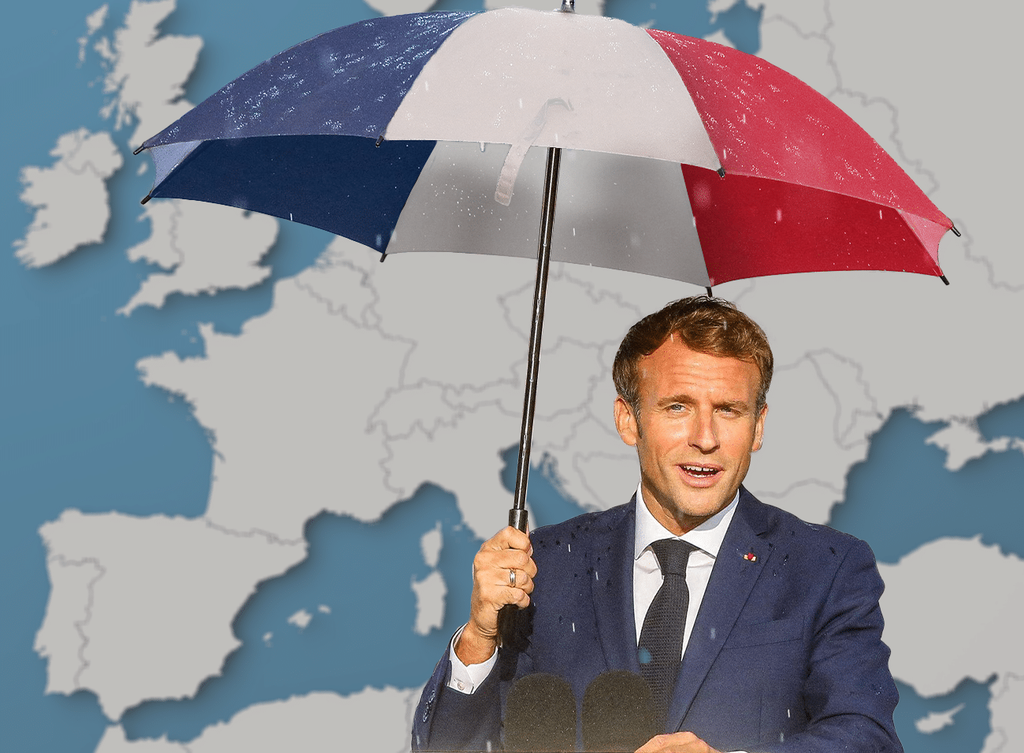
Τhe power of France is rised in EU
Germany, apart from suffering the biggest blow from the Russian gas cut, is largely seen as solely responsible for Europe’s dependence on Russian gas. And this is a significant political blow.
Now Europe “dances” to the rhythm of the Americans and the power of France, mainly, but also of other countries is increasing at the expense of the power of the “Northern club”. We are in a moment of “systemic” change in the European Union and despite the efforts of the Germans to hold the scepter it seems that this is no longer possible – at least for now.
It is characteristic that 15 member-countries submitted a request to the Commission to bring up for discussion a proposal to impose a ceiling on the prices of natural gas imported into Europe. On Germany’s “order”, Von der Leyen did not accept the request of the “15” and did not make any proposals. Finally, now, the issue is coming back and the President of the Commission is considering relevant proposals.
It is in any case a victory of the 15 countries over Germany. Many more such will happen on the way which may lead to a new distribution of power in the EU, fairer of course than the previous one, or even to a new structure of the European edifice, so that the EU on the one hand to survive and on the other to move towards greater integration.
In this route lurks the danger from the anti-systemic parties of Europe and from various anti-systemic leaders of the opposition of all countries, who by exploiting the difficulties of the citizens try to gain political power. And many citizens respond by voting for them either out of reaction, or because they believe what they say, or because they believe that the traditional political forces do not care about the ordinary citizen.

Τhe anti-systemic in Europe
In many cases they are right, the anti-systemic in Europe are neither crazy nor stupid. But a policy that is simply anti-systemic does not offer any solution. Nor can populism, which is solely aimed at grabbing votes without any planning and vision, ever do any good to a country.
Nevertheless, populism persists and populist parties are increasing in popularity in various countries. The fact that there is a large part of the population that chooses to support these views, fortunately, does not mean that they vote for them, and of course similar views are expressed by all other anti-systemic and populist parties. Because there is a large audience.
The situation in which the European economy finds itself is summed up in the fact that Germany made mistakes, that it is characterized by a lack of altruism for other countries and that it remembers European cohesion only when it suits it. To a certain extent, the incomes of weak European citizens should be supported to the maximum extent and not to the totality of citizens, and less but sufficient support should be given to businesses that are in need. Gas and energy prices in general will continue to be high.